Guangzhou, Hong Kong, and the names around them
Cantonese cuisine, also called Yue cuisine (粤菜), is the cooking associated with Cantonese speakers, with Guangzhou, and with the Pearl River Delta, including Hong Kong and Macau. Wikipedia says the label is sometimes stretched across Guangdong, while Teochew cooking and Hakka cooking are treated as their own styles. (Wikipedia — Cantonese cuisine (opens in a new tab), read )
UNESCO’s Chengdu page lists Guangdong cuisine with Sichuan, Shandong, and the cooking of the Yangtze and Huaihe rivers as four reference cuisines of China. (UNESCO Creative Cities — Chengdu (opens in a new tab), read ) Wikipedia also counts Cantonese cooking among the Eight Great Traditions, and says that until the late 20th century most Chinese restaurants in the West served largely Cantonese dishes, which it connects to Cantonese emigration. (Wikipedia — Cantonese cuisine (opens in a new tab), read )
Steam, roast meat, and wok hei
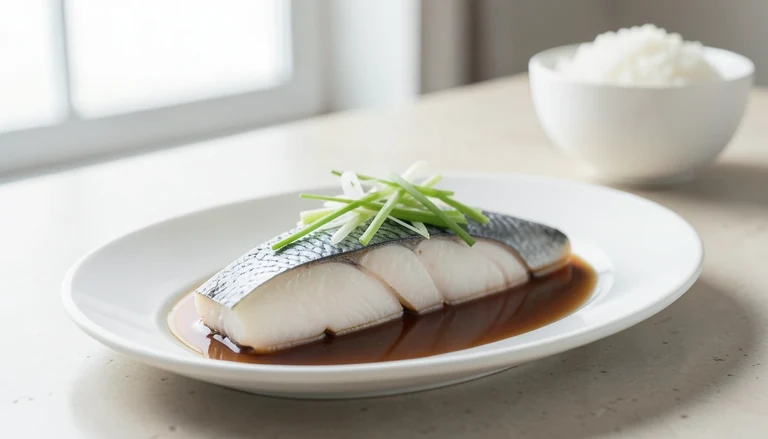
Wikipedia’s Cantonese cuisine article says cooks favor steaming and stir-frying, and that spices stay modest so the main ingredient remains recognizable. For seafood it says the freshest fish is steamed, and it gives a little soy sauce, ginger and spring onion as the seasoning. (Wikipedia — Cantonese cuisine (opens in a new tab), read ) That is the preparation described on the Cantonese steamed fish page.
Siu mei (烧味) is a different counter from the steamer. The same article calls it a rotisserie style of meat, without a vegetable cooked in the dish, and it lists rice plates that pair char siu (叉烧) with siu yuk (烧肉). (Wikipedia — Cantonese cuisine (opens in a new tab), read ) Char siu is the sweet-glazed roast. Char siu versus siu yuk separates the glaze from the crackling skin.
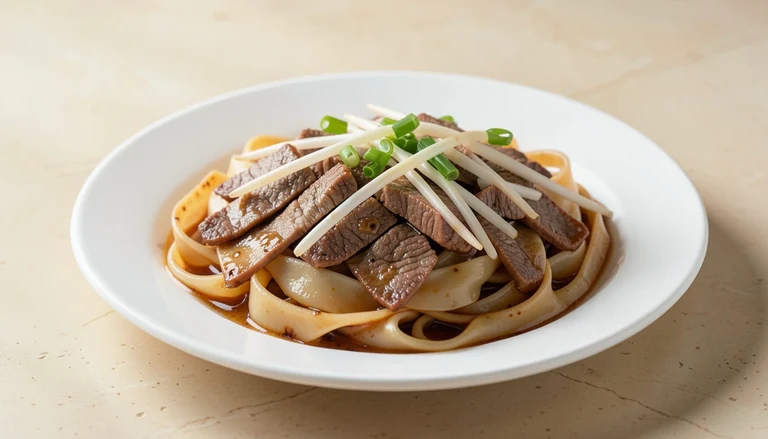
Wok hei (镬气) is not a chili level. It is the smoky, seared character of food tossed quickly over high heat. The wok hei entry is the definition to use, and dry-fried beef chow fun is the noodle it points to. Chow fun versus mei fun separates the wide noodle from rice vermicelli when a menu prints both.
Dim sum is one meal, not the whole cuisine
The Hong Kong Tourism Board describes dim sum as a traditional Cantonese meal of sweet and savoury small plates, eaten with Chinese tea. (Hong Kong Tourism Board — Dim sum (opens in a new tab), read ) Wikipedia says Guangzhou teahouses drew people for dim sum, and that the habit grew through the nineteenth century, taking in snacks from beyond Guangzhou. (Wikipedia — Cantonese cuisine (opens in a new tab), read )
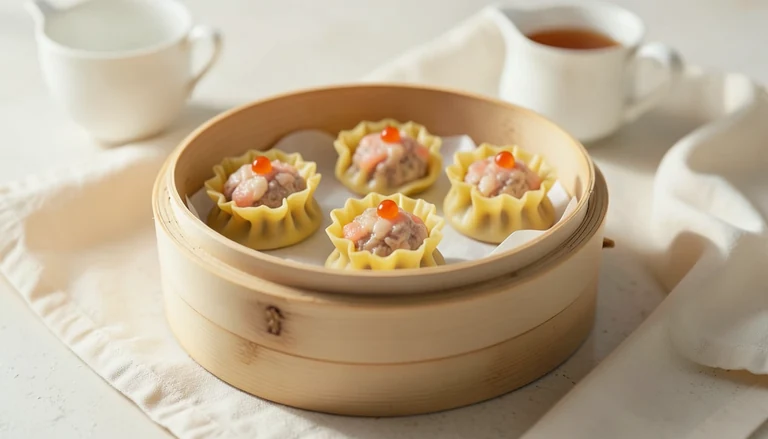
That tea meal does not exhaust the cuisine. A dinner of steamed fish, a roast-meat rice plate and a vegetable is still Cantonese cooking, and it is not dim sum. A first dim sum order is the practical start. Dim sum and yum cha cover the words, har gow versus siu mai separates the two dumplings, and siu mai has its own page. Tea choices are in the dim sum tea guide.
Why so many US Chinese menus started here
Wikipedia’s American Chinese cuisine article says the California Gold Rush of 1848–1855 brought 20,000–30,000 immigrants from Canton, today’s Guangdong, and that Chinese immigration before 1924 came especially from Taishan. It says Cantonese cooking has had the most influence on American Chinese food. (Wikipedia — American Chinese cuisine (opens in a new tab), read )
The same article says cooks adapted southern Chinese dishes into food that was not found in China, and it names chop suey as an example. It describes a typical American sweet-and-sour pork as battered pork with a bright red sauce, and says other versions stay closer to the Cantonese dish. From the 1970s, it says, Taiwanese immigrants widened restaurant menus past that Cantonese base. (Wikipedia — American Chinese cuisine (opens in a new tab), read )
A US menu can therefore hold a Cantonese steamed fish or a dim sum sheet and, nearby, chop suey or a battered sweet-and-sour pork that the article treats as American Chinese cooking. The Cantonese ordering guide stays with the steam, roast and noodle side of that split. Peking duck versus Cantonese roast duck is the comparison when both birds are offered.
Signature dishes
| Dish | Characters and romanization | What it is | Heat |
|---|---|---|---|
| Siu mai | 烧卖 · Siu mai · Cantonese name | Open-topped dim sum dumpling, commonly pork and shrimp. | Mild |
| Cantonese steamed fish | 清蒸鱼 · Qīng zhēng yú | Fish steamed with ginger and scallion. | Mild |
| Beef chow fun | 干炒牛河 · Gān chǎo niú hé | Wide rice noodles wok-fried with beef. | Mild |
| Char siu | 叉烧 · chā shāo (pinyin); caa1 siu1 (Jyutping) | Sweet-glazed roast pork from the siu mei counter. | Mild |
| Siu yuk | 烧肉 · shāo ròu (pinyin); siu1 juk6 (Jyutping) | Crisp-skinned roast pork, served with char siu over rice in the Cantonese cuisine article’s rice-plate list. | Mild |
Keep reading
Questions people ask
Is dim sum the same thing as Cantonese food?
No. The Hong Kong Tourism Board describes dim sum as a traditional Cantonese meal of small sweet and savoury plates with tea. (Hong Kong Tourism Board — Dim sum (opens in a new tab), read ) Steamed fish, roast meats and wok-fried noodles are Cantonese cooking as well, and they are not all served as dim sum. Wikipedia counts the wider cuisine among the Eight Great Traditions. (Wikipedia — Cantonese cuisine (opens in a new tab), read )
What is siu mei?
Wikipedia’s Cantonese cuisine article calls siu mei (烧味) a rotisserie style of meat, without a vegetable cooked in the same dish, and it lists char siu and siu yuk together over rice. (Wikipedia — Cantonese cuisine (opens in a new tab), read ) Char siu versus siu yuk separates the glazed pork from the crisp-skinned pork.
Why did so many US Chinese restaurants serve Cantonese food?
Wikipedia’s Cantonese cuisine article says that until the late 20th century most Chinese restaurants in the West served largely Cantonese dishes, and it ties that to Cantonese emigration. (Wikipedia — Cantonese cuisine (opens in a new tab), read ) The American Chinese cuisine article says the Gold Rush brought 20,000–30,000 people from Guangdong and that Cantonese cooking has had the most influence on American Chinese food. (Wikipedia — American Chinese cuisine (opens in a new tab), read )
How is Cantonese steamed fish seasoned?
Wikipedia describes the fresh-seafood version as steamed fish with a little soy sauce, ginger and spring onion, used to bring out the seafood rather than to cover it. (Wikipedia — Cantonese cuisine (opens in a new tab), read ) Kitchens still vary. The steamed fish page covers whole fish versus a fillet and the questions worth asking.
Is chop suey a Cantonese dish?
Wikipedia’s American Chinese cuisine article says chop suey belongs to a style cooks developed in the United States from southern Chinese cooking, and that it was not a dish found in China. (Wikipedia — American Chinese cuisine (opens in a new tab), read ) A restaurant can print a Cantonese steamed fish and a chop suey on the same menu without those two plates sharing a recipe.