Choose the serving style you want
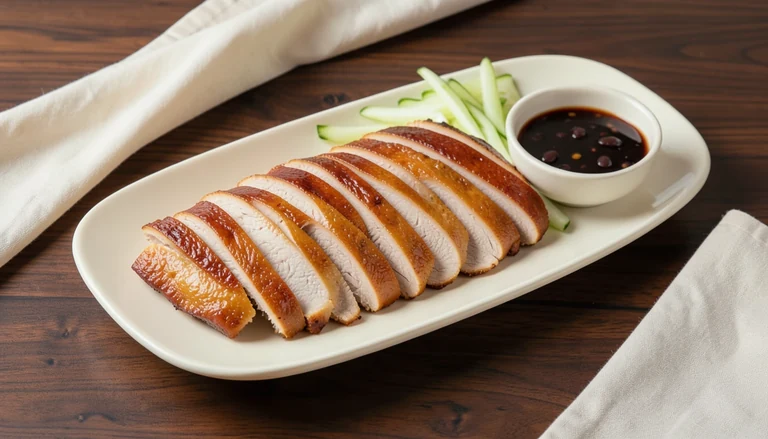
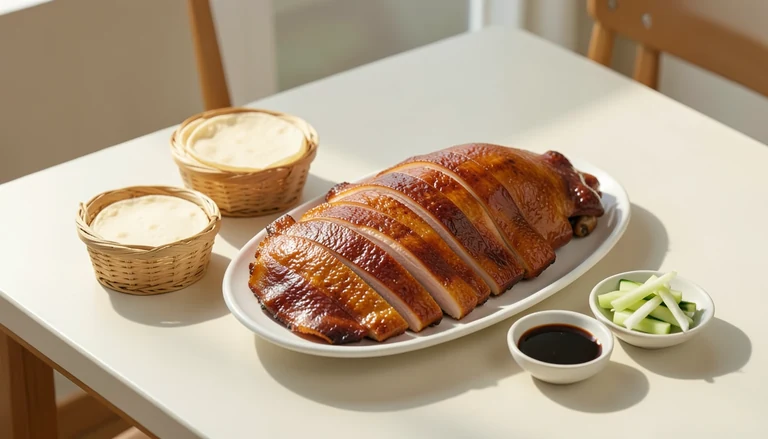
Peking duck puts particular attention on crisp skin and sliced portions served with accompaniments such as pancakes. Cantonese roast duck combines skin and seasoned meat in a roast-meat preparation, often served as chopped pieces. Choose Peking duck when the pancake-and-condiment meal is what you want; choose Cantonese roast duck when you want the duck itself to anchor a rice-based plate or shared meal.
Both are roast duck. The comparison is between two preparations and serving traditions, not between a duck that is roasted and one that is not. “Roast duck” on an English menu is therefore too broad to settle the choice. Look for the full name and the restaurant’s description.
Use this guide to plan portions, accompaniments and advance ordering. The dish page covers Peking duck’s introduction; here the useful question is what will arrive at your table and what you need to arrange before you get there.
Compare what arrives on the plate
These are ordering patterns, supported by named recipe and operator examples below. They are not carving rules that every restaurant must follow. A kitchen may offer a different cut, a second course, a boneless option or its own accompaniments.
| What to compare | Peking duck | Cantonese roast duck |
|---|---|---|
| Main presentation clue | Sliced skin and meat for an assembled bite | Skin attached to substantial meat pieces |
| Typical accompaniment question | Pancakes or buns, sauce and vegetables? | Rice, sauce, buns or noodles? |
| Bone question | How is the sliced portion served? | Bone-in chopped pieces or a deboned option? |
| Seasoning question | What sauce and condiments accompany it? | What marinade, glaze and juices accompany it? |
| Portion question | Whole, half, one course or several? | Whole, half, cut selection or rice plate? |
| Advance-order question | Does this operator require a preorder? | Can this operator supply your chosen size today? |
Peking duck: compare the whole bite
Mott 32 Singapore gives a precise example: its applewood-roasted Peking duck is served tableside with steamed pancakes, cucumber, scallions, raw cane sugar and the restaurant’s hoisin sauce. The operator says this duck is available by preorder and recommends it for around three to four guests. Those are Mott 32 Singapore’s service and portion statements, checked October 3, 2026.
That example explains why accompaniments matter as much as the photograph of the bird. If you want pancakes, confirm that the menu includes them rather than assuming “Peking duck” settles the package. Ask whether additional pancakes and vegetables can be ordered and whether the sauce arrives separately. A family that enjoys assembling each bite may want different quantities from people sharing only a small taste.
Taste a piece as served, then assemble a bite with a modest amount of sauce. This is an editorial suggestion for noticing the skin, meat and condiment separately, not a required etiquette rule. Ask your server how the kitchen intends its particular preparation to be eaten.
Cantonese roast duck: seasoning goes beyond a dipping sauce
The Woks of Life’s Bill Leung presents Cantonese roast duck as part of the Hong Kong-style roast-meat family. His original recipe seasons the cavity with five spice and uses a cooked marinade with ginger, scallion, bean sauces and other aromatics. It is carved into pieces, including bone-in portions, and the reserved cooking juices are offered alongside.
That named recipe is a useful explanation for a meat-centered roast-duck order. It does not establish one compulsory marinade or sauce for every Cantonese kitchen. Ask whether the restaurant serves roasting juices, a sweet or tart sauce, or another accompaniment; the answer changes how you may want to combine the plate with rice.
Skin still matters in this preparation. Ordering Cantonese roast duck does not mean giving up crisp skin, just as ordering Peking duck does not mean there will be no meat. The more useful distinction is whether you want thin sliced portions and a wrapping kit or substantial seasoned meat pieces as the centerpiece.
Bones and buns are not reliable shortcuts
Quack House in San Francisco explicitly identifies its duck as Cantonese roast duck and explains that it debones the meat with the skin attached for eating in baos. Its operator-linked Toast item offers both bone-in and deboned half or whole duck choices, and says the wing remains bone-in. It lists plum vinaigrette and house-made duck jus as accompaniments.
This is a concrete exception to two easy assumptions: Cantonese duck need not always arrive chopped through the bones, and a bun does not turn a roast-duck preparation into Peking duck. Use the full menu description. If you are sharing with someone who wants boneless meat, ask how complete the deboning is and whether wings or other pieces retain bones.
For a rice meal, a bone-in preparation may fit what you want. For small assembled bites, a deboned option may be more convenient. Neither presentation is a taste ranking. Pick the format your table will enjoy, and make that choice explicit when ordering.
Whole and half describe the bird, not a serving guarantee
The operator-linked Quack House menu demonstrates half and whole options for its Cantonese duck. Mott 32 Singapore instead provides its own around-three-to-four-guest recommendation for the signature Peking-duck service. Neither example means that every half duck feeds two or every whole duck feeds four. Bone content, carving, other courses and appetite all affect the meal.
A second checked US operator, Peter Chang Annapolis, lists half and whole Peking duck alongside a separate half roasted duck in its takeout category. It also lists extra pancakes separately. This is evidence that both portion choices can appear on one menu; it does not prove what another branch offers, establish a Cantonese label for that separate roast duck or guarantee availability today.
Describe the planned meal when asking about portions: “Four adults, duck as the main shared dish, with greens and rice,” or “Two diners sharing duck and another main.” Ask what the ordered duck includes and how much edible meat is served. That gives staff enough information to recommend a size.
Confirm the preorder and any second course
At Mott 32 Singapore, the published preorder requirement is clear; confirm the needed lead time and that the restaurant has accepted the duck order. A table reservation by itself does not establish that a limited duck has been reserved. Elsewhere, ask the same question without importing Mott 32’s rule into that kitchen.
Do not assume that a Peking-duck order automatically includes soup, fried rice or lettuce wraps made from the remaining meat. Some menus name multiple courses; others describe a single serving. Ask how many courses are included, what happens to the remaining duck and whether a second preparation carries a separate charge.
For takeout, ask how pancakes, condiments and duck are packaged and whether the operator provides reheating instructions. A travel plan and a tableside meal create different expectations. We have not tested these restaurants’ takeout texture or tasted their duck, and the service examples here are drawn from their own published information.
Plan the shared meal around the chosen format
For a first Peking-duck meal, our editorial suggestion is the confirmed duck service, one vegetable dish and whatever additional starch the group actually wants after checking the pancakes and portions. For Cantonese roast duck, start by asking about a rice plate for one diner or a half or whole shared order with greens. These are meal-planning proposals, not measured portion formulas.
If the group wants a side-by-side comparison, first check that the restaurant offers both preparations and that the amount makes sense. Two duck orders may fill the table while repeating the same protein. Another sensible approach is to compare the meals on separate occasions, noting the cut, sauce and accompaniments as well as the name.
A clear final order should specify the duck preparation, portion, bone preference where offered, included accompaniments and any accepted preorder. Then choose supporting dishes around what the duck already contributes.
- Which preparation is this, and is the meat sliced, chopped or deboned?
- What comes with the order: pancakes, buns, rice, vegetables and sauces?
- Is half a bird available, and what does the restaurant suggest for our whole meal?
- Does this specific duck require an advance order, and has it been confirmed?
- Is a second course included or priced separately?
Questions people ask
Is Peking duck different from roast duck?
Peking duck is itself roasted. The useful comparison is with another preparation, such as Cantonese roast duck: ask about cuts, seasoning, bones and accompaniments rather than relying on “roast duck” alone.
Is Cantonese roast duck always bone-in?
No. Quack House’s checked operator menu offers bone-in and deboned choices; its description says the wing remains bone-in. Ask the specific kitchen which pieces contain bones.
Must Peking duck be ordered in advance?
Some operators require it. Mott 32 Singapore says its signature Peking duck is preorder-only. Confirm the lead time and acceptance directly with the restaurant you plan to visit.
How many people does a whole duck feed?
There is no reliable universal count. Mott 32 Singapore recommends its signature service for around three to four guests, but another kitchen’s portions, bones and included courses may differ. Describe the complete meal when asking staff.
Menu words in this guide
Last reviewed
Sources & further reading
Background and preparation references. Our descriptions are editorial summaries, not restaurant reviews.
- Mott 32 Singapore — Signature duck service and preorder terms, checked October 3, 2026 (opens in a new tab) ↗
- Quack House — Cantonese duck presentation (opens in a new tab) ↗
- Quack House — Operator-linked Cantonese roast-duck options, checked October 3, 2026 (opens in a new tab) ↗
- The Woks of Life — Chinese roast duck (opens in a new tab) ↗
- Peter Chang Annapolis — Takeout duck portion options, checked October 3, 2026 (opens in a new tab) ↗