
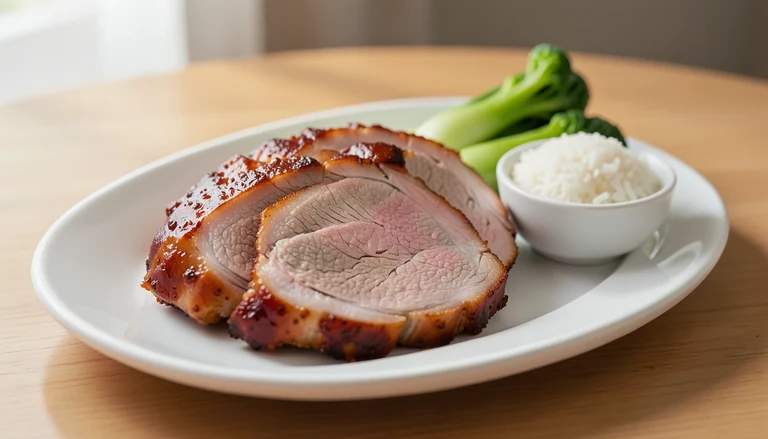
Choose glaze, crisp skin or a little of both
Char siu is Cantonese roast pork with a sweet-savory glaze; siu yuk is roast pork whose crisp skin is the main contrast with the meat underneath. In the pork-belly preparation commonly offered for siu yuk, you also get visible layers of meat and fat. Choose char siu for the glazed slices, siu yuk for skin and belly texture, or ask about a two-meat order to compare them.
Made With Lau names the dishes 叉燒, char siu, and 燒肉, siu yuk. These are Cantonese menu names, so keep them when ordering at a Cantonese roast-meat counter. English roast pork can be ambiguous: Hong's BBQ in Davie lists both roasted pork and crispy pork in its combinations, with 叉烧 and 烧肉 distinguishing them in the Chinese text.
Before picking a portion, decide whether you want a complete individual meal or meat to share. The same two preparations can appear in very different serving formats.
| Feature | Char siu | Siu yuk / crispy pork belly |
|---|---|---|
| Cut to clarify | Ask what cut this shop uses; shoulder is one chef-recipe example | Ask whether the serving is pork belly and how the pieces are cut |
| Skin | The glaze is the defining surface feature | Crisp skin is the feature to ask for |
| Surface and seasoning | Sweet-savory glazed roast pork | Roasted skin above seasoned meat and fat layers |
| Serving choice | Rice plate, noodle topping or separate meat order | Rice plate, noodle topping or separate meat order |
| Mixed-order question | Can char siu and crispy pork share one serving? | How much of each meat comes in that serving? |
Char siu: ask about the cut as well as the glaze
Daddy Lau's char siu at Made With Lau is a pork-shoulder example. Its marinade includes brown sugar, soy, oyster and hoisin sauces, wines, red fermented bean curd and five-spice powder; a honey mixture is used for basting. Those are the ingredients of that chef's version, not a required formula for every roast-meat shop.
Wei Guo's Red House Spice recipe also uses shoulder, cut into steaks, and explains why she selects it rather than a very lean fillet or fatty belly. This comparison is useful for an ordering question, not a universal ranking of cuts: 'Is your char siu leaner, more marbled or made from belly? Can I choose?'
If you prefer less fat, ask what options the shop actually has. If you want a more marbled slice, say so. A request can guide the server, but it does not guarantee that one counter offers multiple cuts or can pick through every slice. Color alone is not a dependable cut indicator.
Our char-siu glossary covers the basic term and other menu uses. Here, the practical choice is whether you want glazed slices rather than the skin-and-layer contrast of the other roast pork.
Siu yuk: the skin is only one part of the bite
Daddy Lau's siu yuk uses a slab of pork belly and treats the skin and meat sides separately. The meat receives seasoning and a ground-bean-sauce marinade; the skin preparation includes vinegar and salt before roasting. The resulting order is about the contrast among skin, fat and meat, rather than a char-siu glaze.
Ask whether the kitchen serves the belly with the skin attached and what portion format is available. If you are ordering specifically for crisp skin, tell the staff that before choosing a dish that surrounds the pork with sauce or broth. The belly cut also means that asking for crispy pork without the fatty layers may not be a request this kitchen can satisfy.
For takeout, ask how the shop packages its crispy pork and whether sauce comes separately. My suggestion is to choose a serving format that lets you decide how much sauce reaches the skin. This is a texture preference, not a reason to treat one preparation as nutritionally superior.
Rice plate and meat order are different decisions
Chung Wang BBQ's Katy ordering menu lists BBQ pork on rice and crispy pork belly on rice, alongside two- and three-meat combinations on rice. It also has separate roast-meat sections and noodle formats. That operator example shows why you should settle the serving format before comparing two items by their names alone.
For one person's meal, ask what the rice plate includes: the amount of meat, vegetables if any, sauce and whether you can choose two meats. For a shared table, ask about a separate meat order and its portion, then decide how much rice and vegetable accompaniment you need. Do not assume that a combination means a larger serving than a single-meat order.
A noodle topping is another option when the restaurant offers it. Confirm whether the pork is served on dry noodles or in soup and whether you can keep it separate. Choose that format because it fits the meal you want, not because BBQ pork automatically means a rice plate.
Build a useful two-meat order
Hong's BBQ offers pick-two and pick-three roast-meat combinations that include its char-siu and crispy-pork choices. A menu like that makes a mixed order possible, but you still need to confirm the selected meats, quantity and included accompaniments. A combination may refer to meat only rather than a complete rice meal.
For a first comparison, my suggestion is char siu and crispy pork with plain rice and a vegetable preparation you want. Ask staff to adjust the quantity to the appetites at your table. This lets you compare the two surfaces and cuts without building a meal around several more roast meats at once.
When seasoning ingredients matter, ask about both marinades and accompanying sauces. Neither a plain-looking interior nor crisp skin establishes what seasoned the meat. For a casual sweetness preference, ask which char-siu preparation is less sweet or whether extra sauce can stay separate; for a requirement, discuss the complete ingredients.
- Name the two meats: char siu / 叉燒 and siu yuk / 燒肉, or the kitchen's own labels for glazed and crispy pork.
- Choose the format: individual rice plate, noodle order or separate meat portion for sharing.
- Confirm the quantity of each meat, included accompaniments and whether sauces can come separately.
- Ask about the actual cut, skin and seasoning before finalizing any preferences or ingredient requirements.
Questions people ask
What is the difference between char siu and siu yuk?
Char siu emphasizes glazed roast pork; siu yuk emphasizes roast pork with crisp skin. For the belly version, expect layers of meat and fat. Ask which cut and serving format the restaurant offers.
Is char siu always made from pork belly?
No. Daddy Lau and Red House Spice both provide shoulder-based recipes. The name does not identify every shop's cut. Ask about leaner or more marbled options at the counter.
Can I order char siu and siu yuk together on rice?
Some shops offer mixed rice plates. Chung Wang BBQ lists two- and three-meat combinations on rice. Confirm whether your chosen restaurant allows these two meats together and what the serving includes.
Does roast pork on an English menu mean siu yuk?
It can be ambiguous. Hong's BBQ uses roasted pork and crispy pork as separate combination choices. Ask whether the item is glazed char siu or crisp-skinned pork rather than relying on roast pork alone.
Menu words in this guide
Last reviewed
Sources & further reading
Background and preparation references. Our descriptions are editorial summaries, not restaurant reviews.
- Made With Lau — Daddy Lau's char siu / 叉燒 (opens in a new tab) ↗
- Made With Lau — Daddy Lau's siu yuk / 燒肉 (opens in a new tab) ↗
- Red House Spice — Wei Guo's char siu and cut choice (opens in a new tab) ↗
- Chung Wang BBQ, Katy — Operator rice and noodle menu (opens in a new tab) ↗
- Hong's BBQ, Davie — Operator pick-two and pick-three roast-meat combinations (opens in a new tab) ↗