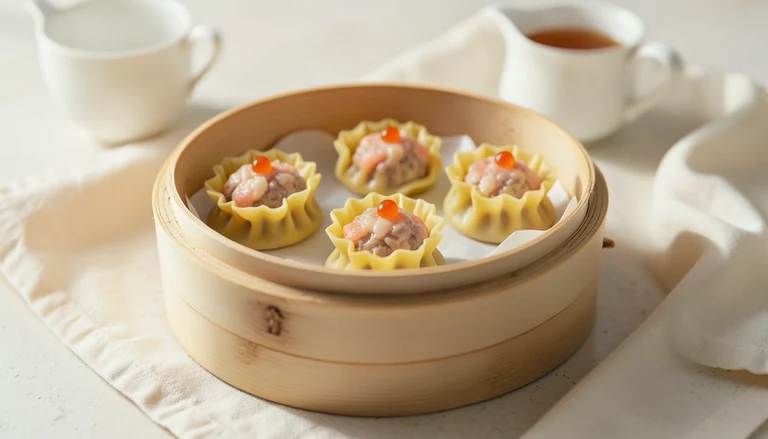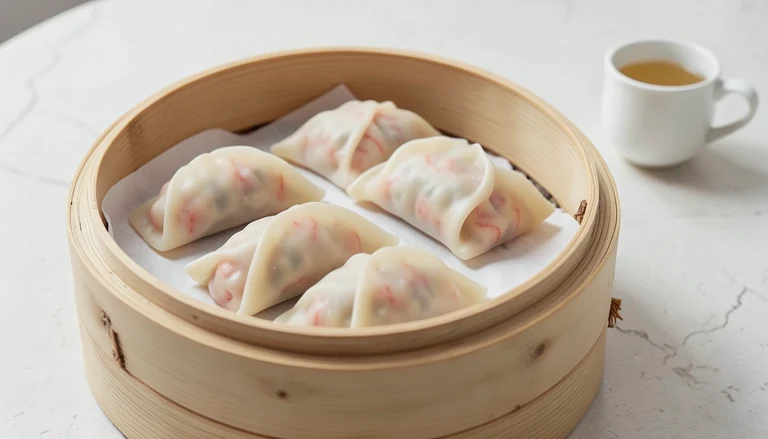
Look for the closed shrimp dumpling and the open-topped cup
Har gow is the translucent, closed shrimp dumpling; Cantonese siu mai is the open-topped dumpling commonly filled with pork and shrimp. If you want the shrimp filling and delicate starch wrapper to stand out, start with har gow. If you want a meatier mixed filling in a thin wrapper cup, start with siu mai. Ordering a basket of each is a useful direct comparison if the ingredients suit everyone.
The Hong Kong Tourism Board describes these Cantonese examples as shrimp-filled har gow and pork, shrimp and mushroom siu mai. This article compares that dim sum pair. It does not treat every dish called shumai, shaomai or siu mai across different regional menus as the same recipe.
You can point to the Chinese names on a menu as well as the English: har gow (蝦餃) and siu mai (燒賣). The spelling may appear as ha gow, shu mai or shumai. The filling description and shape matter more than selecting one English spelling as universally correct.
Use the two-dumpling identification chart
Use the wrapper and opening together. Color alone is a weaker clue because wrappers and garnishes vary. A translucent dumpling can also have a different filling, and an orange dot on top does not establish what the rest of the dumpling contains.
| Look for | Har gow | Cantonese siu mai |
|---|---|---|
| Shape | Closed dumpling with a pleated seam | Upright cup with the filling visible on top |
| Wrapper clue | Pale, translucent starch wrapper | Thin wrapper around the sides and base |
| Reference filling | Shrimp; recipe may add bamboo shoots | Pork and shrimp; recipe may add mushrooms |
| Texture to compare | Wrapper tenderness and shrimp texture | The mixed filling and thin wrapper |
| Ingredient question | Wheat starch, fat and sauce ingredients? | Pork, shrimp, wrapper and garnish ingredients? |
| Ordering question | How many pieces in this basket? | How many pieces in this basket? |
Har gow: the wrapper is part of the choice
The Woks of Life’s Judy Leung makes har gow dough with wheat starch and cornstarch or tapioca starch. Her shrimp filling includes bamboo shoots and seasonings; the dough includes lard or oil. That recipe gives a specific example of how the translucent wrapper differs from an ordinary flour dumpling wrapper. It is not a guarantee that another kitchen uses the same starches or fat.
Try a first piece with little or no dipping sauce if you want to compare wrapper and filling, then season the next piece to your preference. This is our tasting suggestion, not formal dim sum etiquette. The point is to notice the dumpling before chili or a large amount of soy sauce becomes the dominant flavor.
When choosing between baskets, ask whether the listed crystal dumpling is actually shrimp har gow. “Crystal” can be a wrapper description instead of a complete filling name. A menu picture helps with identification, but it cannot answer ingredient questions that the text leaves out.
Siu mai: identify the filling as well as the open top
Sarah Leung’s Cantonese siu mai recipe at The Woks of Life uses pork, shrimp and shiitake mushrooms in a thin wrapper. The recipe describes mixing the filling to a sticky paste-like texture and forming an open-topped pocket. That is why the mixed filling, rather than a sealed seam, becomes the most obvious feature when the basket arrives.
The Hong Kong Tourism Board notes that garnishes and premium additions vary, including fish eggs, carrot and more elaborate ingredients. A garnish is therefore not a dependable definition of the whole dumpling. Ask what is inside and on top when seafood, pork, egg or another ingredient matters to the order.
If someone expects shrimp-only dumplings, do not use siu mai as an automatic substitute for har gow. Conversely, someone who wants pork may prefer the siu mai reference version. The best choice follows the filling and texture that person wants, not which basket is called the most famous item.
Shumai and shaomai can describe other fillings
The Cantonese dim sum example is only part of the larger family of open-topped dumplings. Judy Leung also publishes a sticky-rice mushroom shumai with peas and a homemade flour wrapper. Dim Sum King’s checked Sunnyvale menu separately names its shrimp-and-pork siu mai and a vegetarian sticky-rice siu mai. Those examples make the distinction visible without requiring you to memorize a regional taxonomy.
At a Shanghainese restaurant or breakfast counter, ask what a shaomai contains instead of expecting the pork-and-shrimp basket described here. A sticky-rice filling changes the role of the order: you may want it as a more substantial starch-centered choice rather than as a small meat dumpling beside noodles.
The useful habit is to read the full name, not dismiss the different version as wrong. If a menu says mushroom, sticky rice, chicken or lamb siu mai, that qualifier is telling you something material. This comparison does not establish the origin of the whole dumpling family or rank one version above another.
Order enough pieces for the comparison you want
Basket size determines whether everyone gets to taste both. If a menu lists three pieces and there are four people, one basket is not a one-piece-each order. Ask the kitchen whether an additional piece can be ordered or whether you need another basket; do not assume that a dim sum basket always holds three or four.
Our editorial proposal for two diners is one basket of each to start, followed by a contrasting dish if the portions and appetite warrant it. For a group, count the people who want each filling before ordering. Someone avoiding pork might want only har gow, but that still requires a separate ingredient check for the complete preparation.
Choose a contrast for the next dish rather than treating two baskets as a whole-meal formula. A vegetable preparation, bun or rice-noodle roll can change the texture, but the kitchen’s portion advice should guide the number of dishes. The first-dim-sum guide covers broader meal planning; this page keeps the comparison on these two dumplings.
Compare price per piece on the same menu
Dim Sum King in Sunnyvale provides a clean like-for-like example. Its printed food-to-go PDF, fetched October 3, 2026, lists steamed dim sum at $6.15 for three pieces and includes both Shrimp Dumpling (Har Gow) and Shrimp & Pork Dumpling (Siu Mai). The dim sum panel is undated. On that printed menu, each works out to $2.05 per piece before any applicable additions or charges.
The equality applies to those two entries on that menu. It is not a national average or a claim about quality. These are printed-menu observations, not a quote for online checkout; confirm the current menu and ordering channel before using them to budget a meal.
| Item | Listed count | Listed basket price | Price ÷ pieces |
|---|---|---|---|
| Shrimp Dumpling (Har Gow) | 3 pieces | US$6.15 | US$2.05 |
| Shrimp & Pork Dumpling (Siu Mai) | 3 pieces | US$6.15 | US$2.05 |
Use counts and ingredients before declaring a winner
For another restaurant, divide the listed item price by its stated piece count, using the same branch, date and order channel. If the count is missing, ask instead of filling it in from a photograph or another restaurant. Piece price is one comparison, but differently sized dumplings or premium fillings may still make the orders unlike. Our dumpling price index keeps its own dated observations; this article’s fresh PDF check does not redate the whole dataset.
Neither har gow nor siu mai is an automatic dietary substitute. The named har gow recipe uses wheat starch and allows lard, while the named siu mai recipe includes pork, shrimp and sauces. Ask the restaurant about your exact requirement and how it handles preparation; this guide does not label either basket gluten-free, pork-free or allergy-safe.
The most useful comparison ends with a preference you can describe: the closed wrapper and shrimp-centered filling, or the open-topped mixed filling. Record the restaurant and its version alongside that preference. It will help you choose more accurately when the next menu offers a different spelling or a different siu mai filling.
- Identify the closed pleated wrapper versus the open-topped cup.
- Read the filling, wrapper and garnish descriptions.
- Count the pieces needed for the diners who want each item.
- Compare prices only within a clearly named branch, date and channel.
- Ask the restaurant to resolve any ingredient or dietary uncertainty.
Questions people ask
What is the difference between har gow and siu mai?
Har gow is a closed translucent shrimp dumpling. The Cantonese siu mai discussed here has an open top and commonly combines pork and shrimp in a thin wrapper. Read the menu for the restaurant’s actual ingredients.
Is shumai the same as siu mai?
Shumai and siu mai are English spellings used for related dumplings, but the filling can change across menus and regional preparations. Sticky-rice mushroom versions are a different order from the Cantonese pork-and-shrimp example.
Is har gow gluten-free or pork-free?
The name does not establish either. The Woks of Life’s recipe uses wheat starch and lists lard or oil in the dough. Ask the restaurant about the complete preparation and your exact requirement.
Which is cheaper, har gow or siu mai?
It depends on the menu and count. Dim Sum King Sunnyvale’s printed food-to-go PDF, fetched October 3, 2026, lists both at US$6.15 for three pieces, or US$2.05 each. Its dim sum panel is undated. That one comparison is not a general price rule.
Menu words in this guide
Last reviewed
Sources & further reading
Background and preparation references. Our descriptions are editorial summaries, not restaurant reviews.
- Hong Kong Tourism Board — Beginner’s Cantonese dim sum dishes (opens in a new tab) ↗
- The Woks of Life — Har gow (opens in a new tab) ↗
- The Woks of Life — Cantonese pork-and-shrimp siu mai (opens in a new tab) ↗
- The Woks of Life — Sticky rice mushroom shumai (opens in a new tab) ↗
- Dim Sum King Sunnyvale — Printed food-to-go PDF, undated dim sum panel, fetched October 3, 2026 (opens in a new tab) ↗