Choose a flavor before choosing a famous name
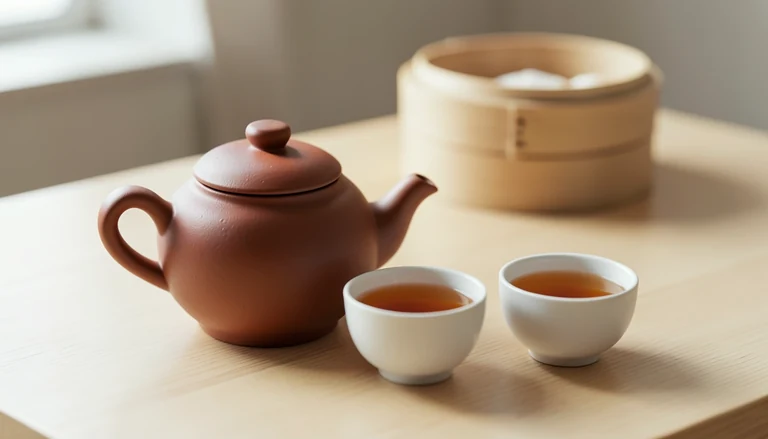
For a first dim sum tea order, ask for jasmine if you want a flower-scented tea, a ripe pu-erh if an earthy direction appeals, or Tie Guan Yin if you want to explore oolong. Chrysanthemum is another name you may see; ask whether it is brewed on its own or blended with tea. There is no required pot that makes your meal correct. Start with a flavor the table wants to drink.
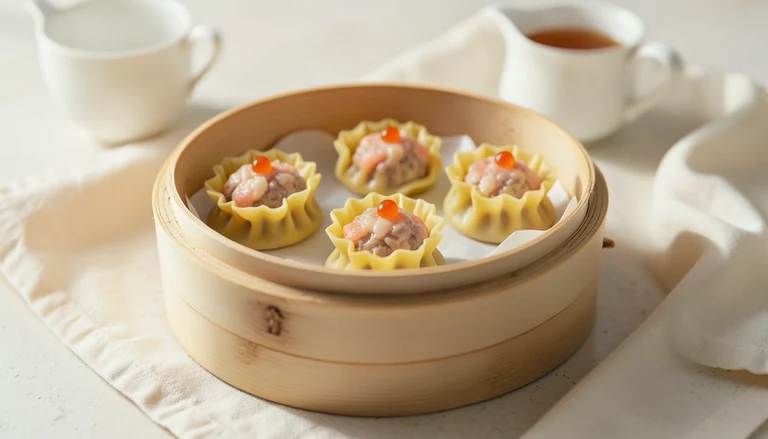
Tea belongs to the meal, rather than being an afterthought to the dumplings. The Hong Kong Tourism Board describes dim sum as a Cantonese meal of small sweet and savory dishes enjoyed with Chinese tea. That context explains why the tea question may arrive early, before you have finished reading the food menu.
The suggestions here are an editorial way to choose among a bounded selection. Producer descriptions help identify useful flavor directions; they do not predict the exact pot a restaurant will brew. A house blend, different leaf or longer steep can change the cup.
Use the tea menu as a short conversation
The Chinese Library's published dim sum menu lists pu-erh, jasmine, chrysanthemum and an osmanthus Tie Guan Yin alongside other teas. This is a real operator example, not a promise that every dim sum restaurant stocks the same list. Notice the extra word in osmanthus Tie Guan Yin: a floral addition can be part of the order, not simply a description of the underlying oolong.
Ask which teas are available, whether the table shares a pot, and how the charge works. If two people want different flavors, ask whether separate pots are practical. Choosing together now is easier than discovering that someone dislikes the shared tea after it arrives.
| Menu name | Useful flavor direction | Question to ask |
|---|---|---|
| Jasmine / 茉莉花茶 | Flower-scented tea; TeaVivre's green-tea example has a jasmine aroma | What tea is used as the base? |
| Pu-erh / 普洱 | TeaVivre's ripe example is earthy and mellow | Is this a ripe pu-erh or another version? |
| Tie Guan Yin / 鐵觀音 | Oolong; Ten Ren's named example has an orchid-like fragrance | Is yours floral, roasted, or blended with flowers? |
| Chrysanthemum / 菊花茶 | Ask about the flowers and any added tea or sweetener | Is it brewed alone or as a blend? |
Jasmine: choose it for the fragrance
Jasmine names the scenting direction, so ask what sits beneath it. TeaVivre's Jasmine Dragon Pearls product uses green tea and describes its cup as sweet with a jasmine fragrance. The maker explains that flowers are used during scenting and then removed. The tea therefore need not contain visible blossoms to have a floral aroma.
For an initial meal of steamed dumplings and rice rolls, jasmine is an editorial starting suggestion when the table enjoys flower-scented drinks. You are choosing an aroma, not asking for a sweetened beverage. If that distinction matters, check whether the restaurant adds sugar or serves a sweetened preparation.
A diner who dislikes perfumed drinks may prefer a different tea even if jasmine is the house default. Explain that preference in ordinary words: 'We would like something without a strong flower scent.' The server can match that request to the teas actually available.
Pu-erh: ask which direction the pot takes
The pu-erh name covers more than one product. TeaVivre's mini tuocha assortment includes a ripe Yunnan cube tea described as earthy and mellow with a dark red infusion. That is a useful reference for a ripe example; it is not a description of every tea bearing the pu-erh name.
If you want a tea to sit beside roast pork buns or a crisp fried dish, an earthy ripe pu-erh is an editorial option worth discussing. Say that you want the earthy style, then let the staff tell you whether their pot fits. Darker color alone cannot answer how it tastes.
You may see claims that a particular tea counteracts a rich meal. Choose this pot because the flavor interests you. This guide makes no claim that tea cancels oil, aids digestion or provides another health effect.
Tie Guan Yin: find out whether it is floral or roasted
Tie Guan Yin, also written Ti Kuan Yin, is an oolong order worth describing more precisely. Tea producer Ten Ren presents its Spring Ti Kuan Yin as an Anxi, Fujian oolong with an orchid-like fragrance and a sweet finish. That named example gives you a useful reference, while the restaurant's actual tea still needs its own description.
If you want to explore beyond jasmine, ask the server for a floral or roasted oolong according to your preference. The words are more useful than assuming that every restaurant's Tie Guan Yin will taste like a pot you remember elsewhere.
A floral version beside steamed dishes or a roasted version beside baked pastries are editorial comparisons to try, not rules that bind the entire table. One pot can accompany a varied order; you do not need to replace it every time a new basket arrives.
Chrysanthemum: ask about the complete blend
Chrysanthemum appears as a separate option on The Chinese Library's menu. That menu proves the option exists at this operator; it does not disclose enough to settle every question about the brew. Ask whether the kitchen uses flowers alone, adds tea leaves or supplies a sweetener.
Do not use a flower name as evidence of caffeine-free status. The useful question is about everything in the pot. If avoiding caffeine is essential, explain that requirement and ask the restaurant what it can confirm rather than relying on the English label or the pale color of the infusion.
For a mixed group, this is also a reason to discuss the tea before agreeing to share. A blend can sound familiar while containing a component that one diner did not intend to order.
Settle refills and charges at the start
Ask, 'How do we request more hot water, and is that included?' A restaurant may use a gesture, a staff refill or another service arrangement. Follow the system the staff explains. This article does not assume that moving a lid or following a ritual from another venue will always produce the intended result.
Tea charging also needs a direct check. The Chinese Library's menu specifies a tea selection for two people, illustrating why a listed amount is incomplete without its unit. Elsewhere, ask whether the charge is per person, per pot or part of a meal arrangement, and whether choosing another tea changes it.
If the pot becomes stronger than you enjoy, tell the server what you are noticing and ask how they prefer to adjust it. You do not need to diagnose the leaf or copy a producer's home brewing instructions at the table.
Make the next order more specific
Keep a useful note after the meal: flower-scented, earthy, roasted, or a flavor you want less of. If you can, record the actual menu name and whether it was a blend. That gives your next server something more actionable than 'the tea we had with dim sum.'
For a simple first request, say: 'We like jasmine fragrance; what jasmine tea do you serve, and how does the tea charge work?' If you want to explore, change one decision next time, such as trying the house oolong with similar dishes. The food guide can help build the meal; this guide gives the tea its own clear choice.
Questions people ask
What is a useful first tea to order with dim sum?
Jasmine is an option if you enjoy a flower-scented tea. Ask for ripe pu-erh if an earthy style appeals, or ask about the house Tie Guan Yin if you want oolong. Confirm the available tea and the table's preferences before choosing a shared pot.
Is chrysanthemum tea at a dim sum restaurant caffeine-free?
The name alone does not establish that. Ask whether the pot contains flowers alone or a blend with tea leaves, and explain any caffeine requirement directly to the restaurant.
Are tea refills free at dim sum?
Check the restaurant's arrangement. Ask whether hot-water refills are included, how to request them, and whether changing the tea means ordering another pot.
Does Tie Guan Yin always taste roasted?
Ten Ren describes its Spring Ti Kuan Yin in floral terms, with an orchid-like fragrance and a sweet finish. That producer example does not describe every restaurant pot. Ask which style the restaurant serves.
Menu words in this guide
Last reviewed
Sources & further reading
Background and preparation references. Our descriptions are editorial summaries, not restaurant reviews.
- Hong Kong Tourism Board — An introduction to dim sum (opens in a new tab) ↗
- The Chinese Library — Published dim sum and tea menu (opens in a new tab) ↗
- TeaVivre — Jasmine Dragon Pearls (opens in a new tab) ↗
- TeaVivre — Mini tuocha assortment: ripe Yunnan cube example (opens in a new tab) ↗
- Ten Ren — Spring Ti Kuan Yin (opens in a new tab) ↗