
Start with a Cantonese and Hong Kong-style counter
For a first bakery order, choose a pineapple bun for its sweet patterned topping, a cocktail bun for a coconut-filled reference point, or a baked char siu bun for roast pork inside soft bread. Add an egg tart if you want pastry and custard rather than another bread roll. Those choices reveal several counter categories without needing a box of everything.
This guide starts with Cantonese and Hong Kong-style buns, including versions made by diaspora bakeries. It does not describe every Chinese bakery. Taipan Bakery's New York menus, for example, place pineapple and roast pork buns beside Danish-style products, taro buns and other breads. Read the specific counter rather than expecting one fixed collection under the broad bakery label.
The most helpful first distinction is bread versus pastry, then topping versus filling. A round bun may be recognizable by its surface while concealing a different interior. The names below are menu aids, with attributed recipe and bakery examples; they are not complete ingredient declarations.
Read the counter by shape, surface and filling
The Chinese names for these buns are verified against bakery menus. The common Cantonese spellings bo lo bao, gai mei bao and char siu bao also appear in The Woks of Life's recipe descriptions. English spelling varies, so a Chinese label or a quick question can help when two similar buns sit beside each other.
The illustrations show example shapes and presentations. Fillings and preparations vary by bakery, so use the names to ask about the actual product rather than treating a cut-open illustration as ingredient verification.
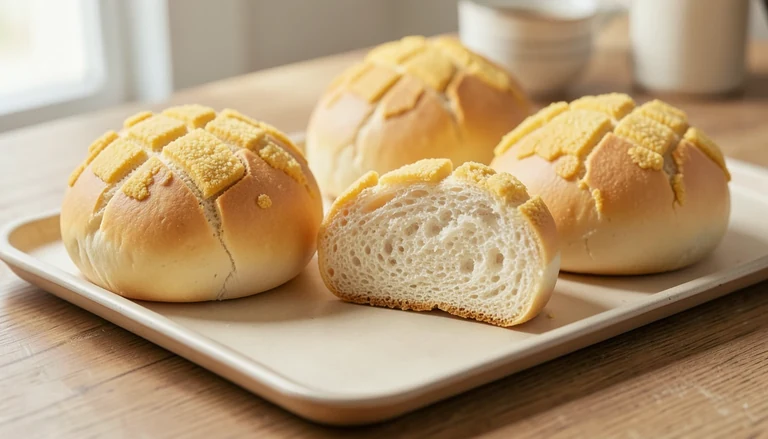
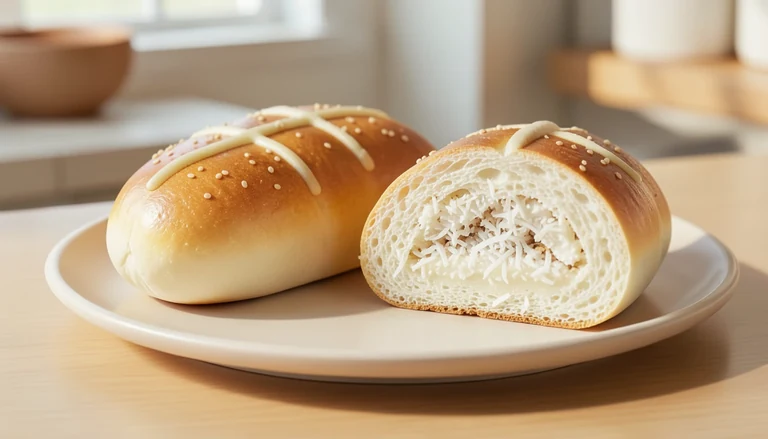
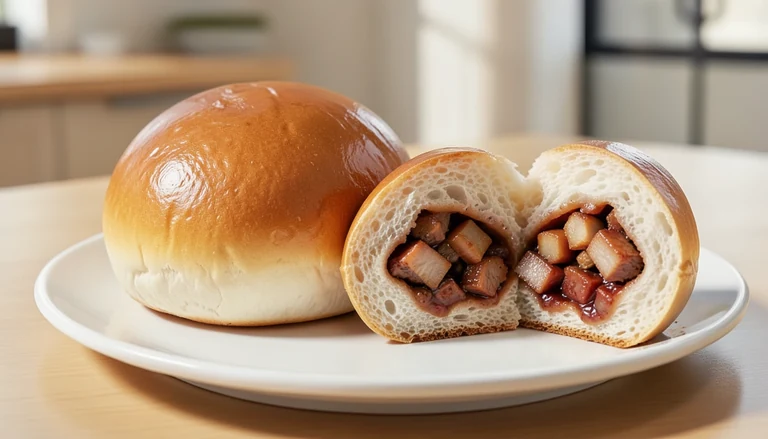
| Order name | What to look for | What the name leaves open |
|---|---|---|
| Pineapple bun — 菠蘿包 / bo lo bao | Soft bread with a golden, patterned cookie-like topping | Whether this version has a filling or added butter |
| Cocktail bun — 雞尾包 / gai mei bao | An often oblong bun; the recipe example has decorative stripes | The filling, which the coconut example does not make universal |
| Char siu bun — 叉燒包 / char siu bao | For the baked version, browned soft bread enclosing roast pork | Baked or steamed, and the kitchen's sauce |
| Red bean paste bun — 豆沙包 | A filled bread on Taipan's counter | The dough, filling texture and shape |
| Egg tart — 蛋撻 / dan taat | A small pastry shell with custard | Shortcrust or puff pastry, and the style of custard |
Pineapple buns: the topping gives the classic its name
A pineapple bun is not automatically filled with pineapple. The Woks of Life's bo lo bao recipe contains no pineapple and explains the name through the cracked, pineapple-like pattern of its topping. Polly Chan's Bakehouse describes its 菠蘿包 as a soft milk bun with a sweet cookie top, providing an actual bakery example of that structure.
Choose this bun when you want to compare the soft bread with its topping rather than focus on a filling. Ask whether the one in front of you is plain inside, filled or supplied with butter. The same bakery may offer more than one version; Polly Chan separately lists a roast pork pineapple bun.
That hybrid is a useful reminder that surface and filling are separate choices. A crackled top can sit above savory pork. Point to the bun you want and ask what is inside, especially when the counter label mentions only the familiar topping.
A Taiwanese pineapple cake is a different bakery choice
A Taiwanese pineapple cake is a different counter choice from the Hong Kong-style pineapple bun. SunnyHills describes its pineapple cakes as made in Taiwan and lists pineapple, butter and wheat flour among the product ingredients. That is a specific producer's filled pastry, while the classic pineapple bun described above is bread named for its patterned topping.
Ask whether a label refers to a bread bun or a filled pastry, and what the shop puts inside. The shared word 'pineapple' does not make the two products interchangeable. A bakery may draw from more than one tradition; use its full product name and ingredient description rather than treating this Cantonese and Hong Kong-style starting guide as the whole Chinese bakery counter.
Cocktail buns: ask for the filling, not a literal translation
Cocktail bun, or gai mei bao, is a name for a bread rather than a cocktail drink. Polly Chan pairs 雞尾包 with the English label Coconut Bun, while Taipan also lists coconut buns. Those labels help connect the menu terms without making every product identical.
The Woks of Life's reference recipe fills milk bread with a mixture containing desiccated coconut, butter, sugar and milk powder, then decorates the top with stripes and sesame seeds. This makes coconut a useful first expectation for that version. It does not make the name a guarantee of one recipe at every counter.
Choose it if you want the filling to be the main sweet element. Ask what this bakery puts inside and whether the 'coconut bun' beside it is the same item or a different preparation. A shop can offer both a filled cocktail bun and another coconut bread with a different arrangement.
Char siu buns: distinguish baked bread from steamed bao
Char siu bao identifies roast pork in a bun, but it does not settle the cooking method. The Woks of Life's baked version uses soft milk bread around a roast-pork filling. Polly Chan's menu also pairs 叉燒包 with a baked milk-bun description. A steamed char siu bun on a dim sum menu gives you a different exterior.
Ask for baked or steamed explicitly. If you want a browned bakery roll, saying only 'pork bao' may leave the staff with several possible items. If you want the fluffy steamed version, check whether the bakery makes it or whether you need the restaurant's dim sum menu.
This is a savory filling choice, but that does not imply an unsweetened bread or sauce. Ask the bakery to describe its preparation if you have a strong preference. For a first tasting comparison, choosing one sweet-topped bun and one baked pork bun is an editorial way to make the difference clear.
Look beyond those three buns without guessing from color
Taipan's English and Chinese bread menus include red bean paste buns, taro buns, hot dog buns and pork floss buns as well as the familiar starters. These are useful counter examples, not a ranked list or a claim that another bakery has them today. A pale or purple filling needs the label; color alone is an unreliable way to decide what a bun contains.
Ask whether the filling is smooth or textured, whether the bread has a topping and which pieces need refrigeration. 'Cream,' 'custard' and 'coconut' can appear in different English combinations, so ask the staff to distinguish similar items in their own display.
Other bakery traditions need their own names and evidence. A shop organized around a regional pastry, a steamed-bun range or a Taiwanese-style bread selection should be read through that specialty. The Hong Kong-style counter guide gives you a starting vocabulary, not a reason to rename every product you encounter.
Egg tarts belong to the pastry decision
An egg tart changes the texture of a bakery box: pastry around custard instead of a bread roll around filling. The Hong Kong Tourism Board describes both shortcrust and puff-pastry bases for Hong Kong egg tarts. Ask which crust the bakery uses before treating all yellow custard tarts as the same order.
Portuguese-style or Macao-style labels introduce another comparison, including a browned top and particular bakery recipes. That subject deserves its own guide. For the broader counter, the useful move is simply to decide whether you want bread, a filled pastry or a custard tart, then ask about the specific style.
Build a small box and ask the freshness questions
For an initial order, choose two different categories you actually want: a pineapple bun and baked pork bun, or a coconut-filled bun and an egg tart. Check the size and whether you plan to eat them now or carry them home. A larger assortment is useful only when you have people who want those extra pieces.
Ask which items were baked most recently, whether another batch is due and which are best eaten at their present temperature. For takeaway, ask the bakery how to store and reheat its products. The right answer can differ for bread, custard and cream-filled items, so do not use one reheating rule for the whole box.
Keep the full label of a favorite, including the filling or cooking method. 'Baked char siu bun' or 'plain pineapple bun without filling' gives the next counter a clearer request than a photo of a golden roll.
- Confirm the filling even when you recognize the topping.
- Say baked or steamed when ordering a pork bun.
- Ask about egg, dairy, wheat, sesame and other relevant ingredients directly when they matter.
- Get storage and reheating advice for the exact items you buy.
Questions people ask
Do pineapple buns contain pineapple?
The classic reference recipe here does not. The name refers to its patterned topping. Filled and hybrid versions exist, so ask what is inside the specific bun you choose.
What is inside a Chinese cocktail bun?
The Woks of Life's gai mei bao recipe uses a coconut mixture with butter, sugar and milk powder, and Polly Chan's bakery describes a creamy coconut filling. Treat those as examples and confirm the bakery's own filling.
Are char siu buns baked or steamed?
Both forms exist. A baked bakery version has browned bread around roast pork; a steamed dim sum version has a different exterior. Ask for the cooking method you want.
What should I order on a first visit to a Chinese bakery?
At a Cantonese or Hong Kong-style counter, choose contrasting categories: a sweet-topped pineapple bun and a baked pork bun, or a coconut-filled bun and an egg tart. Check the size, filling and freshness with the staff.
Menu words in this guide
Last reviewed
Sources & further reading
Background and preparation references. Our descriptions are editorial summaries, not restaurant reviews.
- Polly Chan's Bakehouse — Hong Kong bun names and filling descriptions (opens in a new tab) ↗
- Taipan Bakery — English bread and bun menu (opens in a new tab) ↗
- Taipan Bakery — Chinese bread and bun menu (opens in a new tab) ↗
- The Woks of Life — Pineapple buns (opens in a new tab) ↗
- The Woks of Life — Coconut cocktail buns (opens in a new tab) ↗
- The Woks of Life — Baked char siu bao (opens in a new tab) ↗
- Hong Kong Tourism Board — Street food and egg tart crusts (opens in a new tab) ↗
- SunnyHills — About the producer and Taiwanese pineapple cakes (opens in a new tab) ↗
- SunnyHills — Pineapple cake product and ingredients (opens in a new tab) ↗