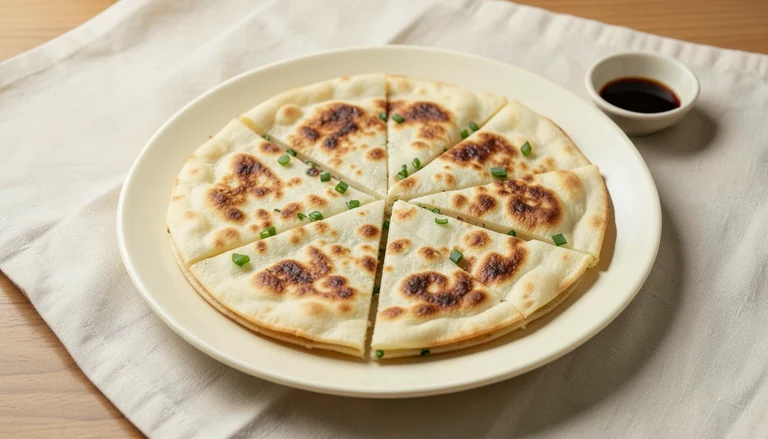
Choose a breakfast format, then look for its local version
Start with youtiao and soy milk if you want crisp fried dough beside a drink or bowl, jianbing if you want a folded savory crepe, or congee and rice noodle rolls if you want to sit down with softer textures. These are useful choices on different morning menus. They do not combine into one breakfast eaten everywhere in China.
Place names matter. Shanghai's local breakfast set differs from Tianjin's jianbing guozi, while Cantonese rice rolls and congee introduce another direction. Even two shops in the same city may offer different fillings, accompaniments and serving formats. Use the regional examples below as a way into a menu, not as a national checklist.
The first practical question is whether you want food to carry or a meal that needs a bowl, spoon and a little time. Then ask whether you want sweet, savory or a combination. That narrows the menu without making a familiar ingredient do more work than it can: rice can be a sticky roll or porridge, and soy milk can be a drink or a savory bowl.
Use this small regional breakfast map
This table labels the examples that the linked sources actually describe. Foods travel beyond these places, so a regional label does not imply exclusive ownership. It tells you which preparation is being discussed and what to ask when an English menu uses a shorter name.
| Food and example | Preparation and texture | Sweet or savory decision |
|---|---|---|
| Youtiao / 油条 — Shanghai example | Airy deep-fried dough sticks; served alone or inside other foods | Check the accompaniment rather than assuming a sweet doughnut |
| Doujiang / 豆浆 — Shanghai example | Soy milk served plain, sweet or as a savory bowl | Ask which of the three versions you are ordering |
| Cifantuan / 粢饭团 — Shanghai example | Glutinous rice wrapped around youtiao with variable additions | Ask about sugar, pickles, pork floss and the shop's other fillings |
| Jianbing guozi — Tianjin example | Thin pancake wrapped around fried dough | Confirm the sauces and crisp filling |
| Congee — Cantonese recipe example | Rice cooked into a soft porridge; the Lau family example adds chicken | Choose the topping and stock, not just the porridge name |
| Cheung fun / 肠粉 — Canton and Hong Kong examples | Steamed rice noodle sheets rolled with variable fillings | Savory fillings may come with a sweet-savory sauce |
Shanghai: understand how the pieces fit together
The Shanghai government's breakfast guide groups dabing, youtiao, cifantuan and doujiang as the Four Heavenly Kings. Dabing is baked wheat flatbread, while cifantuan is a glutinous rice roll. Both can enclose youtiao, so the fried dough may be visible on a plate or hidden inside a portable breakfast.
Decide whether you want to taste the dough stick separately or as part of a layered bite. Ordering youtiao on its own lets you focus on the crisp exterior and airy middle; choosing a rice roll puts that crisp element beside sticky rice and the shop's filling. Those are different texture decisions even when the same component appears in both.
Ask what the roll contains before ordering. The source records variable additions, not one mandatory filling. A photo of the outside tells you little about whether your version has a sweet direction, preserved vegetables or meat.
Soy milk: sweet, plain and savory are separate orders
Doujiang does not automatically mean a sweet drink. Shanghai's official guide explicitly includes sweet, plain and savory versions, with the savory example carrying toppings that can include dried shrimp. When a menu lists 'soy milk,' ask which preparation it means.
For a portable order, ask whether the soy milk comes in a cup and whether sweetness can be chosen. For a savory version, find out whether it is served as a bowl and what toppings are included. A spoonful with toppings has a different role from a drink beside a flatbread.
If you avoid seafood or meat, explain that before choosing a savory bowl or rice roll. The word soy identifies the base ingredient; it does not disclose the finished order. For a casual preference, ask the shop to describe the available versions and choose one that sounds appealing.
Tianjin and other jianbing menus: check the crisp center
Exploring Tianjin describes jianbing guozi as a thin pancake folded around deep-fried dough sticks. Wei Guo's Red House Spice jianbing recipe provides a different concrete reference: a grain-based crepe with egg, crisp fried crackers, herbs and sauces. The contrast is useful evidence that the filling needs a question; it is not a reason to insist that every vendor uses one format.
Ask whether the crisp center is a dough stick or a thin cracker, and whether chili sauce is included. If heat matters to your order, make that request before the cook spreads the sauces and folds the crepe. A sauce already inside is harder to change at the table.
Choose jianbing when you want a hand-held breakfast with a crisp element inside a flexible wrapper. Check the size before adding another starch. Its convenience does not tell you the portion, the flour mixture or the complete filling.
Cantonese congee: choose what goes into the bowl
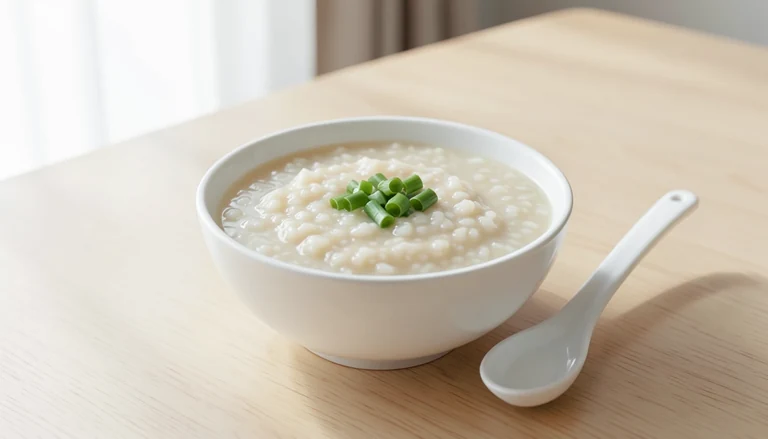
Congee is rice porridge, and its topping is a separate choice. Made With Lau's Cantonese family recipe cooks rice into a soft consistency and adds marinated chicken, with ginger and scallions among the finishing ingredients. That is an attributed chicken example, not a recipe assumed for every bowl called congee.
Ask what liquid the kitchen uses, which toppings cook in the porridge and what arrives separately. If you want a simple bowl, clarify whether 'plain' means a rice-only preparation or the restaurant's usual base without a topping. That distinction matters more than how pale the bowl looks.
Congee is an editorial choice for a breakfast organized around a spoon and softer texture. If you want contrast, ask whether youtiao or another crisp accompaniment is available. Order enough to suit your appetite; a large shared bowl and an individual portion can carry the same English name.
Rice noodle rolls are different from sticky rice rolls
Cheung fun are steamed rice noodle sheets presented as rolls. Red House Spice describes them at Canton and Hong Kong street cafes, often alongside congee, as well as on dim sum menus. They have a soft, slippery texture and can enclose different fillings. They are a different order from Shanghai's glutinous-rice cifantuan.
English 'rice roll' can therefore leave an important ambiguity. Ask, 'Is this a steamed rice noodle sheet or a sticky rice roll, and what is inside?' Then check the sauce. A savory filling and a sweeter sauce can coexist; choosing savory does not mean that every component is unsweetened.
If you want to compare the two, keep their formats in mind: cifantuan encloses its filling in grains of sticky rice; cheung fun wraps it in a steamed noodle sheet. That distinction is more useful for ordering than treating both as one category because their English names overlap.
Ask what the morning menu actually offers
A shop's regional emphasis can be more useful than the broad 'Chinese breakfast' label. Ask which items are made to order, which fillings are available and whether the breakfast menu is still being served. This guide does not provide opening hours or promise that a particular dish is available all day.
For a first order, choose one main format and add a drink or contrasting accompaniment if you want it. For the next visit, change the format: a Tianjin-style wrap after a Shanghai rice roll, or a Cantonese congee-and-noodle-roll breakfast after a hand-held meal. Bakery buns and egg tarts make another useful morning direction, covered in the separate counter guide.
- For crisp dough and a drink: ask about youtiao and the plain or sweet soy milk option.
- For a portable rice breakfast: check the cifantuan filling and the size.
- For a folded crepe: confirm the jianbing's crisp center and sauces.
- For a sit-down bowl: choose a congee topping, then ask about rice noodle rolls if you want another texture.
Questions people ask
What are some Chinese breakfast foods to try first?
Choose a format: youtiao with soy milk, a filled jianbing, a Shanghai-style sticky rice roll, or congee and rice noodle rolls. The shop's region, fillings and serving style matter; these do not describe one breakfast eaten everywhere.
Is Chinese breakfast soy milk always sweet?
No. Shanghai's official breakfast guide describes plain, sweet and savory doujiang. Ask which version the shop serves and what toppings go into a savory bowl.
Is a rice roll the same as cheung fun?
Not necessarily. Cheung fun uses steamed rice noodle sheets. Shanghai cifantuan uses glutinous rice around a filling. Ask which format the menu means when it says only 'rice roll.'
Does jianbing always contain youtiao?
Do not assume that. The Tianjin source describes fried dough sticks, while the Red House Spice recipe uses crisp fried crackers. Confirm the crisp center and sauces before ordering.
Menu words in this guide
Last reviewed
Sources & further reading
Background and preparation references. Our descriptions are editorial summaries, not restaurant reviews.
- Shanghai government — Classic local breakfast staples (opens in a new tab) ↗
- Exploring Tianjin — Breakfast in Tianjin (opens in a new tab) ↗
- Red House Spice — Jianbing recipe and filling example (opens in a new tab) ↗
- Made With Lau — Cantonese chicken congee (opens in a new tab) ↗
- Red House Spice — Cheung fun rice noodle rolls (opens in a new tab) ↗