The tingle and the burn are different ingredients
Mala (麻辣) is a seasoning made from Sichuan peppercorn and chili. The first character names a numb tingle and the second names chili heat. Wikipedia’s mala page calls that combination characteristic of Sichuan cooking, and of Chongqing cooking in particular. (Wikipedia — Mala (seasoning) (opens in a new tab), read )
China Sichuan Food’s guide treats mala as one pattern, not the whole cuisine. It says older Sichuan cooking used Sichuan pepper and ordinary aromatics, and that chili peppers arrived later, in the late Ming and Qing, when cooks started folding them into local spices. (China Sichuan Food — Sichuan food guide (opens in a new tab), read )
Wikipedia’s Sichuan cuisine article describes the pepper as fragrant and citrus-like, and as the source of the numbing sensation marked with 麻. It calls broad-bean chili paste essential in mapo tofu and in twice-cooked pork. (Wikipedia — Sichuan cuisine (opens in a new tab), read )
Dry-frying is a technique, separate from how much chili goes in. China Sichuan Food’s guide describes it as frying the ingredient until it is dry and slightly crisp, then adding aromatics, and gives dry-fried green beans (干煸四季豆) as the example. (China Sichuan Food — Sichuan food guide (opens in a new tab), read ) “Dry” on that page is about driving off moisture. It is not a claim that the pan was oil-free.
One paste, several named flavors
Pixian douban comes from Pidu District, formerly Pixian County, in Chengdu. The Mission of the PRC to the EU describes a paste of red chili, broad beans, wheat flour and salt, salted, started with a fermentation culture, then sun-dried. That page calls the paste the soul of Sichuan cuisine, says the traditional technique is on China’s national intangible-cultural-heritage list, and names the flavor patterns it is used to build: salty-savory, homestyle, mala, scorched chili, fish-fragrant, Sichuan-pepper and hot-and-sour. Mapo tofu, kung pao chicken and twice-cooked pork are among the dishes it lists. (Mission of the PRC to the EU — Pixian Douban (opens in a new tab), read )
China Sichuan Food’s guide separates those patterns in practice. Fish-fragrant (鱼香, yuxiang) is a sauce of chili, garlic, ginger and scallion. The guide does not treat the name as proof that the dish contains fish. Scorched-chili flavor comes from frying dried chilies until they darken, and the guide calls kung pao a subtype of that flavor. A third pattern, 椒麻, is Sichuan pepper with scallion and sesame oil. (China Sichuan Food — Sichuan food guide (opens in a new tab), read )
The menu words for those patterns are mala, doubanjiang, Sichuan peppercorn and yuxiang. Each entry stays with what its own sources support.
A short history, with the disagreements left visible
UNESCO’s Creative Cities page calls Chengdu the cradle and centre of Sichuan cuisine. It names four reference cuisines of China: Sichuan, Guangdong, Shandong, and the cooking of the Yangtze and Huaihe rivers. (UNESCO Creative Cities — Chengdu (opens in a new tab), read )
Wikipedia places the cuisine in Sichuan and in neighboring Chongqing, which was part of Sichuan until 1997, and says the cooking varies from place to place inside that area. It dates wide use of chili in Sichuan cooking to the Kangxi reign and calls that the break between older Sichuan cooking and the modern style. (Wikipedia — Sichuan cuisine (opens in a new tab), read ) China Sichuan Food’s guide puts the same turn in the late Ming and Qing, when chili was imported. (China Sichuan Food — Sichuan food guide (opens in a new tab), read )
School names do not line up. China Sichuan Food’s guide divides the cooking into three subtypes: a Rong school (upper river), a Yu school (lower river) and a salt gang. (China Sichuan Food — Sichuan food guide (opens in a new tab), read ) Wikipedia’s article lists four: an upper-river style of Chengdu and Leshan, a small-river style around Zigong, Yibin, Luzhou and Neijiang, a lower-river style of Chongqing and Dazhou, and a Buddhist vegetarian style. (Wikipedia — Sichuan cuisine (opens in a new tab), read ) The two lists are not the same map, so this page does not pick one as complete.
On the paste itself, the Mission of the PRC to the EU says historical records place the start of Pixian douban with immigrants to Sichuan in the late Ming and early Qing, and describes a later change that added wheat flour to the ferment. (Mission of the PRC to the EU — Pixian Douban (opens in a new tab), read ) This page does not add a single founding year on top of that account.
How Szechuan reads on a US menu
Wikipedia records Szechwan and Szechuan as English spellings of Sichuan, and says milder versions of Sichuan dishes remain a staple of American Chinese cuisine. (Wikipedia — Sichuan cuisine (opens in a new tab), read ) Its American Chinese cuisine article says some North American versions of kung pao chicken add zucchini and bell peppers alongside peanuts, scallions and Sichuan pepper. (Wikipedia — American Chinese cuisine (opens in a new tab), read )
Those two statements are menu clues, not a count of restaurants. A line that only says “Szechuan” next to a mild vegetable stir-fry matches the milder pattern Wikipedia describes. Names such as mapo tofu, dan dan noodles and kung pao chicken point at the preparations in the table. Ask whether the kitchen uses Sichuan pepper as well as chili. The pepper is a different ingredient from the chili, which is the distinction the mala page is about. (Wikipedia — Mala (seasoning) (opens in a new tab), read )
For a first order built around those questions, use the Sichuan ordering guide. Hunan versus Sichuan is the comparison when both heat styles are on the same menu, and suan cai yu versus shui zhu yu separates two Sichuan fish preparations. The hot pot guide covers a mala broth as a meal rather than a single plate.
Signature dishes
| Dish | Characters and romanization | What it is | Heat |
|---|---|---|---|
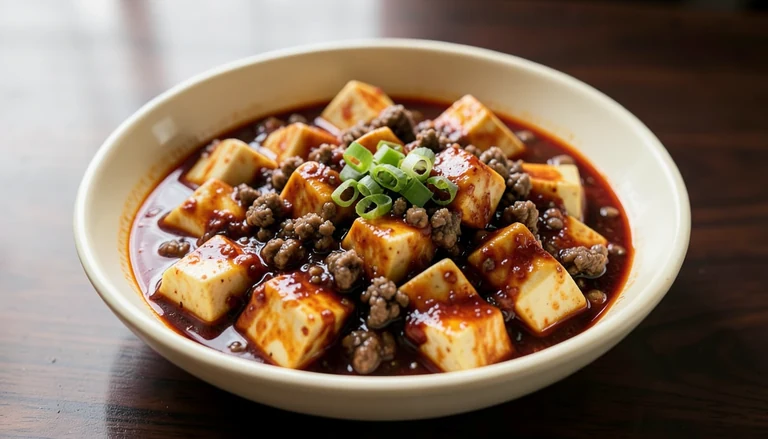
| Mapo tofu | 麻婆豆腐 · Má pó dòu fu | Soft tofu in a savory sauce with chili bean paste and Sichuan pepper. | Hot |
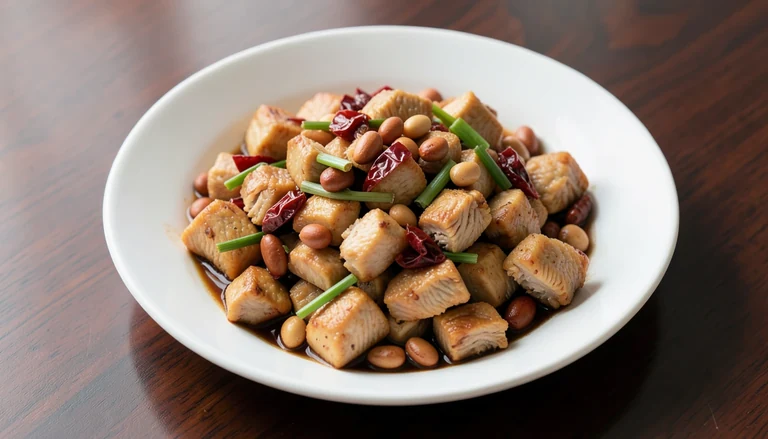
| Kung pao chicken | 宫保鸡丁 · Gōng bǎo jī dīng | Diced chicken stir-fried with peanuts and dried chilies. | Medium |
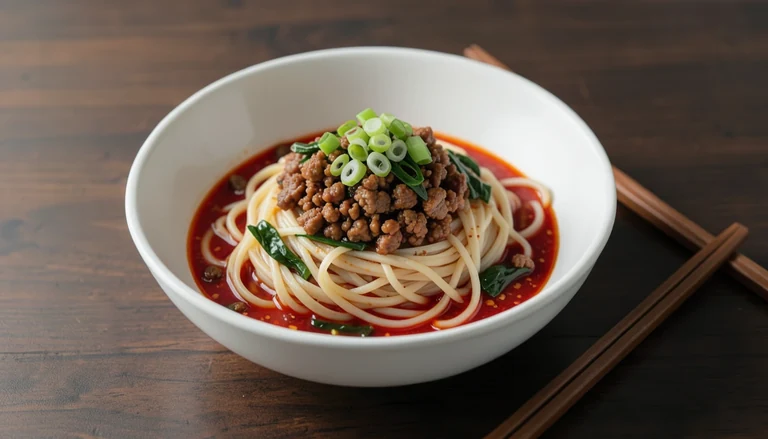
| Dan dan noodles | 担担面 · Dàn dàn miàn | Wheat noodles in a savory, spicy sauce with a minced-pork topping. | Hot |
| Twice-cooked pork | 回锅肉 · Huí guō ròu | Pork boiled or steamed, then sliced and stir-fried. | Varies |
| Fish-fragrant eggplant | 鱼香茄子 · Yú xiāng qiézi | Eggplant in a garlic-chili sauce. The name does not mean the dish contains fish. | Varies |
Keep reading
Questions people ask
What does mala mean?
Mala (麻辣) joins a numb tingle from Sichuan pepper with chili heat. Wikipedia’s mala page describes that seasoning as characteristic of Sichuan cooking, especially in Chongqing. (Wikipedia — Mala (seasoning) (opens in a new tab), read ) A dish can be very hot and still fail to be mala if the pepper is missing.
Is every Sichuan dish spicy?
Wikipedia says most Sichuan dishes are spicy, and that a typical meal still includes dishes that are not, so the palate can cool. (Wikipedia — Sichuan cuisine (opens in a new tab), read ) China Sichuan Food’s guide also separates a Sichuan-pepper-and-scallion pattern from the chili-led ones. (China Sichuan Food — Sichuan food guide (opens in a new tab), read ) The region name does not settle the heat of one plate.
What is Pixian douban?
It is a fermented paste of red chili, broad beans, wheat flour and salt from Pidu District in Chengdu. The Mission of the PRC to the EU says the traditional technique is on China’s national intangible-cultural-heritage list, and it calls the paste the soul of Sichuan cuisine. (Mission of the PRC to the EU — Pixian Douban (opens in a new tab), read )
Why do US menus say Szechuan?
Szechuan and Szechwan are older English spellings. Wikipedia’s Sichuan cuisine article records both, and says milder versions of these dishes remain a staple of American Chinese cuisine. (Wikipedia — Sichuan cuisine (opens in a new tab), read ) The spelling by itself does not tell you whether the kitchen uses Sichuan pepper.
What is dry-frying?
China Sichuan Food’s guide describes dry-frying as cooking the ingredient until it is dry and slightly crisp, then adding aromatics. Dry-fried green beans are the example on that page. (China Sichuan Food — Sichuan food guide (opens in a new tab), read ) The word describes the technique. It does not mean the cook used no oil.