Kung pao chicken
宫保鸡丁
Gōng bǎo jī dīng
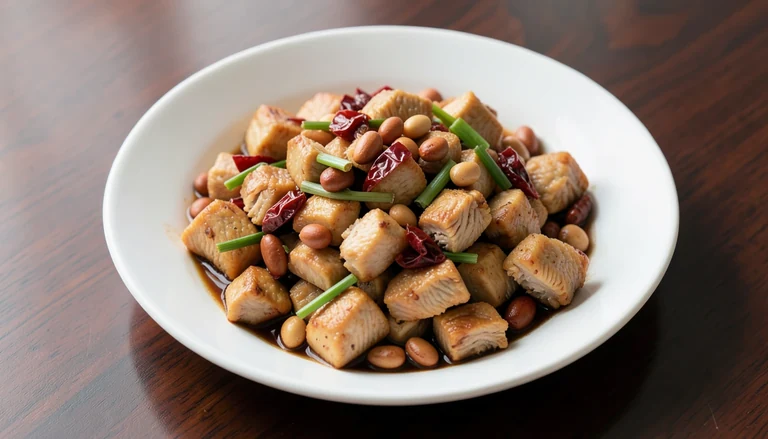
Bite-sized chicken, peanuts and dried chilies in a bright, balanced stir-fry.
| Fact | Detail |
|---|---|
| Heat | Medium |
| Main protein | Chicken |
| Region | Sichuan |
| Common menu names | Kung pao chicken, gong bao |
Gong bao ji ding, in characters and in English
Kung pao chicken is 宫保鸡丁, Gōng bǎo jī dīng on this site. Wikipedia records the traditional characters 宮保雞丁, the simplified characters 宫保鸡丁, and the pinyin Gōngbǎo jīdīng, along with the English spellings Gong Bao and Kung Po. The literal reading it gives is Palace Guardian chicken cubes. (Wikipedia — Kung Pao chicken (opens in a new tab), read )
That page places the stir-fry in Sichuan, dates it to the mid-to-late 19th century, and lists cubed boneless chicken, chili peppers and peanuts as the main ingredients. It also says the dish uses vegetables and Sichuan peppercorns, and that the cooking spread across China into plates that are less spicy than the Sichuan one. (Wikipedia — Kung Pao chicken (opens in a new tab), read ) China Sichuan Food describes the same idea as chicken cubes, dried chili and crispy peanuts, with a taste that moves through sweet, sour and spicy. (China Sichuan Food — Kung pao chicken (opens in a new tab), read )
Marinade, a bowl of sauce, then the wok
The two recipe pages this site uses build the dish in the same order. The chicken is coated first. A sauce is mixed in a bowl. Then the wok work is fast.
China Sichuan Food prefers boneless thigh. It marinates the cubes with salt, Shaoxing wine, starch and white pepper, then adds a little oil so they do not stick. The page calls that velveting: a coating that keeps the meat from drying out. The bowl sauce in that recipe is light soy, dark soy, vinegar, sugar, cornstarch, water, salt and white pepper. (China Sichuan Food — Kung pao chicken (opens in a new tab), read ) The Woks of Life uses the same coating idea on breast or thigh, with oil, cornstarch, Shaoxing wine, salt and white pepper, and a bowl sauce of light soy, dark soy, rice wine vinegar, sugar, water and cornstarch. (The Woks of Life — Kung pao chicken (opens in a new tab), read )
In the wok, China Sichuan Food fries the marinated chicken until the color changes and sets it aside. Sichuan peppercorns and dried chilies go into the oil next, then garlic, ginger and scallion. The chicken comes back, the bowl sauce goes over it, and fried peanuts plus more scallion finish the plate. The page says the peppercorns should be fried slowly, because over-fried peppercorns turn bitter. (China Sichuan Food — Kung pao chicken (opens in a new tab), read ) The Woks of Life sequence is close: sear the chicken, cook garlic, ginger, dried chilies, Sichuan peppercorn powder and the white part of the scallion, return the chicken, add the stirred sauce, then the peanuts. It toasts raw peanuts in a little oil until they crunch as they cool, and says already-roasted peanuts can stand in. (The Woks of Life — Kung pao chicken (opens in a new tab), read )
China Sichuan Food names the taste that follows the first burn: sour and sweet, which it calls lichee flavor (荔枝) in Sichuan cooking. (China Sichuan Food — Kung pao chicken (opens in a new tab), read ) Wikipedia says the dish does not belong to the mala flavor profile, the numbing-spicy pattern, even though a small amount of toasted Sichuan pepper is used to balance the chilies. (Wikipedia — Kung Pao chicken (opens in a new tab), read ) Pepper and chili are two ingredients. A menu that only says spicy has not told you whether the pepper is in the wok.
One official, and several plates that share his title
Wikipedia says the name is believed to come from Ding Baozhen (1820–1886), a late Qing official and governor of Sichuan. His title, Taizi Shaobao, is one of the gongbao. The article derives the dish name from that title and treats 丁 as a pun on the surname Ding and on a small cube. It also says the origins are uncertain. (Wikipedia — Kung Pao chicken (opens in a new tab), read )
China Sichuan Food tells a more specific kitchen story: Ding liked stir-fried diced chicken, served it to guests while he governed Sichuan, and added dried chilies because people in Sichuan like heat. The title it cites is the same Taizi Shaobao, which it glosses as protector of the crown prince. (China Sichuan Food — Kung pao chicken (opens in a new tab), read ) The two pages agree on the person and the title. They do not agree on how much of the story can be told in detail, so both stay.
The plates diverge after that. Wikipedia describes a Guizhou variant that fries a large quantity of ciba fermented chili paste until the oil is stained, then stir-fries larger, skin-on cubes with garlic, ginger and green onion. It says some literature lists Guizhou as the place the dish began. (Wikipedia — Kung Pao chicken (opens in a new tab), read ) Made With Lau’s note on that Guizhou plate adds that it does not use peanuts. (Made With Lau — Kung pao chicken (opens in a new tab), read )
China Sichuan Food separates three plates: a Sichuan version, a northern Chinese version that adds cucumber or other vegetables, and a westernized version that uses fresh peppers. (China Sichuan Food — Kung pao chicken (opens in a new tab), read ) Wikipedia’s description of versions commonly found in the West is more specific about the sauce: diced marinated chicken stir-fried with orange or orange juice, ginger, garlic, broth, sugar, oil, cornstarch, salt and pepper, often with onion, bell pepper or carrot, and often finished with roasted peanuts. The same paragraph notes pork, duck, fish, shrimp and tofu cooked under the English name. (Wikipedia — Kung Pao chicken (opens in a new tab), read )
Made With Lau’s recipe is the vegetable-heavy restaurant plate: chicken, fried peanuts, broccoli stems, celery, carrot, red and green bell pepper, shallot, garlic and dried chili. Its sauce uses oyster sauce, soy, ground bean sauce and chili sauce rather than the vinegar-sugar bowl sauce above. The page says a spicier peppercorn version comes from Sichuan, and that the sweeter, milder plate is what Cantonese immigrant kitchens adapted to American produce. (Made With Lau — Kung pao chicken (opens in a new tab), read )
What a US menu line does not settle
Wikipedia’s American Chinese cuisine page says kung pao chicken is served with peanuts, scallions and Sichuan peppers, and that some North American versions add zucchini and bell peppers. (Wikipedia — American Chinese cuisine (opens in a new tab), read ) That sits next to the bell peppers in Made With Lau’s recipe and the fresh-pepper plate China Sichuan Food describes. It does not say every kitchen does this. (Made With Lau — Kung pao chicken (opens in a new tab), read ) (China Sichuan Food — Kung pao chicken (opens in a new tab), read )
Kung Pao, Gong Bao and Kung Po are transcriptions, not three recipes. Wikipedia records all three. (Wikipedia — Kung Pao chicken (opens in a new tab), read ) The useful questions are whether Sichuan pepper is in the dish as well as chili, whether peanuts are in it, and whether the plate is the drier stir-fry or the one loaded with crunchy vegetables. Made With Lau says the nuts can be omitted and that cashews or almonds sometimes replace them. (Made With Lau — Kung pao chicken (opens in a new tab), read ) The Woks of Life points readers with a peanut allergy toward a different recipe rather than treating this one as nut-free. (The Woks of Life — Kung pao chicken (opens in a new tab), read )
The dried chilies in the China Sichuan Food and Woks of Life recipes season the oil. They are not a requirement to eat. (China Sichuan Food — Kung pao chicken (opens in a new tab), read ) (The Woks of Life — Kung pao chicken (opens in a new tab), read ) For the fried, sweet-glazed chicken that shares menu space with this stir-fry, read kung pao versus General Tso’s chicken. The regional context is Sichuan cooking, and the Sichuan ordering guide puts the plate in a whole meal. The San Francisco and Los Angeles guides already include restaurants whose checked menus print Kung Pao Chicken. Those lines are names on a menu, not a judgment of the cooking.
Regional versions
- Sichuan stir-fry. Cubed chicken, dried chilies, peanuts and a small amount of Sichuan pepper. Wikipedia says this plate is not the mala flavor profile, even though the pepper is there. (Wikipedia — Kung Pao chicken (opens in a new tab), read ) China Sichuan Food’s sauce is soy, vinegar, sugar and starch, mixed in a bowl before the wok work. (China Sichuan Food — Kung pao chicken (opens in a new tab), read )
- Guizhou ciba chili. Wikipedia describes larger, skin-on chicken cubes stir-fried after a paste of ciba fermented chili (糍粑辣椒) stains the oil, with garlic, ginger and green onion. It also says some literature lists Guizhou as the origin. (Wikipedia — Kung Pao chicken (opens in a new tab), read ) Made With Lau’s account of that Guizhou plate leaves the peanuts out. (Made With Lau — Kung pao chicken (opens in a new tab), read )
- Northern plate with vegetables. China Sichuan Food separates a northern Chinese version that adds cucumber or other vegetables from the Sichuan stir-fry and from a westernized plate that uses fresh peppers. (China Sichuan Food — Kung pao chicken (opens in a new tab), read )
- Cantonese-American restaurant plate. Made With Lau describes a sweeter, milder plate from Cantonese immigrant kitchens, and its recipe uses chicken, fried peanuts, broccoli stems, celery, carrot, bell peppers, shallot, garlic and dried chili, with oyster sauce, soy, ground bean sauce and chili sauce. (Made With Lau — Kung pao chicken (opens in a new tab), read )
Questions people ask
What does gong bao in the name mean?
Wikipedia says the dish is believed to be named for Ding Baozhen (1820–1886), a late Qing official and governor of Sichuan. His title, Taizi Shaobao, is one of the gongbao (宫保), which that page translates as Palace Guardian. The same page says the character 丁 is a pun on his surname Ding and on the word for a small cube, and it also says the origins are uncertain. (Wikipedia — Kung Pao chicken (opens in a new tab), read )
Why does the heat give way to something sour and sweet?
China Sichuan Food calls that sequence lichee flavor (荔枝): a short burn from the dried chilies and Sichuan pepper, then a sour-sweet taste from vinegar and sugar in the bowl sauce. (China Sichuan Food — Kung pao chicken (opens in a new tab), read ) Wikipedia adds that the dish is not the mala flavor profile, though a small amount of toasted Sichuan pepper is still used to balance the chilies. (Wikipedia — Kung Pao chicken (opens in a new tab), read )
Does kung pao chicken contain peanuts?
Often, and not always. Wikipedia lists peanuts among the main ingredients, and both China Sichuan Food and The Woks of Life finish the stir-fry with them. (Wikipedia — Kung Pao chicken (opens in a new tab), read ) (China Sichuan Food — Kung pao chicken (opens in a new tab), read ) (The Woks of Life — Kung pao chicken (opens in a new tab), read ) Made With Lau says the nuts can be left out, and that cashews or almonds sometimes replace them. Ask if a peanut allergy matters. (Made With Lau — Kung pao chicken (opens in a new tab), read )
How is kung pao chicken different from General Tso’s chicken?
They are different plates that sometimes sit near each other on a US menu. China Sichuan Food describes kung pao as a Sichuan stir-fry seasoned with chili, garlic, vinegar and large scallion. Use the comparison guide for the fried, sweet-glazed chicken that carries the other name, and ask about coating and sauce rather than assuming the two names mean one recipe. (China Sichuan Food — Kung pao chicken (opens in a new tab), read )
Which cut of chicken is in the dish?
China Sichuan Food says cooks in China usually use thigh rather than boneless breast, and its recipe velvets thigh cubes with salt, Shaoxing wine, starch and white pepper. (China Sichuan Food — Kung pao chicken (opens in a new tab), read ) The Woks of Life marinates breast and says thigh also works. (The Woks of Life — Kung pao chicken (opens in a new tab), read ) Made With Lau’s recipe uses breast and its FAQ says restaurants use thigh. The menu name does not settle the cut. (Made With Lau — Kung pao chicken (opens in a new tab), read )
Keep reading
Last reviewed
Where to eat kung pao chicken
From each restaurant’s checked menu; call ahead — menus change.
Chinese food in Bellevue
- Tasty SzechuanKung Pao Chicken · 148th Ave NE
Chinese food in Sugar Land
- Cafe Goo Goo YenKung Pao Chicken · Williams Trace Boulevard
Chinese food in Edison
- China ChefKung Pao Chicken · Route 27, 1900-2000 block
Chinese food in Fremont
- Eastern Winds Chinese RestaurantKung Pao Chicken · Grimmer Blvd
Chinese food in Las Vegas
- China Passion RestaurantKung Pao Chicken · Nellis Boulevard, east Las Vegas
Chinese food in Los Angeles
- Duck HouseKung Pao Chicken · S Atlantic Blvd
- Yang Chow (Chinatown)Kung Pao Chicken · N Broadway, Chinatown
Chinese food in San Francisco
- San TungKung Pao Chicken · Irving St
Chinese food in Minneapolis
- Leeann ChinKung Pao Chicken · New Brighton Boulevard, northeast Minneapolis
Chinese food in Orlando
- China GardenKung Pao Chicken · Conroy Windermere Road
Sources & further reading
Background and preparation references. Our descriptions are editorial summaries, not restaurant reviews.
- Wikipedia — Kung Pao chicken (opens in a new tab) ↗ read
- China Sichuan Food — Kung pao chicken (opens in a new tab) ↗ read
- The Woks of Life — Kung pao chicken (opens in a new tab) ↗ read
- Made With Lau — Kung pao chicken (opens in a new tab) ↗ read
- Wikipedia — American Chinese cuisine (opens in a new tab) ↗ read