Pick a flavor before you pick a heat level
For a first Sichuan meal, choose one dish you want to understand, then order a contrast. Mapo tofu makes sense if you want soft tofu and a sauce for rice. Kung pao chicken suits someone who wants a stir-fry with distinct pieces and crunch. Dan dan noodles give you a sauced noodle bowl. You do not need all three to have a worthwhile introduction.
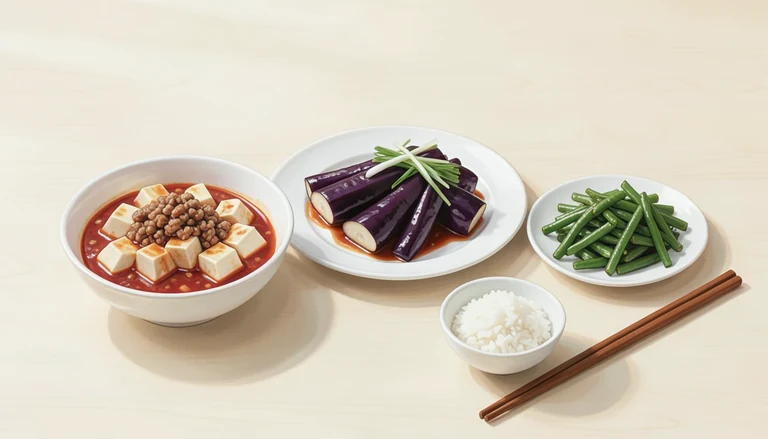
Our suggested first order for two people is mapo tofu, a vegetable dish prepared with garlic, and rice, with another plate added after checking the portions. If you prefer chicken, swap the tofu for kung pao. This is an editorial starting point, not a serving formula: a lunch bowl, a shared dinner plate and a banquet portion can be very different orders.
Ask which dishes the kitchen considers its Sichuan specialties. A long general Chinese menu may offer a different version from a kitchen focused on Chengdu cooking. Use the answer to narrow your choices.
Ask about chili and Sichuan pepper separately
Mala (麻辣) combines the numbing sensation of Sichuan pepper with chili heat. China Sichuan Food's regional guide distinguishes these seasonings and describes several flavor patterns beyond mala. Doubanjiang (豆瓣酱), a fermented broad bean paste, brings savory depth to many dishes; ginger, garlic, vinegar and preserved ingredients can matter just as much as the chili.
Tell your server what you mean by mild. Try: 'I enjoy some chili, but only a little numbing pepper. Which dish would you suggest?' Or reverse it if you like the tingle more than the heat. A row of chili symbols rarely answers both questions. Ask whether the sauce is made ahead and what the kitchen can actually change.
Mapo tofu: choose it for the sauce and soft texture
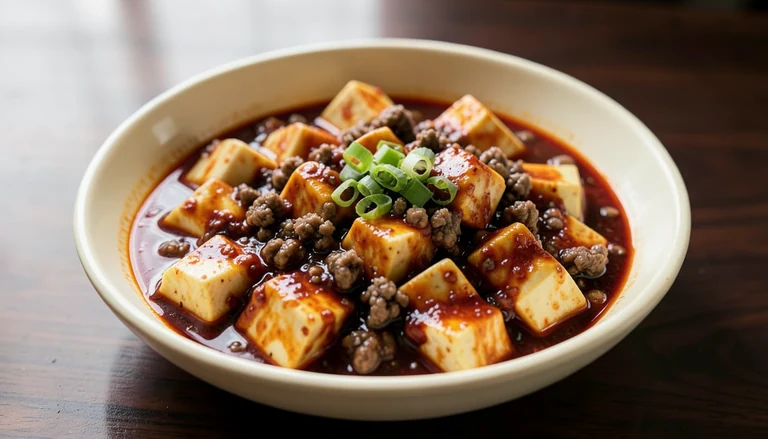
Mapo tofu (麻婆豆腐, ma po dou fu) brings tender tofu into a savory, chili-seasoned sauce. Elaine's China Sichuan Food recipe uses minced beef or pork, doubanjiang, fermented black beans and Sichuan pepper. The tofu is the main texture, but the meat and fermented seasonings help build the flavor. Plain rice gives the sauce somewhere to go.
Order it when you want something spoonable alongside a less saucy plate. Ask what meat the kitchen uses and how prominently the Sichuan pepper comes through. If everyone wants to try it, ask for a serving spoon instead of trying to lift all the soft pieces with chopsticks.
For a meatless order, ask about the complete preparation, including the sauce and stock. The same recipe creator offers a mushroom substitution, which demonstrates that another version is possible; it does not establish what your restaurant serves. Say 'Can you make this without meat or meat stock?' rather than assuming a dish centered on tofu already meets that requirement.
Kung pao chicken: compare the version, not the name
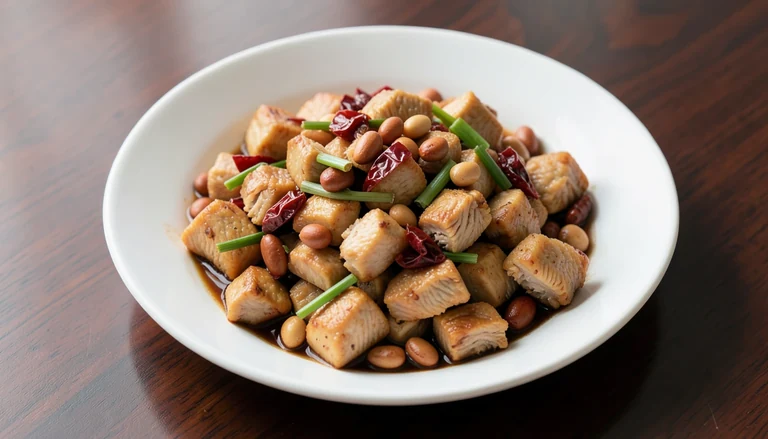
Kung pao chicken (宫保鸡丁, gong bao ji ding) is a useful bridge from a familiar English menu name to a specific Sichuan preparation. China Sichuan Food's version combines diced chicken, peanuts, dried chilies and Sichuan pepper with a sweet-and-sour sauce. The creator also distinguishes versions with cucumber or other vegetables and adaptations with fresh peppers.
Ask whether the restaurant's version is closer to a dried-chili Sichuan stir-fry or the vegetable-heavy preparation you may know from takeout. Neither description tells you whether you will like it; it tells you what you are choosing. If crunch is your priority, the peanuts are part of the attraction. If you want a softer, sauce-led dish, mapo tofu is the more useful comparison.
Discuss ingredients before ordering. Removing visible peanuts does not answer questions about the sauce or preparation. Choose kung pao because people want that combination, then add a different texture instead of another diced-chicken stir-fry.
Fish-fragrant eggplant: read yuxiang as a seasoning clue
Yuxiang qiezi (鱼香茄子) may appear in English as fish-fragrant eggplant or eggplant in hot garlic sauce. China Sichuan Food describes a combination of chili, garlic, ginger, scallion, vinegar and sweetness. Its recipe includes minced meat and notes variation between pickled-pepper and doubanjiang preparations. Its fish-fragrant sauce does not require Sichuan pepper.
Choose it if you want soft eggplant and a sweet, sour, savory sauce rather than assuming every Sichuan dish should be numbing. Ask 'Is your eggplant in garlic sauce the yuxiang dish?' when the menu translation is brief. That question connects an English label to a preparation without requiring you to pronounce every word perfectly.
The translated name is not a complete ingredient list. Ask directly about fish, seafood ingredients, meat or stock when those matter to you. At the table, this plate fills a similar soft-and-saucy role to mapo tofu. For a small first order, choose one of them and spend your other plate on a different texture; save the comparison for another meal.
Dan dan noodles: check the bowl size and mix the sauce
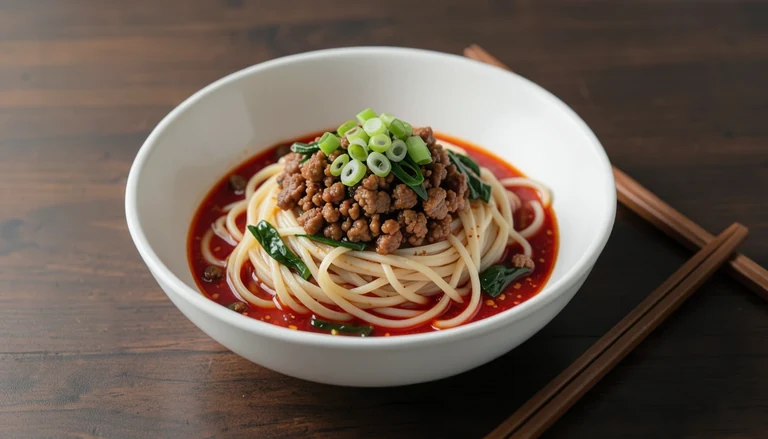
Dan dan noodles (担担面, dan dan mian) give you another way into Sichuan seasoning. China Sichuan Food's recipe combines noodles, chili oil, preserved ya cai, a pork topping and peanuts. The creator stresses that restaurant versions differ and describes a bowl with a little stock that becomes a dressed noodle dish after mixing.
Before ordering, ask whether the noodles are a small bowl to share or an individual main, and whether this version is dry, lightly sauced or brothier. If you are already ordering rice and two shared dishes, a large noodle bowl may change the meal more than you intended. Portion size matters more than the fact that it appears under appetizers.
Mix from the bottom before making a judgment about the seasoning. If you want to compare two bowls, ask about their sauces as well as their toppings. Sesame, peanut, meat and broth choices need direct questions; a familiar name will not settle them. For a solo lunch, I would start here if noodles are what I actually want, rather than order a shared dinner spread alone.
Give the vegetable dish a job of its own
Dry-fried green beans (干煸四季豆, gan bian si ji dou) are a useful texture change. The Woks of Life's recipe sears the beans, then adds pork, garlic, dried chili and preserved ya cai. The authors explain that restaurant cooks may fry the beans first. Dry-fried describes a style; it does not promise an oil-free preparation.
Ask whether the beans contain pork, and whether they are strongly chili-seasoned. A vegetable plate can be another richly seasoned centerpiece. If your goal is a quieter counterpoint to mapo tofu, ask which greens the kitchen can prepare simply with garlic instead. Be specific about any dietary requirement rather than using 'plain' to stand in for it.
The practical decision is whether you want contrast in seasoning, texture, or both. Dry-fried beans can contrast with soft tofu while still bringing a strong flavor. Gentler greens can give you a different seasoning direction. Neither has to be a compulsory side; give the dish enough attention that someone at the table is excited to eat it.
Use this order, then let the kitchen adjust it
Take a short proposal to the server instead of a long list of famous dishes. Explain the number of diners, your appetite and the heat you enjoy, then ask whether your chosen dishes repeat the same sauce or arrive in unexpectedly large portions. Staff can answer the practical questions a general guide cannot.
For your next visit, change one decision: compare mapo tofu with yuxiang eggplant, or try a noodle bowl after a rice-based meal. Remember the seasoning and preparation as well as the English name, so you can ask for something specific elsewhere.
- For a sauce-led first meal: mapo tofu, a contrasting vegetable preparation and rice, with portions checked by the restaurant.
- For a stir-fry-led meal: kung pao chicken, greens prepared differently, and rice if the group wants it.
- For a noodle lunch: dan dan noodles, with the size and sauce style confirmed before adding another dish.
- Useful final question: 'Which part of this order would you change to show us what your kitchen does well?'
Questions people ask
Does Sichuan food have to be very spicy?
No single heat level describes the cuisine. Choose by preparation and seasoning, then ask about chili and numbing Sichuan pepper separately. The kitchen may recommend a different dish when a sauce cannot be adjusted.
Is mapo tofu vegetarian?
Do not assume so. China Sichuan Food's recipe uses beef or pork and offers a mushroom alternative. Ask which version the restaurant makes, including the stock and sauce.
Does fish-fragrant eggplant contain fish?
Yuxiang is a seasoning description, not a dependable ingredient declaration. China Sichuan Food's eggplant recipe uses minced meat. Ask the restaurant about the full preparation when fish, seafood or meat matters to your order.
What is the easiest first Sichuan order?
Choose one dish you want to explore, such as mapo tofu or kung pao chicken, then ask for a contrasting vegetable preparation and suitable portions. For a solo noodle meal, check the size and sauce style of the dan dan bowl.
Menu words in this guide
Last reviewed
Sources & further reading
Background and preparation references. Our descriptions are editorial summaries, not restaurant reviews.
- China Sichuan Food — Sichuan food guide (opens in a new tab) ↗
- China Sichuan Food — Mapo tofu (opens in a new tab) ↗
- China Sichuan Food — Kung pao chicken (opens in a new tab) ↗
- China Sichuan Food — Yu xiang eggplant (opens in a new tab) ↗
- China Sichuan Food — Dan dan noodles (opens in a new tab) ↗
- The Woks of Life — Sichuan dry-fried green beans (opens in a new tab) ↗