
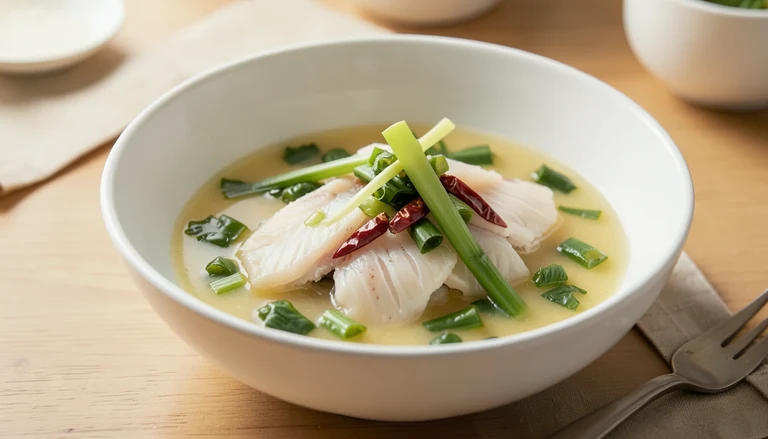
Choose pickled-green sourness or chili-and-pepper seasoning
Choose suan cai yu when you want fish with the sour character of pickled mustard greens. Choose shui zhu yu when the chili, Sichuan pepper and hot-oil finish are the main attraction. Both can be strongly seasoned fish dishes, and both can contain chili and numbing pepper. The useful distinction is the seasoning direction, not a dependable mild-versus-hot ranking.
China Sichuan Food's suan-cai-yu example builds broth with pickled mustard greens and fish bones. The Woks of Life's shui-zhu-yu example poaches fish slices with vegetables and finishes them with dried chilies, Sichuan pepper and hot oil. Red House Spice documents another shui-zhu-yu preparation using chili bean paste. These named recipes explain the comparison; your restaurant's versions still need confirmation.
Before choosing, ask three things: which fish and cuts the kitchen uses, whether bones remain, and how its two sauces differ in sourness, chili and numbing pepper. Those answers are more useful than selecting the bowl whose English translation sounds gentler.
Read the translated menu names carefully
Suan cai yu (酸菜鱼) may be described as fish with pickled mustard greens, sour-vegetable fish or pickled-vegetable fish. Red House Spice's example identifies suan cai as pickled mustard greens. A loose translation such as 'sauerkraut fish' does not establish that the kitchen is using European cabbage sauerkraut, and 'sour fish soup' may leave the actual preserved vegetable unstated.
Shui zhu yu (水煮鱼) literally points to water-boiled fish, but the named examples are seasoned preparations with a spicy oil finish. Do not read 'boiled fish' as plain fish in water. An English menu may emphasize chili oil, Sichuan style or fish slices rather than reproduce the Chinese name.
Show the server the Chinese name if the English description is ambiguous: 'Is this your suan cai yu with pickled mustard greens, or your shui zhu yu with chili and pepper?' Then ask what the kitchen includes. Translations orient you; they do not replace an ingredient or preparation discussion.
| Decision | Suan cai yu / 酸菜鱼 | Shui zhu yu / 水煮鱼 |
|---|---|---|
| Main seasoning clue | Pickled mustard greens and sourness | Chili, Sichuan pepper and a hot-oil finish |
| Example preparation | Elaine's broth uses fish head, bones and pickled greens | Judy's slices are poached, then topped with spices and oil |
| Heat | Elaine's example also contains chili and Sichuan pepper | Chili and numbing intensity vary; ask about them separately |
| Menu wording | Pickled mustard fish / sour-vegetable fish | Boiled fish / fish in chili oil / Sichuan fish slices |
| What the name does not settle | Species, bones, portion or exact sourness | Species, bones, portion or a plain broth |
Suan cai yu: preserved greens shape the bowl
In Elaine's China Sichuan Food preparation, pickled mustard greens join broth made with fish head and bones, with sliced fish cooked separately. Chili and Sichuan pepper also appear. Wei Guo's Red House Spice suan-cai-yu version uses fillets, pickled greens and pickled chili, then finishes with spices and hot oil. That finish is not exclusive to shui zhu yu; the preserved greens give this dish its distinct sour direction.
Order it when the group wants the preserved-green character, then ask how sour this kitchen makes the broth. If you are seeking a gentler fish dish, say so directly rather than infer that from a pale-looking bowl. A restaurant may offer a different preparation when its pickled-green base is made ahead and cannot be changed meaningfully.
Check what is included under the fish. Vegetables, noodles or other additions can affect how much else the table needs. Ask whether the broth is intended to be served with the fish and rice, and use a ladle if that is the format. The actual restaurant's sauce and portion should guide the rest of the meal.
Shui zhu yu: poaching does not make the dish plain
The Woks of Life's Judy prepares shui zhu yu with fish fillets, soybean sprouts and a stock-based poaching liquid, then adds dried chilies, green Sichuan peppercorns and hot oil. Red House Spice's Wei Guo uses chili bean paste and chili powder in the seasoned liquid, with an aromatic oil finish. The two primary recipe examples make clear why the translated word 'boiled' understates the seasoning.
Ask which part of the preparation supplies the chili and which part supplies the numbing pepper. Removing a few visible peppers from the top is different from changing a seasoned base. Tell the server whether you want less chili, less numbing pepper, or both, and let the kitchen explain what it can adjust.
Choose the dish because that seasoning is what the table wants. If some diners want a quieter fish preparation, ask about alternatives rather than rely on a generic mild request to transform this particular bowl. A lightly seasoned vegetable or rice can support the order, but neither changes the fish sauce itself.
Fish slices and whole-fish portions need different questions
Both dish names leave the fish choice open. The sources demonstrate that whole-fish and fillet preparations are possible: Elaine separates slices from a whole fish while using the head and bones for broth, and Judy chooses fillets for her home recipe. Those cooking choices do not guarantee boneless restaurant service.
Ask: 'What species is this? Are the serving pieces fillets, bone-in sections or a whole fish? Do head and bones come in the bowl? Can small bones remain?' Settle this for everyone sharing the dish, especially if diners are expecting easy-to-lift slices from the English menu wording.
Also ask about the purchasing format. Is the price for a standard dish or tied to the fish's weight? Can the restaurant offer a smaller portion, and is a specific fish available today? A large-looking serving bowl does not tell you the amount of fish because broth, greens and other ingredients occupy space too.
Build the shared meal around one fish decision
For a first comparison at a small table, choose one fish bowl rather than order both automatically. Our editorial proposal for two assumes the kitchen offers a suitable shared portion: suan cai yu or shui zhu yu, one differently prepared vegetable and steamed rice. Ask whether the fish includes substantial extra vegetables or starch before adding more.
If your purpose is to compare both sauces with a larger group, tell the kitchen that and ask whether two fish dishes would dominate the order. You might choose smaller portions if available, or compare the second dish on another visit. This is a planning suggestion, not a measured number of servings or a claim that one combination is traditional everywhere.
Give the vegetable its own reason to be there. Ask for a preparation that changes the texture or seasoning rather than select another strongly chili-seasoned dish by habit. If the table wants several assertive sauces, that is a valid choice too—make it deliberate and explain the group's appetite to the server.
Use serving tools that suit the actual bowl
Ask for a serving spoon or slotted utensil to lift fish and vegetables from the shared bowl. Judy's recipe specifically recommends a slotted spoon or mesh scoop for serving the fish among the oil and peppers. Use the restaurant's tools and identify any bone-in pieces before passing portions around.
Serve a modest first portion so each diner can understand the sauce and texture. Visible whole spices, preserved greens and fish pieces play different roles; ask staff if you are uncertain about an item in the bowl. Do not judge the preparation solely from its color or from the first piece lifted off the top.
For ingredient requirements, discuss the full preparation before ordering. The cited examples show that marinade, stock and sauce can add ingredients beyond fish and the prominent seasoning. A menu name cannot settle an allergy, vegetarian-stock preference or other specific requirement.
Make the final choice by flavor and service format
Choose suan cai yu for the preserved-green sour direction, then confirm chili and bones. Choose shui zhu yu for chili-and-pepper seasoning, then confirm the base, oil finish and fish cut. If those descriptions still leave you undecided, ask which of the kitchen's two versions better suits the sensations and portion you want.
Keep the sauce description with the dish name for next time. 'Pickled-mustard fish with moderate chili and bone-in pieces' describes an actual order more usefully than calling it the mild fish. The broader Sichuan guide can help choose the rest of the meal, while this comparison keeps the two-fish decision focused.
Questions people ask
What is the main difference between suan cai yu and shui zhu yu?
Suan cai yu centers the sour character of pickled mustard greens. The cited shui-zhu-yu preparations emphasize chili, Sichuan pepper and a hot-oil finish. Both can contain chili and numbing pepper, so confirm the kitchen's version.
Is suan cai yu less spicy?
Do not treat that as a guarantee. China Sichuan Food's example includes chili and Sichuan pepper. Ask about sourness, chili and numbing sensation separately when comparing the two dishes.
Does water-boiled fish mean plain fish?
No. Shui zhu yu's translated name understates the seasoning in the cited recipes, which poach fish and finish it with chili, pepper and hot oil. Ask about the restaurant's sauce and base.
Are suan cai yu and shui zhu yu boneless?
The names do not guarantee that. Sources demonstrate whole-fish and fillet approaches. Confirm the species, cuts, head and bones, and whether small bones can remain before ordering a shared bowl.
Menu words in this guide
Last reviewed
Sources & further reading
Background and preparation references. Our descriptions are editorial summaries, not restaurant reviews.
- China Sichuan Food — Suan cai yu, fish with pickled mustard greens (opens in a new tab) ↗
- The Woks of Life — Sichuan boiled fish, shui zhu yu (opens in a new tab) ↗
- Red House Spice — Sichuan boiled fish, shui zhu yu (opens in a new tab) ↗
- Red House Spice — Suan cai yu, a fillet preparation (opens in a new tab) ↗