Jiaozi dumplings
饺子
Jiǎo zi
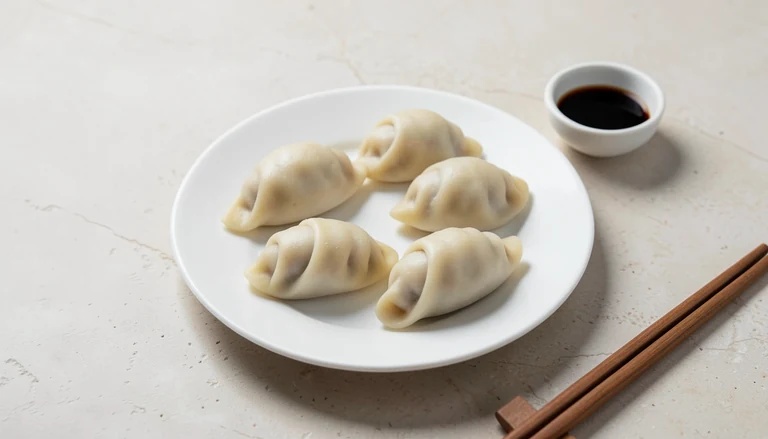
Pleated wheat-wrapper dumplings, with a world of fillings to explore.
| Fact | Detail |
|---|---|
| Heat | Mild |
| Main protein | Varies (pork, beef, shrimp, fish, or vegetables) |
| Region | Beijing & the north |
| Common menu names | Jiaozi; potstickers when pan-fried |
Jiaozi, a folded parcel with several cooking methods
Jiaozi are 饺子 in simplified characters and 餃子 in traditional, jiǎo zi in pinyin. Wikipedia describes them as a Chinese dumpling: a ground meat or vegetable filling wrapped in a thinly rolled piece of dough, with the edges pressed shut. (Wikipedia — Jiaozi (opens in a new tab), read )
The same article lists the cooking names that matter on a menu. Boiled is shuǐjiǎo (水饺), steamed is zhēngjiǎo (蒸饺), pan-fried is jiānjiǎo (煎饺), deep-fried is zhàjiǎo (炸饺), baked is kǎojiǎo (烤饺), and served in soup is tāngjiǎo (汤饺). (Wikipedia — Jiaozi (opens in a new tab), read )
They are a northern staple eaten all year and a centerpiece of the Lunar New Year table. Wikipedia says the shape echoes the gold and silver ingots once used as currency, which gives the dumpling its association with prosperity, and that many families eat them at midnight on New Year’s Eve. (Wikipedia — Jiaozi (opens in a new tab), read ) Beijing tourism places the same dish at family reunions, with extended families gathering to fold a batch together. (Beijing tourism — Chinese dumplings (opens in a new tab), read )
The origin story is older than any written recipe. Wikipedia calls an Eastern Han invention by the physician Zhang Zhongjing the traditional account: he wrapped mutton and warming herbs in dough for villagers whose ears had been frostbitten. The same article then cites Yan Zhitui in the Northern Qi, writing in the sixth century that crescent-shaped jiaozi were ordinary food, and it records dumplings found in Tang-dynasty tombs at Turfan. (Wikipedia — Jiaozi (opens in a new tab), read ) Beijing tourism tells the Zhang Zhongjing story with the same frostbite detail. (Beijing tourism — Chinese dumplings (opens in a new tab), read )
The wrapper and the fold are the constants; the rest changes by kitchen. A northern dumpling is often thicker-skinned than a Cantonese dim sum parcel, and Shanghai and Hangzhou cooks also sell thin-skinned jiaozi. (Wikipedia — Jiaozi (opens in a new tab), read ) That range is why the menu verb and the filling matter more than the English noun.
The English names on a US menu are fewer than the Chinese ones. Potstickers usually means the pan-fried dumplings, and Wikipedia traces the word to guōtiē (鍋貼), literally pot stick. Steamed dumplings, boiled dumplings and dumpling soup are the other common lines. (Wikipedia — Jiaozi (opens in a new tab), read )
Dough, filling, a fold, then heat
A jiaozi begins with a thin wheat wrapper. Wikipedia says the filling goes into a thinly rolled piece of dough and is sealed by pressing the edges, and its folding section describes the common crescent: a tablespoon of filling, the wrapper folded in half, then small pleats pinched along one side and repeated on the other. (Wikipedia — Jiaozi (opens in a new tab), read )
Fillings are built from meat, vegetables or both. Wikipedia lists pork, chicken, beef, shrimp and fish, usually mixed with chopped cabbage, scallion, celery, leek, spinach, mushroom, carrot, garlic chives or black fungus. (Wikipedia — Jiaozi (opens in a new tab), read ) Beijing tourism names several northern combinations, including pork with Chinese cabbage, pork with garlic chives, and garlic chives with scrambled egg. (Beijing tourism — Chinese dumplings (opens in a new tab), read )
Tianjin has two fillings of its own on that page. San xian mixes ground pork, shrimp and garlic chives. Jin wei su is a vegetable filling of mung bean sprouts, coriander, smoked bean curd and vermicelli, bound with sesame paste. (Beijing tourism — Chinese dumplings (opens in a new tab), read )
Cooking is where the same parcel splits into different dishes. The Woks of Life steams for 8 to 10 minutes, boils for 6 to 8, and pan-fries until the bottoms brown before adding half a cup of water under a lid and uncovering to crisp. It says frozen dumplings need no thawing, only a minute or two more heat. (The Woks of Life — How to cook dumplings (opens in a new tab), read )
Made With Lau’s restaurant-style potsticker filling is chicken with celery, cabbage and ginger, held together with a marinade of oyster sauce, soy, fish sauce, white pepper, bouillon, sugar, salt, cornstarch and sesame oil. It lists three mistakes to avoid: skipping the marinade, leaving the wrappers unsealed, and leaving water in the filling. (Made With Lau — Potstickers (opens in a new tab), read )
Guotie, gaau ji, gyoza, and a dumpling that traveled
Guotie are the northern pan-fried shape. Wikipedia says they are usually longer than jiaozi and often left open at the two ends, and that northern cooks treat them as their own dumpling while southern kitchens use the name for pan-fried jiaozi. In Shanghai, it says, guotie means a meat-only dumpling that is always pan-fried. (Wikipedia — Jiaozi (opens in a new tab), read )
Cantonese dim sum has a smaller relative. Wikipedia calls it gaau ji: a thinner, translucent skin, a smaller size and steaming as the usual method, with har gow as the common shrimp filling. It says these wrappers are rarely made at home because they must be thin and still strong. (Wikipedia — Jiaozi (opens in a new tab), read )
Japan has gyōza, developed from recipes brought back from northeast China after the Second World War. Wikipedia says the Japanese version leans on garlic and often uses thinner machine-made wrappers. (Wikipedia — Jiaozi (opens in a new tab), read )
The name traveled further. Wikipedia records Hawaiian gau gee, a deep-fried Cantonese-derived dumpling in a thick wonton wrapper, served with soy and mustard. (Wikipedia — Jiaozi (opens in a new tab), read ) Those are separate snacks under one family name, and none of them is the boiled northern dumpling described above.
How to order a plate
Start with the cooking method, then the filling, then the count. The Woks of Life and Made With Lau both describe a plate that can be boiled, steamed or pan-fried from the same filling, so the menu verb is the first useful word. (The Woks of Life — How to cook dumplings (opens in a new tab), read ) (Made With Lau — Potstickers (opens in a new tab), read )
Ask whether the filling contains shrimp, egg or pork if any of those matter. Wikipedia’s list is wide and Beijing tourism’s northern mixes include seafood and egg. (Wikipedia — Jiaozi (opens in a new tab), read ) (Beijing tourism — Chinese dumplings (opens in a new tab), read ) The wrapper is wheat, so a dumpling is not a gluten-free order by default. (Wikipedia — Jiaozi (opens in a new tab), read )
The dip is worth asking about because the published accounts differ. Wikipedia says black vinegar and soy; Beijing tourism puts vinegar and chili oil first; the Woks of Life offers black vinegar or a house sauce. (Wikipedia — Jiaozi (opens in a new tab), read ) (Beijing tourism — Chinese dumplings (opens in a new tab), read ) (The Woks of Life — How to cook dumplings (opens in a new tab), read ) The guotie entry covers the pan-fried shape.
Menu names vary by city. The Chicago guide includes a line written Jiaozi, the San Francisco guide includes Shui Jiao, and the Boston guide includes Pan Fried Dumpling. Those are checked menu names, not rankings. Northern cooking is the regional page, the dumpling field guide sets jiaozi beside siu mai and xiaolongbao, and wontons versus dumplings is the comparison for a parcel in soup.
Regional versions
- Boiled (shuijiao). Wheat parcels dropped into boiling water for 6 to 8 minutes, with a splash of cold water added when the pot threatens to boil over. The wrapper stays tender. (The Woks of Life — How to cook dumplings (opens in a new tab), read ) Wikipedia gives the characters 水饺 and 水餃. (Wikipedia — Jiaozi (opens in a new tab), read )
- Steamed (zhengjiao). The same parcel in a steamer for 8 to 10 minutes, which leaves the wrapper firmer and slightly chewy. (The Woks of Life — How to cook dumplings (opens in a new tab), read ) Wikipedia writes it 蒸饺 and 蒸餃. (Wikipedia — Jiaozi (opens in a new tab), read )
- Pan-fried and guotie. Fried until the bottoms brown, then steamed under a lid with half a cup of water and uncovered to crisp again. (The Woks of Life — How to cook dumplings (opens in a new tab), read ) Guotie are the northern version, usually longer and often open at the ends; southern kitchens use the same word for pan-fried jiaozi. (Wikipedia — Jiaozi (opens in a new tab), read )
- Cantonese gaau ji. Smaller dumplings with a thin translucent skin, usually steamed, standard on a dim sum table. Har gow is the common shrimp-filled type. (Wikipedia — Jiaozi (opens in a new tab), read )
Questions people ask
Are potstickers the same as jiaozi?
Potsticker is an English name for the pan-fried branch. Wikipedia says it comes from guōtiē (鍋貼, pot stick), and that northern China treats guotie as a separate dumpling, usually longer with the ends left open. In the south, the same word can mean pan-fried jiaozi. (Wikipedia — Jiaozi (opens in a new tab), read ) Made With Lau uses the name for its pan-fried dumplings and translates it as pot stick. (Made With Lau — Potstickers (opens in a new tab), read )
What are jiaozi filled with?
Usually a ground meat or vegetable mixture, chopped fine and wrapped in a thin dough. Wikipedia lists chicken, pork, beef, shrimp and fish, with cabbage, scallion, celery, leek, spinach, mushroom, carrot, garlic chives and black fungus among the vegetables. (Wikipedia — Jiaozi (opens in a new tab), read ) Beijing tourism names pork with cabbage, pork with garlic chives, pork and shrimp with vegetables, and garlic chives with scrambled egg. (Beijing tourism — Chinese dumplings (opens in a new tab), read )
Why do people eat jiaozi at Chinese New Year?
They are one of the main dishes of the northern New Year table, and families often fold them together on New Year’s Eve. Wikipedia says the crescent shape resembles the gold and silver ingots called sycee, so the dumpling stands for wealth, and that some cooks hide a clean coin inside one. (Wikipedia — Jiaozi (opens in a new tab), read ) Beijing tourism describes the same reunion meal. (Beijing tourism — Chinese dumplings (opens in a new tab), read )
What is the difference between boiled, steamed and pan-fried jiaozi?
The wrapper and the filling can be identical; the heat changes the texture. The Woks of Life says steaming leaves the wrapper firm and slightly chewy, boiling keeps it al dente, and pan-frying gives a crisp brown base. Its timings are 8 to 10 minutes for steaming, 6 to 8 for boiling and about 7 minutes under a lid for the pan-fried stage. (The Woks of Life — How to cook dumplings (opens in a new tab), read )
What do you dip jiaozi in?
The sources do not send one saucer to every table. Wikipedia says the traditional dip is black vinegar and soy sauce. (Wikipedia — Jiaozi (opens in a new tab), read ) Beijing tourism describes vinegar with chili oil or chili paste and sometimes soy. (Beijing tourism — Chinese dumplings (opens in a new tab), read ) The Woks of Life serves Chinese black vinegar or a house dumpling sauce. (The Woks of Life — How to cook dumplings (opens in a new tab), read ) Ask what is in the saucer before pouring.
Keep reading
Last reviewed
Where to eat jiaozi dumplings
From each restaurant’s checked menu; call ahead — menus change.
Chinese food in San Francisco
- Mister Jiu'sShui Jiao · Waverly Place, Chinatown
Chinese food in Houston
- North China Restaurantboiled dumplings · Katy Freeway, Energy Corridor
Chinese food in Chicago
- Duck Duck Goat (West Loop)Jiaozi · Fulton Market, West Loop
Chinese food in Boston
- Dumpling CafePan Fried Dumpling · Washington Street, Chinatown
Chinese food in Dallas
- Jeng ChiBoiled dumplings · N Greenville Ave, Richardson
Chinese food in Atlanta
- Northern China Eateryboiled dumpling · Buford Highway, Doraville
Chinese food in Phoenix
- Tsing TaoPan Fried Dumplings · Baseline Road, west Mesa
- Chen's Noodle HousePan Fried Dumplings · Lemon Street, Tempe
Chinese food in Miami
- Sang's Chinese Food and Dim SumPan Fried Dumplings · NE 163rd Street, North Miami Beach
- Tropical Chinesepan-fried dumpling · Bird Road, Miami
Chinese food in Pittsburgh
- Golden PalacePan Fried Dumpling · Forbes Avenue, Oakland
Sources & further reading
Background and preparation references. Our descriptions are editorial summaries, not restaurant reviews.