Wontons are dumplings; the menu usually means jiaozi
A wonton is a kind of dumpling. On a menu that lists wontons and dumplings separately, the practical comparison is usually wontons versus jiaozi, or versus pan-fried dumplings sold as potstickers. Ask which shape, filling and cooking method the restaurant means before deciding that the two headings describe opposite categories.
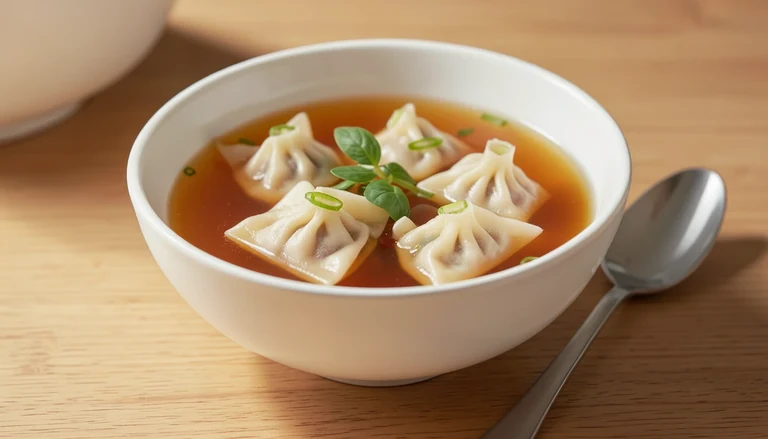
Choose wonton soup when you want filled parcels in a broth bowl; choose pan-fried jiaozi when a browned base is the attraction. Boiled jiaozi and wontons in chili-oil dressing make the picture less binary. Both families can be boiled, and wontons do not have to arrive in soup.
| Menu label | What it may mean | Serving question |
|---|---|---|
| Wonton soup | Wontons served in broth | What fills the wontons, and what is the broth? |
| Wonton noodle soup | Wontons plus a separate noodle component | Does this portion include noodles and vegetables? |
| Red-oil wontons / hong you chao shou | Boiled wontons with a chili-oil dressing | How much chili and Sichuan pepper are in this version? |
| Dumplings / jiaozi | Filled dumplings; cooking method may be unstated | Are these boiled, steamed or pan-fried? |
| Potstickers / guotie | A pan-fried dumpling preparation | What shape, filling and piece count do you serve? |
| Soup dumplings / xiaolongbao | A steamed parcel with broth inside | Are these xiaolongbao rather than dumplings served in soup? |
A small family tree for reading the menu
Use this as a practical English-menu family tree, not a complete classification of Chinese dough foods. Dumpling is the umbrella word. Wonton and jiaozi are two useful branches; a cooking method sits below the branch rather than replacing it.
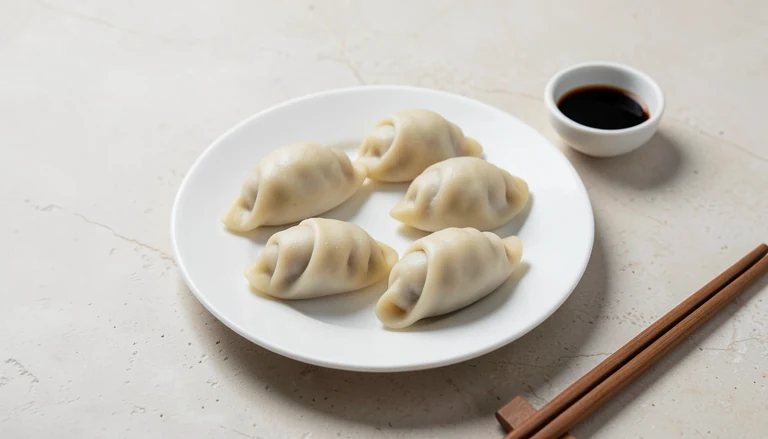
The potsticker connection needs a little care. English menus often use potstickers for pan-fried jiaozi, while guotie can describe a more specific shape or local preparation. If a restaurant distinguishes guotie from its other pan-fried dumplings, follow that menu instead of insisting the words must be exact synonyms.
| Level 1 | Level 2 | Level 3: preparation examples |
|---|---|---|
| Dumplings — broad English category | Wontons | In soup; boiled and dressed with chili oil; fried versions |
| Dumplings — broad English category | Jiaozi | Boiled; steamed; pan-fried, often called potstickers in English |
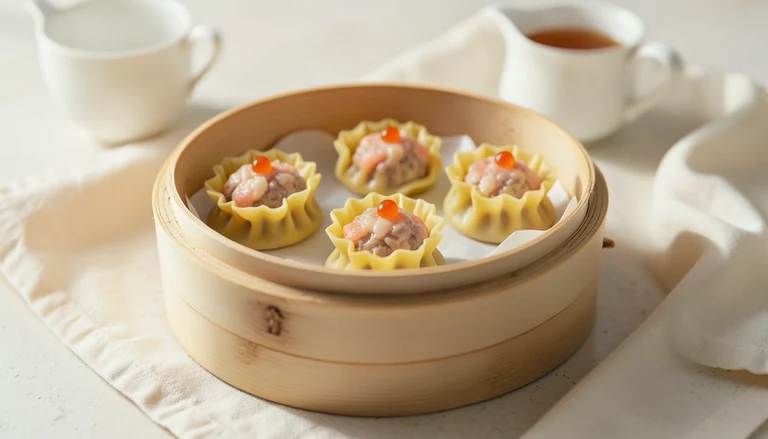
| Dumplings — broad English category | Other named forms | Siu mai and xiaolongbao have their own menu identities |
Compare the wrapper before comparing the shape
The Woks of Life's wrapper guide shows square wonton skins and round dumpling skins among the packaged forms it uses. It also distinguishes thinner yellow Hong Kong-style wonton wrappers from white Shanghai-style ones. That is a useful shopping and menu clue, not a rule that every wonton must be yellow or every jiaozi equally thick.
A square wonton skin can be folded into a pouch or a shape with joined corners; a round jiaozi skin often becomes a folded, pleated parcel. Once cooked, those folds change the amount of wrapper in each bite. A loose fold gives a different impression from a tightly enclosed crescent, even when the filling sounds similar.
If you want a delicate wrapper, ask which dumpling the kitchen recommends for that texture. If you prefer more dough to chew, say so. The label steamed does not answer the wrapper question, and a thin-looking parcel is not necessarily a soup dumpling. Look for a description of the food itself rather than only its container.
The fillings overlap more than the names suggest
The Woks of Life's simple wonton soup combines pork with leafy vegetables. China Sichuan Food's red-oil wontons use minced pork, ginger and scallion, with egg and oyster sauce in the filling. Those examples demonstrate that a wonton name does not give you a complete ingredient list or require shrimp.
Jiaozi also accommodate different meat, vegetable and mixed fillings. Compare what this kitchen offers rather than assuming wontons are light and dumplings are heavy. A vegetable-filled jiaozi, a pork-filled wonton and a large mixed filling can play very different roles despite all being filled dough parcels.
Ask about the stock and condiments as well as the filling when you avoid an ingredient. A vegetable dumpling in meat broth is a different order from the same dumpling served on a plate. Removing a visible topping does not tell you what was mixed inside the parcel before it was folded.
Soup, steam and a crisp base are separate decisions
The Woks of Life's cooking guide uses three methods for jiaozi: boiling, steaming and pan-frying. It describes a slightly chewy steamed wrapper and a crisp base from pan-frying. Therefore, 'wontons are boiled, dumplings are steamed' is not a dependable comparison.
First decide whether you want broth. Next decide whether a browned surface matters. If the answer is yes to broth and no to browning, compare wonton soup with the restaurant's boiled-dumpling option. If you want browning, ask for the pan-fried preparation and confirm whether the sauce comes as a dip or coats the dumplings.
If you are comparing fillings, keep the cooking method the same for a clearer choice. If you are comparing textures, choose the same filling prepared two ways, where the menu allows it. These are editorial ways to structure an order; the kitchen may only offer particular combinations.
Wontons in chili oil belong in this comparison too
China Sichuan Food calls its red-oil preparation hong you chao shou, 红油抄手. The recipe boils the wontons and adds a dressing built around chili oil, black vinegar, soy sauce and sesame oil. This is a sauced wonton order, rather than the familiar clear-broth bowl.
Choose it when the dressing is part of what you want to explore. Ask about chili and Sichuan pepper separately, whether the sauce is premixed, and whether the kitchen offers a gentler presentation. Saying 'less spicy' may not explain which sensation or component you would like reduced.
Do not use the red color alone to predict a measured heat level. A small dish of strongly seasoned wontons may be intended to accompany other plates, while a soup bowl may be sold as a meal. Check the portion and service before deciding that every wonton order should fill the same slot.
Soup dumplings put the broth in a different place
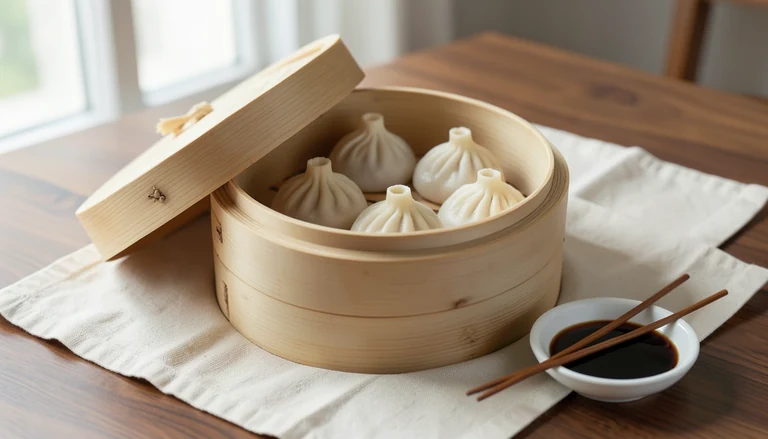
On this site, soup dumplings refers to xiaolongbao: steamed parcels with broth inside. Wonton soup puts the wontons in a surrounding broth. These are different orders even though both descriptions contain the words soup and dumpling.
If the menu translation is unclear, ask: 'Does the soup sit inside the dumpling, or are the dumplings served in a bowl of soup?' That one question is often enough to resolve the confusion. Then confirm the filling and the portion.
The distinction also changes the meal you are planning. A basket of xiaolongbao is not automatically a replacement for a full noodle-soup bowl. Use the dedicated soup-dumpling guide for the broth-filled parcel; use this comparison to decide among wonton, jiaozi and potsticker presentations.
Build your order around the format you want
For a solo broth meal, ask whether the wonton bowl includes noodles and how substantial the portion is. For a shared starter, a plate of potstickers or dressed wontons may divide more easily than one soup bowl. If broth is important to everyone, ask about individual bowls rather than assuming one order supplies the whole table.
Our editorial comparison order is one wonton preparation and one jiaozi preparation, with a vegetable dish if the portions and appetite call for it. Keep the questions short: 'What is inside? How is it cooked? Does it come in broth or with a dip? How many pieces are in the order?'
You can save the jiaozi or soup-dumpling dish guide as a starting point for another menu. Keep a note of the cooking style you chose: remembering boiled, pan-fried or chili-oil-dressed will be more useful next time than remembering only that you liked dumplings.
Questions people ask
Is a wonton a dumpling?
Yes. Dumpling is the broad English category. When a restaurant separates wontons from dumplings on its menu, ask whether dumplings means jiaozi, potstickers or another named preparation.
Are wonton wrappers and dumpling wrappers the same?
Packaged wonton skins are commonly square and dumpling skins commonly round, with thickness and ingredients varying by style and brand. The Woks of Life distinguishes several versions. Ask about the wrapper used for your actual order.
Are dumplings always steamed and wontons always boiled?
No. Jiaozi can be boiled, steamed or pan-fried. Wontons can appear in soup, dressed with chili oil after boiling, or in fried preparations. The cooking method is a separate choice.
What is the difference between wonton soup and soup dumplings?
Wonton soup serves wontons in broth. Xiaolongbao, the soup dumplings discussed on this site, contain broth inside the steamed parcel. Ask where the soup is when a menu translation is unclear.
Menu words in this guide
Last reviewed
Sources & further reading
Background and preparation references. Our descriptions are editorial summaries, not restaurant reviews.
- The Woks of Life — Chinese noodles and wrappers (opens in a new tab) ↗
- The Woks of Life — How to cook dumplings (opens in a new tab) ↗
- The Woks of Life — Simple wonton soup (opens in a new tab) ↗
- China Sichuan Food — Red-oil wontons (opens in a new tab) ↗
- Shanghai municipal government — Xiaolongbao and broth inside (opens in a new tab) ↗