Start with the service format
For a first hot pot meal, make three decisions in order: choose the broth, choose a small first round of ingredients, and choose a dipping sauce. Then ask the staff to explain the cooking and serving process. You do not need to recognize every item on the order sheet before the meal can begin.
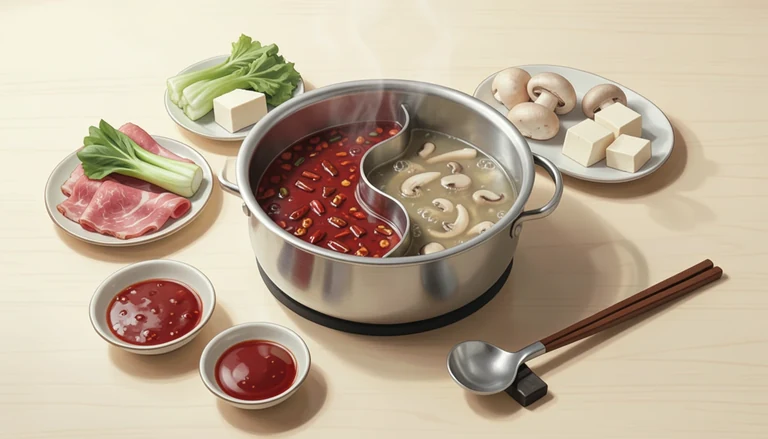
Hot pot is a meal built around ingredients cooked in soup at the table. The Woks of Life describes both communal pots and individual formats, with personal dipping sauces. The Dolar Shop, for example, describes its offering as individual hot pot. Confirm the format at the restaurant you plan to visit; a shared pot, divided pot and personal pot create different choices for the group.
Ask how charges work: individual plates, a set menu, or all-you-can-eat. Check whether broth, sauce and starch are included. The goal is a manageable first round suited to this restaurant, with another round if available.
Choose broth for the whole table
Broth is a flavor choice that affects every ingredient placed into it. Yihai's descriptions of its Haidilao packaged bases contrast sweet-and-tangy tomato with numbing-spicy Sichuan mala, alongside clear broth and mushroom options. Those are useful flavor directions to ask about; a restaurant's recipe and available bases still need confirmation.
If the group has different heat preferences, ask about divided pots and available combinations. My suggestion is one broth everyone wants and a contrasting second if useful. Describe tolerance for chili and numbing Sichuan pepper separately.
Do not infer the stock or fat from the headline ingredient. Ask 'What is the mushroom broth made with?' or 'Does the spicy base use animal fat?' when that affects the order. For a dietary restriction, also discuss how the pots, utensils and service work. A divider offers two flavor choices; it is not evidence about how the restaurant handles ingredients or allergens.
Recognize two different regional directions
A Sichuan-style mala pot and a Beijing lamb pot are useful contrasts. China Sichuan Food's home guide describes spicy mala and milder clear-soup bases, and associates sesame-oil dips with Chengdu and Chongqing hot pot. Beijing Tourism's Nanmen profile describes a traditional copper pot with clear soup and lamb, paired with a sesame-based sauce.
Use those examples to decide where you want the flavor to come from. Would you rather explore a strongly seasoned broth, or a clearer broth with a distinctive dip? This is an ordering comparison, not a claim that all Sichuan, Chongqing or Beijing restaurants follow one recipe. Nor is a tomato or mushroom pot a lesser first order because it does not match the version you saw online.
At a regional specialist, ask for a representative broth and ingredient pairing. Tell the server what you enjoy and let the answer identify a specific preparation, rather than asking for the best item on a long menu.
Order a first round by contrast
Think in ingredient categories before choosing individual plates: a protein if wanted, tofu or another soy preparation, mushrooms, leafy vegetables, and a starch. The Woks of Life's ingredient guide includes sliced meats, seafood, tofu, greens, mushrooms and noodles. You can build a varied first round without ordering several versions of the same meat.
For two people, an example proposal is one plate of sliced beef or lamb, one tofu preparation, one mushroom choice and one leafy vegetable, with noodles or rice if wanted. Ask the server to adjust this to the actual plate sizes and appetites. If an assorted platter is available, find out what it includes before duplicating those ingredients with separate orders.
For a group, collect one ingredient each person wants, then check for repetitions. Ask whether half portions exist or another round is practical. Three beef plates may be right for your table; choose them deliberately, not because the other sections look unfamiliar.
Choose texture as well as protein
China Sichuan Food lists soft, firm, frozen and fried tofu for hot pot, with a strainer for fragile pieces. It also notes that leafy vegetables pick up broth flavor. Ask whether you want those ingredients in a strongly seasoned or milder pot.
Ask what distinguishes two unfamiliar items instead of treating the entire vegetable section as filler. 'Which tofu is soft, and which one has more bite?' gives you a usable answer. For mushrooms, ask what varieties the plate contains. If two ingredients seem similar, choose one now and remember the other for a later round.
You can try tripe, shrimp balls or another specialty when that sounds interesting, but ask the staff what it is and how they serve and cook it. There is no need to make an unfamiliar ingredient the compulsory centerpiece of your first visit. Pick one deliberate experiment among choices you already want, so curiosity has a place in the order without controlling the whole table.
Build a small dip before building a large one
China Sichuan Food describes northern lamb pots with sesame-paste dips, Sichuan pots with sesame-oil combinations, and beef or seafood pots with shacha dips. Its guide identifies fish and shrimp in shacha; sauce ingredients need direct questions too.
Start with a small bowl and one main direction. My editorial suggestion is sesame paste with a little garlic and scallion if you want a richer dip, or an oil-and-garlic direction if that suits the house broth. Ask for a staff-recommended combination when the condiment station is unfamiliar. Taste and adjust the dip before adding a long list of seasonings.
For a concrete example of variation, Beijing Tourism describes Nanmen's dip with sesame sauce, herbs, garlic chives, fermented bean curd and shrimp oil. That is a reminder that a sesame-looking bowl can contain more than sesame. For ingredient restrictions, ask the staff to identify what can meet your requirements; guessing from color, a translated label or a spoonful of sauce is not enough.
Let the staff explain cooking and utensils
Before putting ingredients into the pot, say it is your first visit and ask the staff to demonstrate their process. Get their instructions for the specific raw ingredients you ordered, which utensils belong to cooking and serving, and when to call them for help. This is not a recipe with a universal cooking time: ingredient thickness, preparation and equipment vary.
Ask how the table should distinguish portions when several people are adding food, and where cooked pieces should go. If you are uncertain about an item, keep it aside and get the staff's instructions. A plate of balls or paste may need a different process from a plate of slices; a brief menu name is not a cooking guide.
Give the table space to follow the explanation. Ask staff to handle broth top-ups and equipment adjustments. A calm first round makes it easier to notice which combinations you enjoy; you can explore more after understanding the process.
Decide how you want to finish
Ask about starch before ordering both noodles and rice. China Sichuan Food lists bean vermicelli, potato or sweet-potato noodles and handmade noodles for hot pot. Leave room for the finish you want.
Noodles near the end are my suggested way to make the broth choice part of the finish; rice is a simpler choice if you want a separate bowl alongside the ingredients. Follow the staff's directions for preparing whichever noodle you select. Before ordering another plate, pause and see what remains on the table.
- Before ordering: confirm shared or individual pots, charging format and what is included.
- Choose broth: discuss chili and numbing pepper, then ask about the complete stock and seasoning when ingredients matter.
- Choose a first round: propose contrasting ingredients and let staff adjust for plate sizes.
- Before cooking: get the restaurant's instructions for your raw ingredients, utensils and equipment.
- Before adding more: check the food already ordered and decide whether you want a noodle or rice finish.
Questions people ask
Does Chinese hot pot have to be spicy?
No. Clear, tomato, mushroom and other bases offer different directions. Ask which broths the restaurant serves and describe both your chili and numbing-pepper preferences. A divided pot may give the group two options.
How much should two people order at hot pot?
There is no dependable plate count across restaurants. Propose one protein if wanted, tofu, mushrooms, a leafy vegetable and a starch, then ask staff to adjust for their portions and your appetite. Confirm whether you can order another round.
Is mushroom hot pot vegetarian?
The name alone does not establish the stock, seasonings or service. Ask what the broth contains and discuss the full preparation with staff, including pots and utensils, before choosing it for a dietary restriction.
How long do you cook hot pot ingredients?
Ask the restaurant for instructions for each raw ingredient and its equipment. This guide does not give universal times or tell you to judge readiness from appearance. Request a demonstration and help whenever you are uncertain.
Menu words in this guide
Last reviewed
Sources & further reading
Background and preparation references. Our descriptions are editorial summaries, not restaurant reviews.
- The Woks of Life — Chinese hot pot at home (opens in a new tab) ↗
- China Sichuan Food — How to make hot pot at home (opens in a new tab) ↗
- Beijing Tourism — Nanmen hot pot (opens in a new tab) ↗
- The Dolar Shop — Group dining and individual hot pot (opens in a new tab) ↗
- Yihai US Food — Haidilao soup-base flavor descriptions (opens in a new tab) ↗