
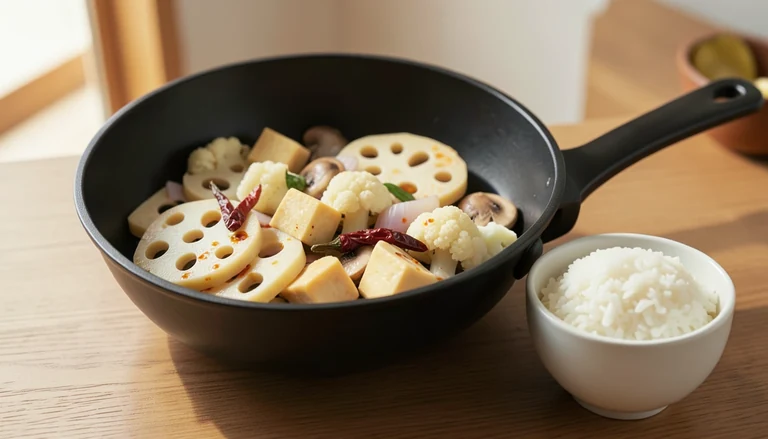
Choose dry pot for a prepared dish, hot pot for tabletop cooking
Dry pot usually arrives as ingredients already cooked together with a concentrated seasoning; broth-based tabletop hot pot gives you simmering liquid and ingredients to cook during the meal. Choose dry pot when you want to start eating a mixed, seasoned dish. Choose tabletop hot pot when choosing, cooking and eating ingredients in stages is part of the evening you want.
The word “pot” is not enough to establish the service. A hot pot on a menu can be an individual prepared soup, and a dry-pot dish may be kept hot over a burner. Ask who cooks the ingredients and whether there is broth before deciding. A burner under a serving vessel does not by itself make dinner a cook-it-yourself meal.
The comparisons here use MáLà Project’s wok-fried dry pot and Happy Lamb Edinburgh’s broth-based tabletop instructions as named examples. They illustrate two formats; they do not define every gan guo, mala xiang guo or dish translated as hot pot.
Compare the service before the spice level
The practical difference is how you spend the meal. With a kitchen-prepared dry pot, the ingredient and seasoning decisions happen before the food arrives. With tabletop hot pot, the order creates a sequence of choices: broth first, ingredients next, then cooking and eating at the table.
| Decision | Kitchen-prepared dry pot | Broth-based tabletop hot pot |
|---|---|---|
| What arrives | Cooked ingredients coated in seasoning | Broth and ingredients to add to it |
| Who cooks | Kitchen in the examples here | Diners, with staff guidance |
| How seasoning is shared | The chosen mix coats the combined dish | The shared broth seasons food as it cooks |
| Meal pace | Eat when the finished dish arrives | Cook and eat in rounds |
| Customization question | Can we order separate seasoning levels? | Can we choose separate or divided broths? |
| Billing question | Base plus ingredients, weight or fixed set? | Per person, individual items or set menu? |
Read gan guo and mala xiang guo as clues, not identical recipes
Gan guo (干锅) is commonly rendered as dry pot; mala xiang guo (麻辣香锅) points toward a spicy, numbing mixed pot. The Woks of Life’s mala xiang guo recipe blanches selected ingredients before finishing them together in seasoned oil with chili, Sichuan pepper and other seasonings. That example makes the format clear: ingredients are prepared and combined before serving, rather than cooked by each diner in a full pot of broth.
“Dry” therefore describes the serving format relative to soupy hot pot. It does not mean oil-free, sauce-free, crispy or a promise that the cooking never used water. Likewise, a restaurant may offer a fixed dry-pot chicken or cauliflower dish instead of a choose-your-own mixture. Read the named ingredient and preparation alongside the category heading.
If the menu’s English translation is “dry hot pot,” ask whether it means a finished mixed stir-fry. That single service question avoids choosing an interactive dinner when you wanted takeout, or expecting broth when the kitchen is making a seasoned platter.
Build a dry pot around textures you actually want
MáLà Project describes its dry pot as a choice of meats, seafood, vegetables and other ingredients wok-fried with the restaurant’s sauce. Its checked menu includes lotus root, potato, mushrooms, tofu preparations and noodles among the choices. The useful opportunity is to combine textures, not to select every available item.
Our editorial starting mix is one main protein or tofu choice, one vegetable with bite and one ingredient you want to absorb the seasoning. If lotus root is new to you, pair it with an ingredient you already know. If you choose potatoes and noodles together, decide whether you also want rice; a long ingredient list can become a starch-heavy order without much variety.
Tell the restaurant how many people will share it and ask what constitutes one ingredient portion. A listed selection may represent a scoop or a fixed amount that is difficult to judge from the name alone. The staff’s portion explanation is more useful than a general rule that a particular number of selections feeds two people.
For hot pot, the broth choice changes the shared meal
Happy Lamb Edinburgh’s linked menu asks diners to choose a broth and then ingredients, and its instructions describe adding food to simmering broth at the table. That format gives each diner some control over what to cook next, while the broth remains a shared seasoning choice.
If the group wants different heat levels, ask about divided pots or individual vessels and which broth combinations are available. A divider answers a preference question only if the restaurant actually offers it. For an ingredient allergy or strict dietary requirement, also ask about shared utensils, preparation and whether the proposed setup is appropriate.
The full first-hot-pot guide covers the cooking sequence and staff questions in more detail. For this comparison, the deciding issue is whether your group wants responsibility for tabletop cooking. Ask the staff for ingredient-specific guidance; this article does not assign one cooking time to all meat, seafood, tofu or vegetables.
Do not assume one dry-pot pricing model
On October 3, 2026, MáLà Project’s dinner page listed a sauce base and separately priced ingredients: the little-spicy base at $5, chicken breast at $9, lotus root at $6 and broccoli at $5. Its separate lunch-specials page listed fixed combinations, including BènBèn’s Garden at $16 and several meat or fish combinations at $18. These are US-dollar website menu snapshots, not a final bill or prices for other restaurants.
That difference exists even within one operator: a build-your-own dinner and a named lunch set need different calculations. Do not apply an assumed per-pound rate to either menu. When a shop displays weight pricing, ask for the unit, whether ingredient categories have different rates, the minimum purchase and any cooking or sauce charge before weighing the bowl. Read the shop’s rate card before filling a bowl.
For an item-priced menu, count the base and all selected portions, then ask whether rice is included. For a set, ask what the set contains and whether choosing a different sauce or adding an ingredient changes the amount. Online pickup and delivery channels can present different totals; compare the same channel before calling one meal cheaper.
Hot-pot sets bring their own rules
Happy Lamb Edinburgh’s linked food menu offers buffet set menus and states that the table must choose the same set. It also specifies a seating limit, excludes drinks from the buffet and says leftover food cannot be taken away. Those are that branch’s published terms, not rules for hot pot everywhere. We omit its price figures because promotions and meal periods complicate a simple comparison.
Before choosing a per-person hot-pot plan, ask whether broth, sauces, drinks and premium ingredients are included, and whether everyone at the table must choose one tier. Before choosing an à la carte plan, ask whether the broth is charged per pot or person. The service format tells you how to eat; the restaurant’s terms tell you how to budget.
A dry pot and an all-you-can-eat hot pot also cannot be compared fairly from one number on the menu. A prepared bowl, a shared platter and a timed per-person buffet buy different things. Compare the meal your group will actually order, including the items or drinks you intend to add.
Ask these questions, then choose the evening you want
Mala refers to numbing Sichuan pepper alongside chili heat. If one diner likes the tingle but little chili, explain both preferences rather than choosing “medium” and hoping the kitchen interprets it the same way. Ask whether the sauce is adjustable or whether a different base or dish is the better choice.
Our recommendation is dry pot for a group that wants one assembled savory dish and a straightforward order; tabletop hot pot for people who want a slower meal built in rounds. That is a service preference, not a quality ranking. A solo diner may prefer a fixed dry-pot combo, while a group can reasonably choose either.
Confirm the format, ingredient amounts and bill before ordering. Once those are clear, let the kitchen guide you toward a combination that fits the appetite and seasoning preferences at your table.
- Will this arrive fully cooked, or do we cook at the table?
- Is there broth, a coating sauce or a small amount of liquid?
- Is the price per selected item, by weight, per person or for a set?
- What do the minimums, base charge and premium additions change?
- Can you adjust chili and numbing pepper separately?
- What rice, noodles, sauces and drinks are included?
Questions people ask
What is dry hot pot?
It often means a finished dry-pot dish with cooked ingredients coated in seasoning, rather than a pot of broth for tabletop cooking. Confirm the service format because translations vary.
Is dry pot always spicy?
Do not assume so. MáLà Project’s checked menu offers a soy-ginger base as well as several chili levels. Ask your restaurant which bases it offers and what can be adjusted.
Is dry pot charged by weight?
It can depend on the operator. MáLà Project’s checked dinner menu lists a base and individual ingredient prices, while its lunch menu lists fixed combinations. Ask about the actual unit and extra charges at a weight-priced shop.
Which is better for a first meal, dry pot or hot pot?
Choose by service preference: dry pot if you want a finished mixed dish, tabletop hot pot if you want to cook and eat in rounds. Confirm portions, heat and the full pricing model before ordering.
Menu words in this guide
Last reviewed
Sources & further reading
Background and preparation references. Our descriptions are editorial summaries, not restaurant reviews.
- MáLà Project — Dry-pot preparation (opens in a new tab) ↗
- MáLà Project — Dinner menu, checked October 3, 2026 (opens in a new tab) ↗
- MáLà Project — Fixed lunch combinations, checked October 3, 2026 (opens in a new tab) ↗
- The Woks of Life — Mala xiang guo (opens in a new tab) ↗
- Happy Lamb Edinburgh — Branch and linked food menu (opens in a new tab) ↗
- Happy Lamb Edinburgh — Linked buffet menu and service instructions (opens in a new tab) ↗