Cantonese steamed fish
清蒸鱼
Qīng zhēng yú
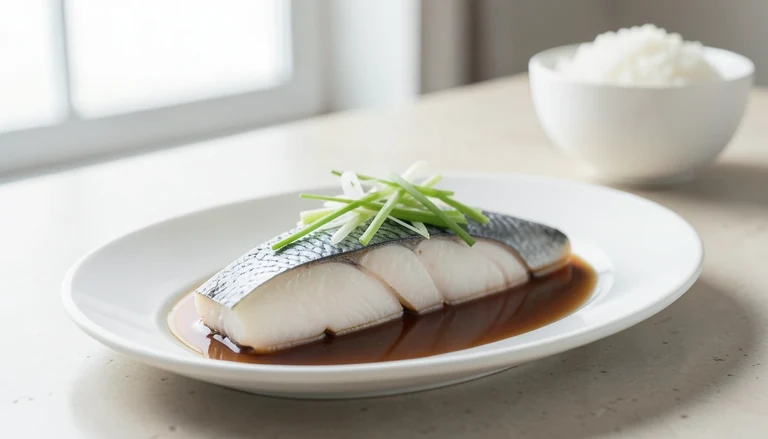
Gently steamed fish with ginger, scallion and a light soy-based sauce.
| Fact | Detail |
|---|---|
| Heat | Mild |
| Main protein | White fish; the species varies |
| Region | Cantonese |
| Common menu names | Cantonese steamed fish |
Qing zheng yu, and the Cantonese seafood table
Steamed fish is 清蒸鱼, qīng zhēng yú on this site. The Cantonese cuisine article’s seafood table writes steamed fish as 蒸魚, without the 清 prefix. (Wikipedia — Cantonese cuisine (opens in a new tab), read )
Wikipedia ties the dish to Guangdong’s coast on the South China Sea. It says fresh seafood is prominent in Cantonese cooking, that many restaurants keep aquariums or seafood tanks, and that the freshest seafood is odourless and, in Cantonese culinary arts, cooked by steaming. In some recipes only a small amount of soy sauce, ginger and spring onion is added, to bring out the seafood’s natural sweetness. (Wikipedia — Cantonese cuisine (opens in a new tab), read )
Steaming itself is old. Wikipedia’s article on the technique says some of the world’s earliest steam cookers, made of stoneware, were found in China’s Yellow River Valley and date as far back as 5,000 BCE. It also says that in Chinese cooking vegetables are usually stir-fried or blanched and seldom steamed, while seafood and meat are steamed, with steamed whole fish as an example. (Wikipedia — Steaming (opens in a new tab), read )
The dish carries a banquet meaning as well as a weeknight one. The Woks of Life says Cantonese steamed fish is often served as one of the final courses at a Chinese wedding banquet, right before the last rice and noodle course, and that it also appears on ordinary home tables. (The Woks of Life — Cantonese steamed fish (opens in a new tab), read ) Made With Lau calls it a required dish at traditional Chinese banquets, holidays and celebrations, especially Lunar New Year. (Made With Lau — Steamed fish (opens in a new tab), read )
Made With Lau explains the wordplay. The Cantonese word for fish, yùh 魚, sounds like yùh 余, surplus, and the page gives 年年有餘, a surplus every year, and 無魚不成宴, no fish, no feast. A whole fish is the form used for the celebration. (Made With Lau — Steamed fish (opens in a new tab), read )
Ginger, scallion, soy, and hot oil
The Woks of Life fillet recipe cuts scallion into two-inch lengths and juliennes it, slices and juliennes ginger, and roughly chops cilantro. It reserves about a third of the aromatics raw. The sauce is light soy sauce, salt, sugar and hot water, mixed until the sugar and salt dissolve. The fish steams on a heatproof plate for 7 to 10 minutes, depending on thickness. The liquid on the plate is drained, the raw aromatics go on, and the rest of the ginger, scallion and cilantro are fried in oil with the soy mixture and poured over the fish. (The Woks of Life — Cantonese steamed fish (opens in a new tab), read )
Made With Lau prepares a whole fish by cutting away the belly fat, scraping dried blood from the bones, rinsing the cavity and patting it dry, then cutting into the back so the thick part cooks evenly. Its sauce is ground bean sauce, light soy sauce, white pepper, salt, chicken bouillon, sugar, cornstarch and olive oil, mixed with minced ginger and chopped green onion. Half goes inside the fish and half on top before steaming. After about 12 minutes, corn oil is heated until it shimmers and poured over raw scallion strips on the fish, then cilantro is added. (Made With Lau — Steamed fish (opens in a new tab), read )
The two recipes are not one method. The Woks of Life steams a fillet plain on the plate, drains the liquid, then pours a hot soy-and-aromatic sauce over it. Made With Lau spreads a ground-bean sauce inside and over a whole fish before steaming, then pours shimmering oil over raw scallion after the fish comes out. (The Woks of Life — Cantonese steamed fish (opens in a new tab), read ) (Made With Lau — Steamed fish (opens in a new tab), read ) Both use ginger, scallion and a final hit of heat; the order and the sauce differ.
Wikipedia’s Cantonese cuisine article reduces the restaurant plate to a small amount of soy sauce, ginger and spring onion, with the seasoning used to bring out the fish rather than cover it. (Wikipedia — Cantonese cuisine (opens in a new tab), read ) That is a description of the idea, not a recipe. The two recipe pages above are the detail.
Timing is by thickness, not by the clock alone. The Woks of Life gives 7 to 10 minutes for a fillet and 4 to 5 minutes for a very thin half-inch fillet, and says a butter knife should slide through the thickest part without resistance. (The Woks of Life — Cantonese steamed fish (opens in a new tab), read ) Made With Lau steams a 1-pound tilapia for about 12 minutes plus 1, and checks that the eyes have turned white and the meat pulls away from the bones. (Made With Lau — Steamed fish (opens in a new tab), read )
Whole fish, fillet, and a Hunan fish head
Made With Lau says the same recipe works with fillets, subtracting 2 to 4 minutes, but a traditional Chinese celebration calls for a whole fish. The fish should be complete and have its scales; it is traditionally prepared on Lunar New Year’s eve and eaten after the New Year. (Made With Lau — Steamed fish (opens in a new tab), read )
The Woks of Life cooks fillets because a whole fish has bones and trickier timing, and it keeps a separate whole-fish recipe. It recommends a delicate white fish and lists flounder or fluke, sea bass, haddock, ocean perch, grouper, cod and freshwater tilapia. It advises against oily and firm fish such as bluefish, mackerel or swordfish. (The Woks of Life — Cantonese steamed fish (opens in a new tab), read )
The species is not in the English name. A menu that says steamed fish has not said sea bass, grouper, tilapia or cod. (The Woks of Life — Cantonese steamed fish (opens in a new tab), read ) (Made With Lau — Steamed fish (opens in a new tab), read ) Ask which fish is available and how the price is calculated before the kitchen steams it.
The Hunan bowl is a different dish. The Woks of Life’s Hunan steamed fish with salted chilies and tofu uses chopped pickled chilies and tofu and is deliberately hotter and stronger than the Cantonese plate. (The Woks of Life — Hunan steamed fish with salted chilies (opens in a new tab), read ) This site has a separate page for fish head with chopped chili. The Cantonese clear-steam and the Hunan chili-steam share a steamer, not a recipe.
Cantonese seafood restaurants often keep tanks on the premises, according to Wikipedia. (Wikipedia — Cantonese cuisine (opens in a new tab), read ) Ask what is available and how it is priced; the tank is a restaurant practice, not a guarantee at every address.
How to order and eat it
Ask for the whole fish or the fillet, the species, the size and the price. The Woks of Life’s fillet is the quicker order; Made With Lau’s whole fish is the banquet form and serves a table. (The Woks of Life — Cantonese steamed fish (opens in a new tab), read ) (Made With Lau — Steamed fish (opens in a new tab), read ) If the fish is part of a banquet, ask when it arrives, because the Woks of Life places it near the end of the meal, before the final rice and noodle course. (The Woks of Life — Cantonese steamed fish (opens in a new tab), read )
The sauce and aromatics are part of the dish, not a garnish to leave on the plate. The Woks of Life says the aromatics and sauce are as popular as the fish when served with rice, and that lots of steamed white rice is a must. (The Woks of Life — Cantonese steamed fish (opens in a new tab), read ) Spoon some of the sauce over the rice, and eat the fish away from the bones.
The sauce is soy-based in both home recipes. The Woks of Life uses light soy sauce; Made With Lau adds ground bean sauce, which it describes as ground fermented yellow soybeans. (The Woks of Life — Cantonese steamed fish (opens in a new tab), read ) (Made With Lau — Steamed fish (opens in a new tab), read ) If soy or fish is a concern, say so before ordering.
The San Francisco guide lists Cantonese restaurants and dim sum rooms, including R&G Lounge, Yank Sing and Dragon Beaux. Those are restaurant descriptions from checked pages, not a claim that any of them steams this fish today. Cantonese cooking is the regional page, the Cantonese ordering guide builds the wider meal, and the shared-table guide places a whole fish at the center of one.
Regional versions
- Whole fish at a banquet. Made With Lau says a whole fish is the form for a traditional Chinese celebration, especially Lunar New Year: the fish should be complete and have its scales, and it is traditionally prepared on Lunar New Year’s eve and eaten after the New Year. (Made With Lau — Steamed fish (opens in a new tab), read ) The Woks of Life says Cantonese steamed fish is often served as one of the final courses at a wedding banquet. (The Woks of Life — Cantonese steamed fish (opens in a new tab), read )
- Fillet at home. The Woks of Life steams a fillet on a heatproof plate for 7 to 10 minutes, or 4 to 5 minutes for a very thin half-inch fillet, then pours a hot soy-and-aromatic sauce over it. It recommends delicate white fish and avoids oily, firm fish such as bluefish, mackerel and swordfish. (The Woks of Life — Cantonese steamed fish (opens in a new tab), read )
- Hunan fish head under chopped chili. The Woks of Life’s Hunan steamed fish with salted chilies and tofu uses chopped pickled chilies and tofu and is deliberately hotter and stronger than the Cantonese plate. (The Woks of Life — Hunan steamed fish with salted chilies (opens in a new tab), read ) This site has a separate page for fish head with chopped chili.
Questions people ask
How do I know when steamed fish is done?
The Woks of Life tests a fillet with a dull butter knife: the fish is done when the knife falls through the thickest part without resistance. It gives 7 to 10 minutes for a fillet and 4 to 5 minutes for a very thin half-inch fillet. (The Woks of Life — Cantonese steamed fish (opens in a new tab), read ) Made With Lau checks a whole fish by the eyes, which turn white, and by a chopstick pushed into the thickest part; the meat should separate easily from the bones. It steams a 1-pound tilapia for about 12 minutes plus 1. (Made With Lau — Steamed fish (opens in a new tab), read )
Should I order a whole fish or a fillet?
A whole fish is the celebration form and a fillet is the everyday shortcut. Made With Lau says the same recipe works with fillets, subtracting 2 to 4 minutes, but that a traditional Chinese celebration calls for a whole fish with nothing missing. (Made With Lau — Steamed fish (opens in a new tab), read ) The Woks of Life cooks fillets because a whole fish has bones and trickier timing, and it keeps a separate whole-fish recipe. (The Woks of Life — Cantonese steamed fish (opens in a new tab), read ) Ask which one the kitchen is pricing before you order.
Which fish should I order?
The Woks of Life recommends a delicate white fish: flounder or fluke, sea bass, haddock, ocean perch, grouper, cod or freshwater tilapia. It advises against oily and firm fish such as bluefish, mackerel or swordfish. (The Woks of Life — Cantonese steamed fish (opens in a new tab), read ) Made With Lau’s whole-fish recipe uses tilapia and says the method works with most fish. (Made With Lau — Steamed fish (opens in a new tab), read ) The English menu name may not give the species, so ask; the sauce and the cooking time follow the fish.
Why is fish served at Lunar New Year?
Made With Lau explains the wordplay: the Cantonese word for fish, yùh 魚, sounds like yùh 余, surplus. It gives 年年有餘, a surplus every year, and 無魚不成宴, no fish, no feast. A whole fish, with nothing missing, is the form used for the celebration. (Made With Lau — Steamed fish (opens in a new tab), read ) The Woks of Life ties the dish to wedding banquets as well as ordinary home dinners. (The Woks of Life — Cantonese steamed fish (opens in a new tab), read )
What is the sauce on Cantonese steamed fish?
Wikipedia describes a small amount of soy sauce, ginger and spring onion, used to bring out the fish rather than cover it. (Wikipedia — Cantonese cuisine (opens in a new tab), read ) The Woks of Life mixes light soy sauce, salt, sugar and hot water, then pours it over the fish with aromatics that have been fried in oil. (The Woks of Life — Cantonese steamed fish (opens in a new tab), read ) Made With Lau spreads a mixture of ground bean sauce, light soy sauce, white pepper, salt, chicken bouillon, sugar, cornstarch and oil inside and over a whole fish before steaming, then pours hot oil over raw scallion. (Made With Lau — Steamed fish (opens in a new tab), read ) Both sauces are soy-based; they are not the same sauce.
Keep reading
Last reviewed
Sources & further reading
Background and preparation references. Our descriptions are editorial summaries, not restaurant reviews.
- Wikipedia — Cantonese cuisine (opens in a new tab) ↗ read
- Wikipedia — Steaming (opens in a new tab) ↗ read
- The Woks of Life — Cantonese steamed fish (opens in a new tab) ↗ read
- Made With Lau — Steamed fish (opens in a new tab) ↗ read
- The Woks of Life — Hunan steamed fish with salted chilies (opens in a new tab) ↗ read