Min cooking, and the broth rule
Fujian cuisine (福建菜), also called Min cuisine (闽菜), is the cooking Wikipedia ties to Fujian province and especially to the capital, Fuzhou. The article says that, in its own usage, the name means the cooking of Min Chinese-speaking people in the province, and that other food in Fujian includes Putian, Hokkien, Hakka, and the cooking of the She and Tanka peoples. (Wikipedia — Fujian cuisine (opens in a new tab), read ) A later section of the same article still describes Putian and southern Fujian as styles of Fujian cuisine. (Wikipedia — Fujian cuisine (opens in a new tab), read ) The two passages do not draw one boundary. Both stay on the record here.
The article calls the cooking light but flavorful, soft and tender, with particular attention to umami, written 鲜味 (xiān wèi), and to keeping the main ingredient’s flavor instead of covering it. Ingredients run from coastal fish and shellfish to mountain mushrooms and bamboo shoots. The techniques it names as the usual ones are braising, stewing, steaming and boiling. It stresses knife work, and it stresses broth. One saying it records is that a single broth can be turned into many forms. Another is that a meal without soup will not do. (Wikipedia — Fujian cuisine (opens in a new tab), read )
The provincial government’s English feature on Fuzhou puts the same ideas in the city’s frame. It describes Fuzhou food as light but flavorful, aimed at the original taste of the ingredients, with umami from seafood as a staple, and it sets street snacks beside the seafood tables. (Fujian provincial government — Fuzhou local cuisine (opens in a new tab), read ) Seasoning on the Wikipedia page is not one sauce. Fermented fish sauce, called shrimp oil (虾油) locally, sits with oyster, crab, shrimp and peanuts. The page also names fish sauce, shrimp paste, sugar, shacha sauce, preserved apricot, and wine lees left from making rice wine. Red yeast rice (红糟) is described as giving food a rosy color, a pleasant aroma and a slight sweetness. Drunken dishes, food marinated in wine, belong to the same account. (Wikipedia — Fujian cuisine (opens in a new tab), read )
A jar, an oyster, and pork with no fruit
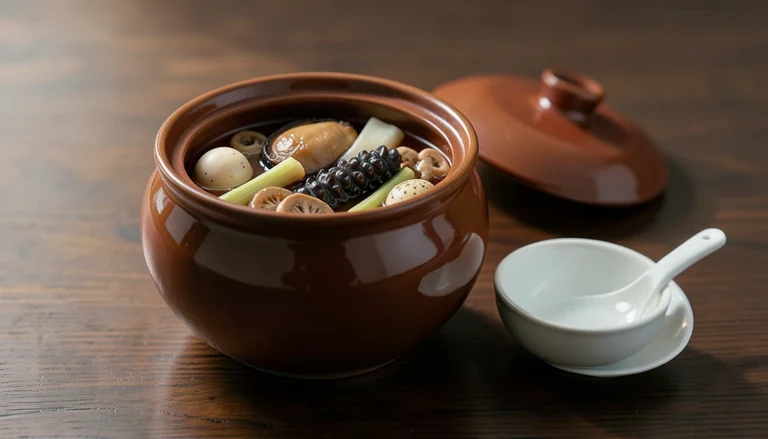
Buddha jumps over the wall (佛跳墙, fotiaoqiang) is the Fuzhou casserole both provincial pages discuss, and they do not describe the same pot. The 2025 page says the dish was first called fushouquan, credits it to Zheng Chunfa, founder of Juchunyuan, in the Guangxu reign of 1871 to 1908, and says the Juchunyuan recipe was placed on the national intangible-cultural-heritage list in 2008. The ingredients it names are poultry, fish maw, abalone, sea cucumber and dried scallops, joined by more than twenty techniques into one aromatic casserole. (Fujian provincial government — Fuzhou fotiaoqiang (opens in a new tab), read )
The 2021 Fuzhou feature gives a wider ingredient list and a different origin story. A recipe, it says, can hold up to thirty main ingredients and twelve condiments, and a pot can include shark fin, sea cucumber, abalone, quail eggs, fish maw, bamboo shoots and pork. Preparation can take one or two days. On that page the name comes from a legend about a traveling scholar’s wine jar and a monk, and from a poet who said even Buddha would climb a wall for the smell. (Fujian provincial government — Fuzhou local cuisine (opens in a new tab), read ) Wikipedia’s Fujian article also lists shark’s fin among the ingredients and repeats a monk-and-wall legend. (Wikipedia — Fujian cuisine (opens in a new tab), read )
When shark fin is the question, United States law is separate from either recipe. NOAA Fisheries says the Shark Fin Sales Elimination Act took effect on December 23, 2022, and that it prohibits possessing, selling or purchasing a shark fin or a product containing a shark fin, with narrow exceptions the agency page spells out. (NOAA Fisheries — Shark fin sales FAQ (opens in a new tab), read ) Ask what is in the jar. Neither provincial page is a menu for a restaurant in the United States. The dish page keeps the heritage listing and the ingredient disagreement together.
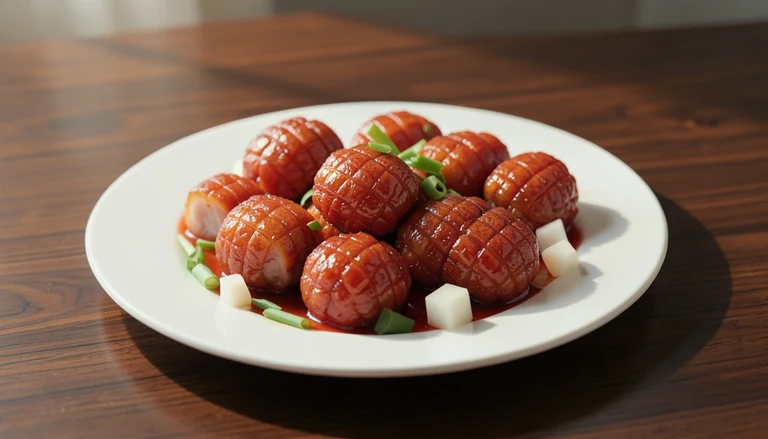
Lychee pork (荔枝肉) contains no lychee fruit. The 2021 Fuzhou feature describes small round pieces of pork and sliced water chestnut in a sweet-and-sour sauce, colored red-orange with red wine lees, and named because the shape and color look like lychee skins. The same page attaches a Tang-dynasty story about a homesick consort. The story is not a description of the plate in the bowl. (Fujian provincial government — Fuzhou local cuisine (opens in a new tab), read )
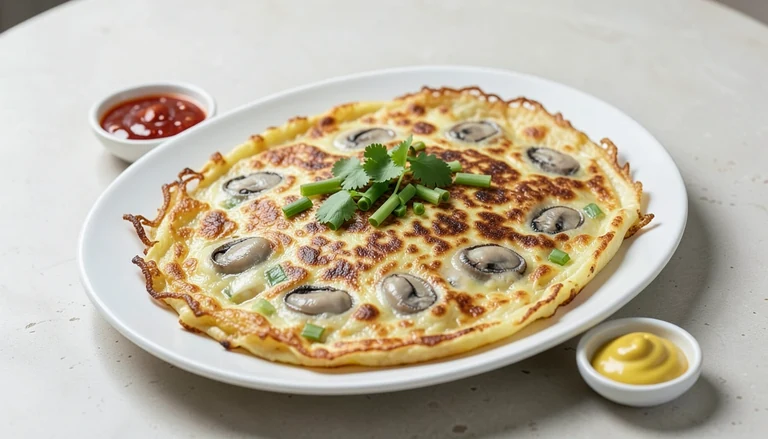
Oyster omelette is the everyday plate beside that banquet jar. A China Daily page carried on a government portal, written about Xiamen, says to blend fresh oysters, sweet potato, starch and egg, add soy sauce, and fry the mix in shallow oil until the oysters are crisp. Local residents, it says, like to eat it with porridge. (China Daily government portal — Xiamen oyster omelet (opens in a new tab), read ) Wikipedia’s Fujian table prints another name, 蚵仔煎, rendered ô-á-chian in Pe̍h-ōe-jī, and glosses the dish as an omelette with an oyster filling. (Wikipedia — Fujian cuisine (opens in a new tab), read ) The characters on our dish page, 海蛎煎, are the ones that portal prints as hailijian. (China Daily government portal — Xiamen oyster omelet (opens in a new tab), read )
Coast, west, and red-yeast chicken
Wikipedia’s style notes do not describe one flavor. Fuzhou, it says, is lighter, often puts sweet and sour in the same plate, and is associated with soups, fermented fish sauce and red yeast rice. Southern Fujian tastes stronger, shows influence from Southeast Asian cooking, uses sugar and spices such as shacha sauce and five-spice powder more often, and sends many dishes out with a dip. Western Fujian is saltier and oilier, leans on meat rather than seafood, and can carry a little heat from mustard and pepper. Putian, on the coast, is described through seafood, including lor mee and a local clam. (Wikipedia — Fujian cuisine (opens in a new tab), read ) The single word Fujian on a menu has not chosen among those kitchens.
Red-yeast chicken (红糟鸡, hóng zāo jī) makes the seasoning visible. Wikipedia’s table calls it chicken cooked in red yeast rice. (Wikipedia — Fujian cuisine (opens in a new tab), read ) Stuffed fish balls, a minced-pork filling inside a fish paste, are the snack the Fuzhou feature treats as a city staple, served where local specialties are cooked and also sold as street food. (Fujian provincial government — Fuzhou local cuisine (opens in a new tab), read ) Neither of those two plates has a dish page here. The jar, the lychee-shaped pork and the oyster omelette do.
The Fujian article says this cooking has had a deep effect on Taiwanese cuisine and on overseas Chinese cooking in Japan, North America and Southeast Asia, because a majority of Taiwanese people, and a majority of Chinese communities in Southeast Asia, have ancestral roots in the Minnan region of the province. (Wikipedia — Fujian cuisine (opens in a new tab), read ) The Taiwanese ordering guide is about a Taiwanese menu. It is a related kitchen, not a second copy of this page.
Pepper steak and Fuzhou cooking abroad
Wikipedia’s Fujian article says strips of pork with green pepper (青椒肉丝) were adapted into pepper steak in American Chinese cuisine. (Wikipedia — Fujian cuisine (opens in a new tab), read ) The American Chinese cuisine article describes that US plate as sliced steak with green bell peppers, tomatoes and onions, stir-fried with salt, sugar and soy sauce, and it notes a somewhat similar dish in Hunan cooking. (Wikipedia — American Chinese cuisine (opens in a new tab), read ) Pepper steak on a takeout menu is that adaptation. It is not the Fuzhou jar, and it is not lychee pork.
The same American article is specific about a few cities and silent about a national map. It says Fujianese cooking is among the regional cuisines available in New York City, that a large Fujianese population in Boston has made Fuzhou cooking readily available there, and that Fuzhou cooking is readily available in Philadelphia’s Chinatown as well. (Wikipedia — American Chinese cuisine (opens in a new tab), read ) Read those lines as the article’s report. They do not say what any one restaurant is serving this week.
If the menu says Fujian, Fuzhou, Hokkien or Min, ask which of those words the kitchen means, and whether the seasoning is red wine lees, a light broth, a sweet-sour glaze or a pepper stir-fry. The regional flavors guide names Fujian inside the eight-cuisine grouping and then says the grouping is only a start. Buddha jumps over the wall, oyster omelette and lychee pork are the three plates with their own pages.
Signature dishes
| Dish | Characters and romanization | What it is | Heat |
|---|---|---|---|
| Buddha jumps over the wall | 佛跳墙 · Fó tiào qiáng | A Fuzhou jar casserole. The 2025 heritage account and the 2021 ingredient list do not match. | Mild |
| Oyster omelette | 海蛎煎 · Hǎi lì jiān | Oysters fried with sweet potato, starch and egg. Also written 蚵仔煎, ô-á-chian. | Mild |
| Lychee pork | 荔枝肉 · Lì zhī ròu | Scored pork and water chestnut in a sweet-sour sauce colored with red wine lees. No lychee fruit. | Mild |
| Red-yeast chicken | 红糟鸡 · hóng zāo jī | Chicken cooked with red yeast rice, which Wikipedia says lends a rosy color and a little sweetness. | Mild |
| Stuffed fish balls | 包心鱼丸 · bāo xīn yúwán | Fish paste wrapped around a minced-pork filling, a Fuzhou snack in the provincial feature. | Mild |
Keep reading
Questions people ask
What does Min cuisine mean on this page?
Min cuisine (闽菜) is another name for Fujian cuisine. Wikipedia ties it to Fujian, especially Fuzhou, and says its own article uses the name for Min Chinese-speaking cooking in the province, while also describing southern, western and Putian styles later on. (Wikipedia — Fujian cuisine (opens in a new tab), read ) The provincial feature on Fuzhou stresses light seasoning, the original taste of the ingredients, and umami from seafood. (Fujian provincial government — Fuzhou local cuisine (opens in a new tab), read ) The word alone does not tell you which of those styles a kitchen cooks.
Does Buddha jumps over the wall contain shark fin?
Some published accounts include it, and a later provincial account does not. The 2021 Fuzhou feature lists shark fin among ingredients a pot can hold. (Fujian provincial government — Fuzhou local cuisine (opens in a new tab), read ) The 2025 page, describing the Juchunyuan recipe on the national heritage list, names poultry, fish maw, abalone, sea cucumber and dried scallops instead. (Fujian provincial government — Fuzhou fotiaoqiang (opens in a new tab), read ) NOAA Fisheries says that since December 23, 2022, US law has prohibited selling or purchasing a shark fin or a product containing one, with narrow exceptions on the agency page. (NOAA Fisheries — Shark fin sales FAQ (opens in a new tab), read ) Ask the kitchen what is actually in the jar.
Does lychee pork contain lychee?
No. The Fujian government’s Fuzhou feature says the pork is cut into small round pieces, cooked with sliced water chestnut in a sweet-and-sour sauce, and colored with red wine lees so the shape and color resemble lychee skins. (Fujian provincial government — Fuzhou local cuisine (opens in a new tab), read ) A Tang-dynasty story on that page is a legend attached to the name. It is not a fruit in the sauce.
How do Fuzhou, southern Fujian and the west differ?
Wikipedia says Fuzhou cooking is lighter, often sweet and sour together, and associated with soups, fermented fish sauce and red yeast rice. Southern Fujian tastes stronger, uses more sugar, shacha sauce and five-spice, and often comes with a dip. Western Fujian is saltier and oilier, focuses on meat more than seafood, and can be slightly hot from mustard and pepper. (Wikipedia — Fujian cuisine (opens in a new tab), read ) A menu that only says Fujian has not picked one of those.
Is pepper steak a Fujian dish?
Wikipedia’s Fujian article says pork with green pepper was adapted into pepper steak in American Chinese cooking. (Wikipedia — Fujian cuisine (opens in a new tab), read ) The American Chinese cuisine article describes the US plate as steak, green bell peppers, tomatoes and onions stir-fried with salt, sugar and soy, and mentions a related Hunan dish. (Wikipedia — American Chinese cuisine (opens in a new tab), read ) The takeout plate is that adaptation. The Fuzhou dishes in the table are a different set of names.
What is red yeast rice doing in Fujian food?
Wikipedia says red yeast rice, 红糟, is widely used in Fujian cooking and gives food a rosy color, a pleasant aroma and a slight sweetness. Wine lees from rice wine are used across the same cooking. (Wikipedia — Fujian cuisine (opens in a new tab), read ) Lychee pork takes its red-orange color from red wine lees in the Fuzhou feature, and red-yeast chicken is the table’s example of chicken cooked in red yeast rice. (Fujian provincial government — Fuzhou local cuisine (opens in a new tab), read ) (Wikipedia — Fujian cuisine (opens in a new tab), read )