
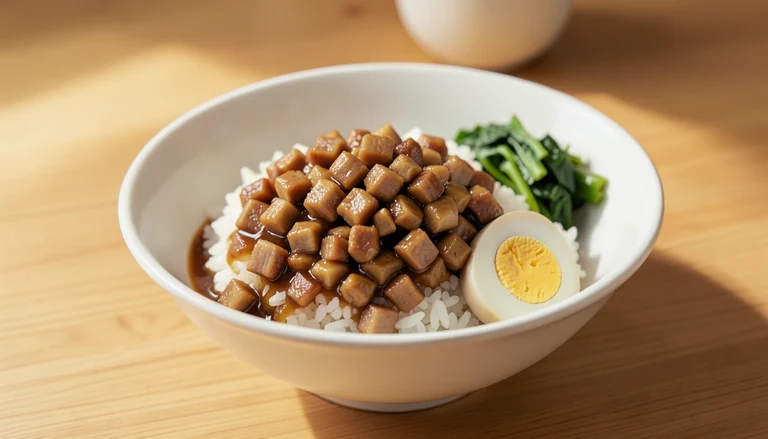
Choose a rice bowl, a noodle bowl or shared plates
For a first Taiwanese restaurant order, start with lu rou fan if you want braised pork over rice, Taiwanese beef noodles if you want a substantial broth bowl, or three-cup chicken if you want a shared dish with rice. Add one small dish after checking what your main includes. That is a practical starting point, not a list every diner should complete in one meal.
The first decision is the restaurant's format. A rice-and-noodle eatery, a bento counter and a kitchen serving shared dinner plates can all offer Taiwanese food while requiring different orders. Ask whether a dish is an individual bowl, a composed box or a plate intended for the table. A small braised-pork rice bowl can fill a different role from a bento carrying the same name.
Taiwanese food traditions deserve their own context. A familiar noodle or dumpling format does not make a preparation interchangeable with Lanzhou noodles, Shanghai buns or a general takeout dish. Read the kitchen's description and use the named Taiwanese examples below to ask more precise questions.
Taiwanese beef noodles: ask what broth and beef you are choosing
Niu rou mian (牛肉麵) identifies beef noodles, but does not finish the order. Taiwan's Tourism Administration describes a Taiwanese preparation beginning with spicy bean paste before beef and water are added. Wei Guo's Red House Spice red-braised example uses beef chunks, chili bean paste, soy sauce and tomato, then serves the broth with noodles, greens and pickled vegetables. These are named preparations rather than a universal formula for every Taiwanese bowl.
Ask whether the kitchen's bowl is red-braised, clear-broth or another preparation, which beef cuts it uses, and which noodle widths are available. If the menu offers tendon, mixed cuts or different toppings, choose by the textures you want. Check the portion before adding a second substantial starch.
Do not substitute the site's Lanzhou beef-noodle description for this decision. Lanzhou is a distinct Gansu tradition, and a Taiwanese red-braised bowl can have a different broth and preparation. Use the broader noodle guide to compare serving styles, then return to the restaurant's specific Taiwanese bowl.
Lu rou fan: make the pork and portion questions concrete
Lu rou fan (滷肉飯, also written 魯肉飯 on menus) is braised pork with rice. The size and cut of the pork, its sauce, and the accompanying dishes are the useful questions. A chopped-pork topping and a large piece of pork belly will not give you the same eating experience, even if an English menu uses 'braised pork rice' for both.
At RenHe Diner in Keelung, the operator's menu describes lu rou fan as rice topped with soy-braised pork, usually accompanied by seasonal greens and a light soup. This is menu example one, checked October 3, 2026. It shows a rice-meal format at one Taiwanese eatery; it does not establish what is included in an order elsewhere.
Ask your restaurant whether the bowl is a small rice item, a main or a bento, and what comes with it. If greens and soup are already included, look at them before adding duplicates. If you want a side, choose it for a preparation you want to explore rather than fill the order automatically.
Three-cup preparations: the name is a sauce clue
San bei ji (三杯雞), three-cup chicken, points to sesame oil, soy sauce and rice wine. The Woks of Life's family recipe uses those ingredients with garlic, ginger and basil, while explaining that its quantities are not three literal full cups. Read the name as a preparation clue, not a serving measure or an exact ratio in every kitchen.
Taipei Cuisine in Quincy lists 'Three Cups Chicken, Spicy' and describes chicken with basil leaves, garlic and ginger. This is menu example two, checked October 3, 2026. The operator also lists the dish in its lunch section, demonstrating that one name can appear in more than one ordering format. Its broader menu names Sichuan and Shanghai preparations too; those entries should not all be relabeled Taiwanese.
If you choose three-cup chicken, ask whether it is bone-in, how the kitchen uses chili, and whether rice accompanies the portion you are ordering. If the menu offers three-cup mushrooms, ask how that version is prepared instead of assuming a chicken recipe describes it completely. A familiar sauce name can travel across ingredients.
Add a small dish that changes the meal
Once your main is settled, read the small-dish section. Ask which items are prepared that day, which are cold or warm, and which size works beside your bowl or shared plate. A vegetable dish, a braised egg or a small tofu preparation may fit better than another full rice or noodle order, depending on what the main includes.
A snack name can conceal a substantial preparation. Taiwan's Tourism Administration, for example, describes oyster thin noodles as a dish built around oysters and thin noodles. If a noodle bowl is already your main, another noodle-based snack may be a deliberate comparison rather than a contrast. Ask about texture and portion as well as the translated name.
For an ingredient requirement, discuss the whole dish, including dressing and stock. A vegetable heading or a tofu ingredient is not enough to establish how this kitchen prepares it. Once those questions are settled, pick a small dish someone is curious about; it need not serve as a generic 'side.'
Use names to check preparation and order format
The table is a menu-reading aid, not an exhaustive account of Taiwanese food. Chinese characters are useful when an English menu abbreviates a name. Confirm the restaurant's preparation and format before turning the name into a meal.
| Name | Preparation clue | Order format to check |
|---|---|---|
| Niu rou mian / 牛肉麵 | Beef with noodles; broth and cuts vary | Individual bowl, broth style, noodle width and beef cut |
| Lu rou fan / 滷肉飯 | Braised pork over rice; RenHe's example uses soy-braised pork | Small rice bowl, main or bento; included soup and greens |
| San bei ji / 三杯雞 | Three-cup chicken; sauce points to sesame oil, soy and rice wine | Shared dish or composed lunch; bones, chili and rice |
| Three-cup mushrooms, if listed | A menu variation using another main ingredient | This kitchen's sauce and whether it is a complete meal |
| Oyster thin noodles | Taiwan Tourism's example combines oysters with thin noodles | Snack or bowl size, other ingredients and texture |
Build a first meal from the format you chose
For a solo rice meal, our editorial proposal is lu rou fan with one small dish only if the bowl's included accompaniments leave room for it. This assumes the pork and sauce are what you want, and that the operator offers a suitable bowl size. RenHe's published example illustrates why checking the greens and soup first is useful; it is not a menu guarantee for your restaurant.
For a noodle meal, choose one Taiwanese beef-noodle bowl and ask about its broth, cuts and toppings. Add a small plate if you want another texture after seeing the portion. A broth bowl can already be a complete meal; ordering extra rice simply because it appears nearby on the menu is optional.
For two people sharing dinner, another editorial proposal is three-cup chicken, a differently prepared vegetable and rice, with portions checked by the kitchen. This assumes everyone wants the aromatic sauce and is comfortable with the actual chicken cut. A lunch portion or bento may make more sense when the same dish is already composed as an individual meal.
Let the kitchen identify its Taiwanese specialties
Say which format you want, then ask: 'Which of your Taiwanese preparations would you choose for someone ordering here for the first time?' Add your preferences for broth, pork texture, chicken bones or chili. The staff can answer questions about the kitchen's actual menu that a general food list cannot.
Record the dish name alongside its broth, sauce and order format. On another menu, that helps you recognize a similar preparation while leaving room for local and family variation. A first meal is an introduction to one kitchen's work, not a conclusion about all Taiwanese food.
Questions people ask
What Taiwanese food should I order first?
Choose a format: lu rou fan for braised pork over rice, Taiwanese beef noodles for a broth bowl, or three-cup chicken for shared plates with rice. Confirm portions and included accompaniments before adding small dishes.
Are Taiwanese beef noodles the same as Lanzhou beef noodles?
Treat them as distinct traditions. The Taiwanese red-braised recipe cited here uses beef chunks and a seasoned braising broth; Lanzhou belongs to Gansu's noodle tradition. Confirm the actual broth and noodles rather than treating 'beef noodles' as one recipe.
Does three-cup chicken contain three cups of sauce?
The name points to sesame oil, soy sauce and rice wine, not a guaranteed quantity in your portion. The Woks of Life's family recipe explicitly uses smaller amounts. Ask the restaurant about its preparation and serving size.
Does lu rou fan come with soup and vegetables?
Check the operator's menu. RenHe in Keelung describes those accompaniments with its rice preparation, but another kitchen may offer a small bowl, a main or a bento with different inclusions.
Last reviewed
Sources & further reading
Background and preparation references. Our descriptions are editorial summaries, not restaurant reviews.
- Taiwan Tourism Administration — Taiwan snacks (opens in a new tab) ↗
- RenHe Diner, Keelung — Operator rice and noodle menu (opens in a new tab) ↗
- Taipei Cuisine, Quincy — Operator menu and three-cup chicken (opens in a new tab) ↗
- Red House Spice — Taiwanese red-braised beef noodle soup (opens in a new tab) ↗
- The Woks of Life — Three-cup chicken, a family recipe (opens in a new tab) ↗