Decide what kind of noodle meal you want
The most useful first noodle question is not 'Which dish is best?' It is 'Do I want broth, a sauce to mix through, or a plate from the wok?' That choice narrows a long menu quickly. Then decide whether you want slender strands, a broad chewy ribbon, or flat rice noodles. A topping you recognize will tell you less about the meal than those two decisions.
Start with Lanzhou beef noodles for a broth-based bowl, biang biang noodles for wide wheat ribbons, or beef chow fun for a Cantonese rice-noodle stir-fry. Beijing zhajiangmian and Sichuan dan dan noodles are two useful sauce-led choices with different seasonings. These are entry points into particular dishes, not a map of every noodle tradition in China.
These editorial comparisons use the preparations in the linked primary sources. Confirm the actual noodles and serving style: a menu saying only “beef noodles” may identify the topping while leaving the important decisions unstated.
Lanzhou beef noodles: choose your width
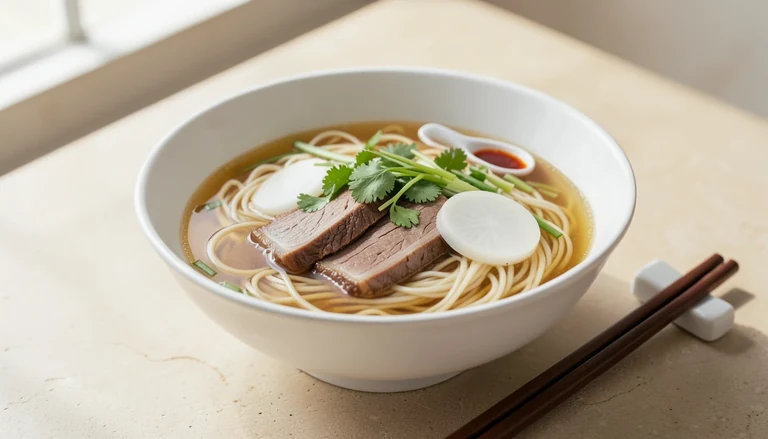
Lanzhou beef noodles (兰州牛肉面, Lanzhou niu rou mian) are a Gansu starting point: pulled noodles in clear broth, with beef, radish, herbs and red chili seasoning. Gansu's official tourism description highlights the clear soup, white radish, red pepper, green herbs and yellow noodles, and notes that noodle widths can vary.
Ask which widths the kitchen offers today. Thin noodles and wide noodles make different lunches even when the broth and topping stay the same. If you want the noodle to occupy more of each bite, try a broader option; if you want a bowl organized around broth and smaller mouthfuls, ask about a slender one. Describe the texture you like rather than guessing a numbered width from another restaurant.
Confirm whether chili oil is mixed in or can come separately. Then ask whether “beef noodle soup” means the clear-broth Lanzhou preparation or a different beef soup. Settle that question before choosing extras.
Biang biang noodles: make room for the ribbon
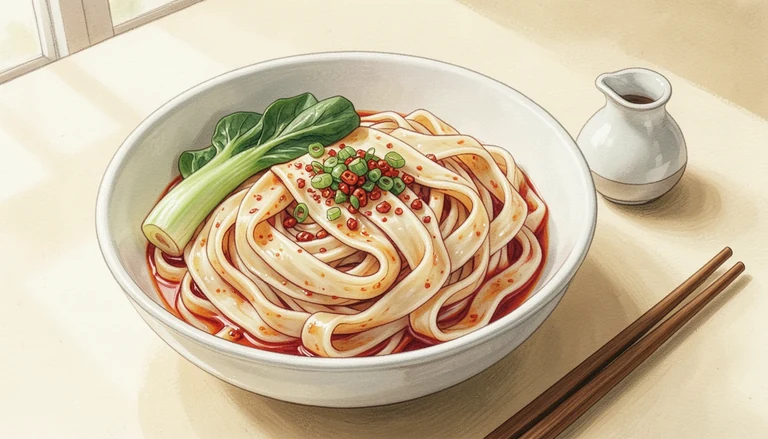
Biang biang noodles are associated with Xi'an in Shaanxi. Wei Guo's Red House Spice recipe uses broad, thick, hand-pulled wheat noodles. Her you po che mian (油泼扯面) preparation dresses the noodles with chili, garlic, scallions and Sichuan pepper, using hot oil over the seasonings, then soy sauce and black rice vinegar.
Choose this direction if the noodle itself is what you want to explore. The width is part of the appeal, so it is a useful change from a familiar thin-noodle lunch. Ask whether the restaurant offers an oil-splashed dressing, a meat topping, or another sauce. 'Hand-pulled' describes the noodle preparation; it does not determine the whole dish.
When comparing bowls, I would pair wide ribbons with soup or a different noodle material. For a solo order, check the portion before adding sides. Ask about chili adjustments before ordering, because the seasonings may be assembled together.
Zhajiangmian: ask what makes the sauce
Beijing zhajiangmian (炸酱面, zha jiang mian) brings a concentrated fried sauce to noodles. The Woks of Life's version combines pork belly, fermented yellow soybean paste and sweet flour paste, with cucumber and carrot at serving. The authors describe differences between families and recommend thicker noodles to stand up to the sauce.
Choose it when you want a savory sauce bowl without making chili the main reason for your order. Ask what meat or other topping this kitchen uses and whether the vegetables arrive mixed in or alongside. If sauce is served separately, add it in stages so you can find the balance you like, rather than assuming every bowl needs the entire portion.
The 'bean' language in an English description needs attention. The Woks of Life explains that tianmianjiang (甜面酱), sometimes called sweet bean paste, is a fermented wheat-flour paste. If you have an ingredient restriction, give it to the kitchen in plain terms. Asking only whether a bowl contains beans will not answer questions about wheat, soy or the complete sauce.
Dan dan noodles: look below the topping
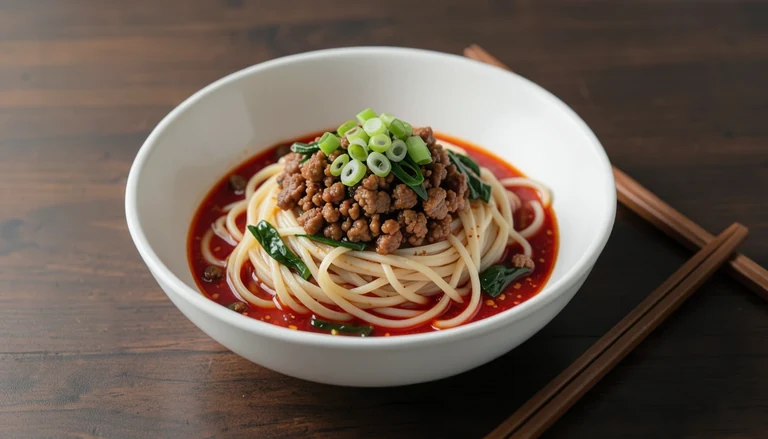
Dan dan noodles (担担面, dan dan mian) are a Sichuan sauce-led choice. The Woks of Life's recipe uses a pork and preserved-vegetable topping with a sauce of sesame paste, chili oil, soy sauce and Sichuan pepper. The ingredients explain why a brief menu name can leave several important questions unanswered.
Ask whether the kitchen's version is brothier or closer to a dressed noodle bowl, how much numbing pepper it uses, and whether sesame or peanut is part of the preparation. Confirm the size too: the same name can sit on an appetizer list or describe your entire lunch. Do not decide how spicy the bowl is from the visible topping alone.
Mix gently from the bottom so the sauce reaches the noodles before you judge the flavor. For a next-meal comparison, move between dan dan and zhajiangmian while keeping the noodle format familiar. You can then pay attention to the change in sauce and topping rather than trying to understand a different noodle, broth and cooking method all at once.
Beef chow fun: switch from wheat to rice noodles
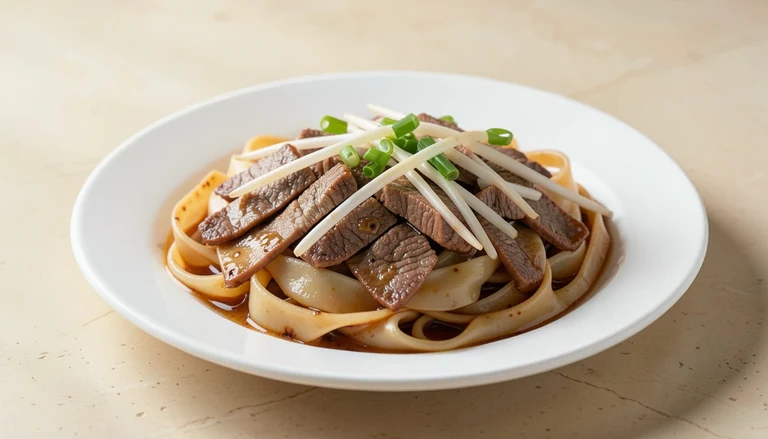
Beef chow fun (乾炒牛河) is a Cantonese plate of wide, flat rice noodles stir-fried with beef. Made With Lau's recipe includes bean sprouts and scallions, and uses soy sauce and oyster sauce. Its description distinguishes the dry-fried version from a saucier one: dry here means the noodles are coated rather than sitting in a pool of sauce.
Choose it when you want a wok-cooked plate instead of a soup or a sauce bowl. Ask whether the menu's chow fun is the dry-fried style, and whether the portion is intended for one diner or sharing. You may recognize the beef, but the flat rice noodle gives you a different texture from the wheat noodles in the preceding bowls.
Rice noodles alone do not establish the ingredients of the finished plate. Made With Lau's preparation illustrates why sauce and marinade questions matter. If avoiding wheat, soy, shellfish or another ingredient is essential, name the requirement and ask about the complete preparation. For a casual preference rather than a restriction, ask which other toppings the kitchen actually offers instead of assuming substitutions are available.
Use preparation words to resolve the remaining choices
Two menus can use the same English noodle label for different textures. The Woks of Life's ingredient guide distinguishes Hong Kong noodles for pan-frying from the more elastic alkaline noodles used in wonton soup. It also describes knife-sliced noodles, daoxiao mian (刀削面), made by slicing dough into cooking water, as well as packaged versions that reproduce the style.
If a menu offers hand-pulled, knife-cut and ordinary noodles, ask how those choices differ in this kitchen. You are selecting the noodle, then selecting what surrounds it. A knife-cut option does not automatically come with one particular sauce; a hand-pulled noodle need not arrive in the same broth as a Lanzhou bowl.
For chow mein or lo mein, settle the practical question: 'Are these soft noodles, crisp pan-fried noodles, or noodles topped with sauce?' English labels vary enough that the answer is more useful than insisting on a term. If your priority is crispness, say that. If your priority is a soft noodle plate, say that instead.
Plan your next three noodle orders
You do not need to memorize a catalog. Keep three different meal formats in mind, then change one feature each time. After a clear-broth Lanzhou bowl, try a wide ribbon with dressing. After two wheat-noodle meals, try chow fun. That sequence lets texture and preparation become useful preferences you can explain to a server.
- For broth: ask about Lanzhou beef noodles, the available widths and whether chili oil can come separately.
- For a broad wheat noodle: ask about biang biang noodles and the kitchen's dressing or topping.
- For a sauce comparison: check the meat, paste and portion in zhajiangmian, then compare it with dan dan noodles another time.
- For a rice-noodle plate: confirm whether beef chow fun is dry-fried or saucier, and check the sauces when ingredients matter.
Questions people ask
What Chinese noodle dish should I try first?
Choose the format you want: Lanzhou beef noodles for broth, biang biang noodles for broad wheat ribbons, or beef chow fun for a rice-noodle stir-fry. Ask about the restaurant's portion and preparation before adding sides.
Are rice noodle dishes gluten-free?
The noodle material does not settle the whole dish. Made With Lau's beef chow fun uses soy and oyster sauces as well as a marinade. Ask the kitchen about the complete preparation rather than relying on the rice-noodle label.
Are hand-pulled and knife-cut noodles the same?
They describe different ways of shaping dough. Ask which textures the kitchen offers and what soup or sauce comes with each. A noodle preparation word does not determine the topping or finished bowl.
Are dan dan noodles always spicy?
The Woks of Life's version includes chili oil and Sichuan pepper, but the name does not specify a fixed heat level. Ask about chili, numbing pepper, sauce ingredients and whether the kitchen can adjust this version.
Menu words in this guide
Last reviewed
Sources & further reading
Background and preparation references. Our descriptions are editorial summaries, not restaurant reviews.
- Gansu tourism — Lanzhou beef noodles (opens in a new tab) ↗
- Red House Spice — Xi'an biang biang noodles (opens in a new tab) ↗
- The Woks of Life — Beijing zhajiangmian (opens in a new tab) ↗
- The Woks of Life — Dan dan noodles (opens in a new tab) ↗
- Made With Lau — Beef chow fun (opens in a new tab) ↗
- The Woks of Life — Chinese noodles and wrappers (opens in a new tab) ↗