
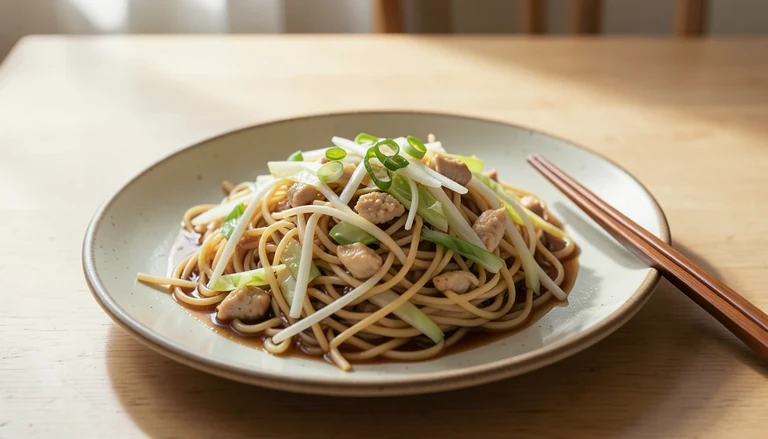
Ask what chow mein means on this menu
Chop suey usually points to a sauced vegetable-and-protein stir-fry. Chow mein may mean a noodle-centered dish, a crisp noodle cake with a saucy topping, or a vegetable-and-protein preparation served with rice and crispy noodle garnish. The difference depends on the restaurant, so 'chop suey has no noodles; chow mein has noodles' is too blunt to predict your order.
The Woks of Life's chicken chow mein guide explicitly separates those formats. A restaurant menu supplies the next clue: New China Wok in Philadelphia lists chow mein with white rice and crispy noodles, while its chop suey section says white rice. That tells you about the accompaniment; it does not tell you every ingredient in either sauce.
Choose the meal you want first: vegetables over rice, noodles throughout the plate, or crisp noodles under a topping. Then ask the server which menu item delivers it. This is more useful than trying to correct the restaurant's terminology.
| Menu clue | What to clarify | Choose it when |
|---|---|---|
| Chop suey; served with rice | Which vegetables, protein and sauce are in this version? | You want a vegetable-and-sauce plate with a separate starch |
| Chow mein; rice and crispy noodles | Are the crispy noodles a side or garnish? | You want the rice-based takeout format |
| Pan-fried or crispy noodle chow mein | Is there a noodle cake with sauce poured over it? | You want a contrast between crisp and sauced noodles |
| Stir-fried noodle chow mein | Are the noodles soft throughout or partly crisp? | You want noodles as the main starch in the dish |
Chop suey does not specify one vegetable mixture
Bill Leung's chop suey at The Woks of Life is a named recipe example: chicken and vegetables in a sauce, with flexibility to substitute tofu or other proteins. His preparation uses oyster sauce and Shaoxing wine in the chicken marinade. It is evidence for that preparation, not a promise that your local kitchen uses the same vegetables or seasonings.
Think of the protein word as the start of the description. 'Chicken chop suey' still leaves the vegetable mixture, sauce and serving size unresolved. Ask which vegetables are prominent if you are seeking celery, bean sprouts or greens, or if you want to avoid one of them. A photo can help identify the format, but it cannot establish the full ingredient list.
If a menu has both chop suey and chow mein with the same protein options, ask: 'Is the stir-fry itself different, or is the main difference the noodles on the side?' The answer can prevent two nearly overlapping dishes from taking up places in a shared order.
Noodle-centered chow mein has its own variations
Made With Lau's chicken chow mein uses thick noodles, chicken, cabbage, carrots and other vegetables, then brings them together in the pan with its sauce. Compare that with The Woks of Life's discussion of gai see chow mein, where a sauce-topped crisp noodle cake creates a different eating format. Neither example describes the rice-and-crispy-garnish version on New China Wok's menu.
For ordering, separate two questions: 'Are there cooked noodles in the main dish?' and 'How crisp are those noodles?' A yes to the first does not answer the second. If you want a soft noodle plate, say so directly. If you want the noodle cake with sauce on top, describe that structure rather than relying on the word crispy alone.
A menu heading such as Hong Kong style or Cantonese style can be a helpful lead, but the preparation description still matters. Read our noodle guide for other noodle materials and shapes; the lo mein comparison has its own glossary page.
Use this menu decision tree
Start with what you want to eat, then follow the matching branch. These questions work on a phone order as well as at a table. The final ingredient check belongs at the end of every branch, because identifying the format does not identify the complete recipe.
- Want vegetables and protein over rice? Ask about chop suey, then compare it with any chow mein listed with rice. Confirm which stir-fry and accompaniments each includes.
- Want a plate built around noodles? Ask whether this chow mein contains cooked noodles in the main dish. If it only comes with crispy garnish, ask which item is the noodle plate.
- Want a crisp noodle cake with a saucy topping? Ask for that preparation explicitly and confirm the topping. If the noodles are only sprinkled on top, return to the noodle-section choices.
- Want soft noodles throughout? Ask which item fits that texture and whether its sauce is mixed in. Do not assume every dish called chow mein will meet that preference.
- Before ordering: confirm the vegetable mixture, protein, sauce, portion and included rice or noodles. For an ingredient restriction, ask about the complete preparation and how the kitchen can meet it.
Fit the choice into the rest of the meal
For a shared order, decide whether this dish supplies the starch or sits alongside it. A noodle-centered chow mein may be the table's noodle choice; a chop suey plate may need rice. Check what is included before adding another rice or noodle order.
My ordering suggestion is to pair the selected format with something that changes the texture or seasoning. If you already have a saucy vegetable stir-fry, another similar plate may offer less variety than the crisp noodle preparation you meant to order. If everyone wants the same familiar format, that is a valid choice too: make the duplication deliberate.
For takeout, ask how the restaurant packages crisp noodles and sauce. If separate packaging is available, you can combine them at the table according to your texture preference. Do not mistake the existence of a bag of crispy noodles for proof that the main container is a noodle stir-fry.
Questions people ask
What is the difference between chop suey and chow mein?
Chop suey generally signals a sauced vegetable-and-protein stir-fry. Chow mein can describe several formats. Ask whether the restaurant means a noodle stir-fry, a crisp noodle cake with topping, or a rice-based dish with crispy noodles alongside.
Does chow mein always have noodles in the main dish?
No. New China Wok's menu lists chow mein with white rice and crispy noodles. Ask whether those noodles are garnish or part of a noodle-centered plate before ordering.
Is chop suey vegetarian?
The name does not settle the protein, stock, sauce or cooking process. Specify the version you are considering and ask about the complete preparation, including the seasonings, when vegetarian ingredients are required.
Can I choose by an East Coast or West Coast rule?
Broad regional shortcuts are less dependable than the actual menu. Ask about this restaurant's preparation and accompaniments. That resolves your order without assuming every kitchen in a region uses the same terms.
Menu words in this guide
Last reviewed
Sources & further reading
Background and preparation references. Our descriptions are editorial summaries, not restaurant reviews.
- The Woks of Life — Bill Leung's chicken chow mein and menu-format comparison (opens in a new tab) ↗
- The Woks of Life — Bill Leung's chop suey (opens in a new tab) ↗
- Made With Lau — Daddy Lau's chicken chow mein (opens in a new tab) ↗
- New China Wok, Philadelphia — Operator chow mein and chop suey menu (opens in a new tab) ↗