
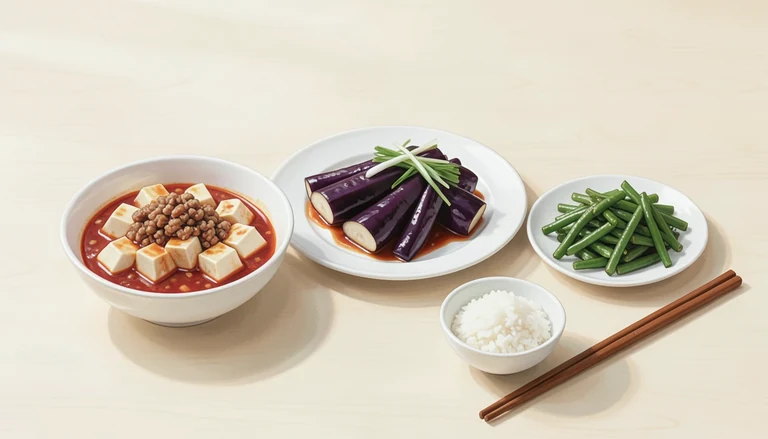
The difference in one table
Cantonese and Sichuan name two regional Chinese cuisines, not two settings on a heat dial. Cantonese cooking comes from Guangdong and the Pearl River Delta, including Guangzhou, Hong Kong and Macau. Sichuan cooking comes from Sichuan province and the neighboring municipality of Chongqing, which separated from Sichuan in 1997.
The contrast most people are reaching for is restraint against seasoning. Wikipedia’s Cantonese cuisine article says spices stay in modest amounts so they do not overwhelm the primary ingredient, which should be at its freshest. The Sichuan cuisine article calls Sichuan pepper the region’s most distinctive spice and describes the numbing sensation it produces.
Treat that as a direction to explore, not a law. A Cantonese kitchen can serve a salt-and-pepper dish with real chili, and a Sichuan table usually includes something mild. The rest of this guide is about reading the named dish in front of you.
| Question | Cantonese starting point | Sichuan starting point |
|---|---|---|
| Flavor base | Fresh and balanced; soy sauce, oyster sauce, ginger and scallion finish the plate | Chili, garlic and fermented broad-bean paste, often with Sichuan pepper on top |
| Heat and mala | Chili is not the goal; Wikipedia calls salt-and-pepper dishes one of the few spicy Cantonese ones | Mala joins a numbing tingle (麻) with chili heat (辣), and not every dish is mala |
| Cooking methods | Steaming and stir-frying favored, plus rotisserie for siu mei and soups simmered for hours | Stir-frying, dry-frying, braising, boiling in chili oil and hot pot |
| Signature dishes | Steamed fish with ginger and scallion, char siu, siu yuk, beef chow fun | Mapo tofu, kung pao chicken, twice-cooked pork, dan dan noodles |
| When to order it | A table with mixed chili tolerance, or a meal where the fish or seafood is the reason | When you want the tingle, a bold sauce for rice, or a hot pot to share |
| What to ask | Is the fish steamed to order, and what goes on it after steaming? | Does this dish use Sichuan pepper, or chili only? |
Cantonese cooking: steam, roast meat, restraint
A whole fish is the clearest place to start. Made With Lau’s Cantonese version steams a 1.5-pound tilapia for about 12 minutes over fully boiling water, pours off the liquid that collects in the dish, covers the fish with finely cut ginger and scallion, then heats two tablespoons of oil until it shimmers and pours that over the aromatics. The sauce is mixed separately from light soy sauce, dark soy sauce, cooking wine, white pepper, water, sugar and salt.
Wikipedia’s Cantonese cuisine article gives the reasoning behind that method. It says steaming and stir-frying are favored for their convenience and speed, and that the freshest seafood is usually steamed, with just soy sauce, ginger and spring onion in small amounts to bring out its sweetness. It also offers a rule of thumb worth carrying into a Cantonese menu: the spiciness of a dish is usually negatively correlated with the freshness of the ingredients.
The roast counter is the second half of the cuisine. The same article describes siu mei as rotisserie cooking, meat only with no vegetables cooked alongside it, and it lists char siu, siu yuk, roast duck and white cut chicken. A two-meat rice plate covers that side of the menu in one order, which is why a Cantonese dinner can run from a steamed fish to a room-temperature meat plate without either dish tasting seasoned in the same way.
Sichuan cooking: mala is two sensations
Mala is not another word for spicy. Wikipedia’s mala article defines it as a numbing and pungent seasoning derived from Sichuan peppercorn and chili, and separates the two characters: 麻 for the numb tingle and 辣 for the heat. The tingle comes from the pepper, so a dish can be very hot without being mala.
The same article calls mala characteristic of Sichuan cooking, particularly in Chongqing, and says the sauce is used in stir-fries, stews, soups, hot pot and as a dipping sauce.
Sichuan cooking is wider than that one combination. Wikipedia’s Sichuan cuisine article says broad-bean chili paste is an essential component of mapo tofu and twice-cooked pork, gives kung pao chicken and yuxiang shredded pork as examples, and notes that most Sichuan dishes are spicy while a typical meal still includes nonspicy dishes to cool the palate.
Keep the two characters apart when you order. Adding chili is easy for any kitchen; the pepper is a separate ingredient and a separate request, which is why the questions in this guide keep returning to it.
The methods behind the texture
Dry-frying is the Sichuan technique to recognize by name. The Woks of Life explains that 干煸四季豆 (ganbian sijidou) literally means dry seared: the beans go into a wok heated until it just starts to smoke and sear for about 20 minutes, until they carry small scorch marks, then garlic, dried red chilies and sui mi ya cai go in, and the dish finishes with Shaoxing wine, soy sauce, sugar and sesame oil. The same page says restaurants often deep-fry the beans first because that is faster.
Cantonese steaming works the other way around. The Made With Lau fish cooks in steam alone, and the browning comes from hot oil poured over raw ginger and scallion after the fish leaves the steamer. Nothing sears in the wok, so the texture stays tender and the flavor comes from the aromatics and the soy mixture.
Put the two methods beside each other and the regional gap becomes physical: one plate is scorched and dry on the surface, the other is wet, soft and glossy. That difference survives translation better than the words on the menu, and it explains why the same vegetable or the same tofu can arrive as two unrelated dishes in two restaurants.
When to order which, and what US menus mean
Order Cantonese when the table has mixed chili tolerance, when whole fish or seafood is the reason for the meal, or when you want several dishes that do not compete for attention. Order Sichuan when you want one bold sauce to carry rice, or when the tingle is the point rather than an accident.
US menus use Szechuan and Szechwan as older spellings of Sichuan; Wikipedia’s Sichuan cuisine article records both. The same article says American Chinese cooking still serves milder takes on Sichuan dishes as a staple, so the word on a takeout menu does not promise Sichuan pepper.
Cantonese names reached those menus earlier. Wikipedia’s Cantonese cuisine article records that Western Chinese restaurants were mostly Cantonese until the late twentieth century, which is why ordinary takeout lists still carry roast meat, chow mein and lo mein.
One question sorts most of it: does this dish use Sichuan pepper, or only chili? Ask it about the specific plate rather than the section heading. For a full order at either kind of restaurant, the Cantonese and Sichuan ordering guides below carry the detail.
Four menus that print both traditions
Golden Palace in Pittsburgh prints a Hongkong Dim Sum section with F1 Crystal Shrimp Dumpling (Har Gow) and F2 Shrimp & Pork Dumpling (Siu Mai) at $7.55 each, and F10 NanXiang Soup Dumpling at $6.55. The same menu has J1 Roasted Duck (half) at $25.00 and, in the vegetable and tofu section, C22 Szechuan Vegetable and C23 Ma Po Tofu at $15.95 each. One document, two traditions, separated by section. Menu read 2026-11-05.
Shangri-La in Colorado Springs lists Hong Kong Style Chow Fun at $17.95, described as fresh wide rice noodles wok-fried over high heat with bean sprouts, scallions and onions and seasoned with soy sauce, then Ma Po Tofu at $16.95 and Szechuan Bean Curd at $15.95 in the same list. Two tofu dishes carry two regional labels at two prices. Menu read 2026-11-05.
Grand House Asian Bistro in Oklahoma City puts a heat mark in the item name. Ma Po Tofu (S) at $12.00 is described as ground chicken and tofu sauteed in a spicy bean curd sauce, Sichuan Sliced Lamb (VS) at $17.00 and Sichuan Dan Dan Mien (S) at $14.00 sit nearby, and Shanghai Dumplings (4) at $7.00 are steamed with ground pork, vegetables and ginger. Read those letters as a house heat mark, not as proof that Sichuan pepper is in the dish. Menu read 2026-11-05.
Hawaii Dim Sum & Seafood in Honolulu runs a dim sum list and a Sichuan section side by side: b13 Siu Mai at $5.95 and b97 Roast Duck (half) at $24.95, then b78 Ma Po Tofu at $19.95 and b74 Sichuan Spicy Boiled Beef at $21.95. Menu read 2026-11-05.
These are operator menus read on the dates shown, not reviews, ratings or visits. Prices and sections change, so check the current menu before you plan a meal around one line.
Hold the decision in one sentence
Choose Cantonese for a meal built on steam, roast meat and the ingredient’s own flavor, and choose Sichuan when you want the tingle of Sichuan pepper or a chili-and-bean-paste sauce over rice.
The kitchen matters as much as the label. Ask whether a named dish uses Sichuan pepper, whether the fish is steamed to order, and how hot the kitchen will make it. Two restaurants can print the same regional heading and cook it differently, which is why the questions travel better than the names.
Questions people ask
What is the difference between Cantonese and Sichuan food?
Cantonese cooking favors steaming, roasting and light seasoning so the main ingredient stays forward. Sichuan cooking often builds on mala, the numbing tingle of Sichuan pepper plus chili heat, along with fermented broad-bean paste and other sauces. The two cuisines also differ in their signature dishes and cooking methods.
Is Sichuan food hotter than Cantonese food?
Usually the Sichuan side has more chili, but the region is not a heat scale. Wikipedia says most Sichuan dishes are spicy while a typical meal still includes nonspicy dishes, and its Cantonese article calls salt-and-pepper dishes one of the few spicy Cantonese ones. Ask about the specific plate.
What does mala mean?
Mala is a numbing and pungent seasoning made from Sichuan peppercorn and chili. 麻 names the tingle and 辣 names the heat. A dish can be very spicy and still not be mala if the pepper is missing.
Is Szechuan the same as Sichuan?
They are English spellings of the same name. Wikipedia’s Sichuan cuisine article records Szechuan and Szechwan as alternative romanizations, and notes that American Chinese cooking keeps milder takes on Sichuan dishes as a staple, so the spelling alone will not tell you if the pepper is in the dish.
Do Cantonese restaurants serve Sichuan dishes?
Some do. Golden Palace in Pittsburgh lists Ma Po Tofu at $15.95 next to a Hongkong Dim Sum section on a menu read 2026-11-05, and Hawaii Dim Sum & Seafood in Honolulu lists Ma Po Tofu at $19.95 and Sichuan Spicy Boiled Beef at $21.95 on a menu read 2026-11-05. Ask whether the kitchen uses Sichuan pepper.
Which should I order for a group with different heat tolerance?
Start Cantonese and add one Sichuan dish. A steamed fish, a roast meat plate and a vegetable leave room for one mala dish for the people who want it, and the Cantonese side still works for anyone avoiding chili.
Menu words in this guide
Last reviewed
Sources & further reading
Background and preparation references. Our descriptions are editorial summaries, not restaurant reviews.
- Wikipedia — Cantonese cuisine (opens in a new tab) ↗ read
- Wikipedia — Sichuan cuisine (opens in a new tab) ↗ read
- Wikipedia — Mala (seasoning) (opens in a new tab) ↗ read
- Made With Lau — Steamed fish with ginger and scallion (opens in a new tab) ↗ read
- The Woks of Life — Sichuan dry fried green beans (opens in a new tab) ↗ read
- Golden Palace, Pittsburgh — operator menu, read 2026-11-05 (opens in a new tab) ↗
- Shangri-La, Colorado Springs — operator menu, read 2026-11-05 (opens in a new tab) ↗
- Grand House Asian Bistro, Oklahoma City — operator menu, read 2026-11-05 (opens in a new tab) ↗
- Hawaii Dim Sum & Seafood, Honolulu — operator menu, read 2026-11-05 (opens in a new tab) ↗