Su cuisine is several kitchens
Jiangsu cuisine (江苏菜), also called Su cuisine (苏菜), is one of the Eight Culinary Traditions on both Wikipedia’s Jiangsu cuisine article and the Jiangsu page of the China Daily government portal. (Wikipedia — Jiangsu cuisine (opens in a new tab), read ) (Jiangsu government portal — Jiangsu cuisine (opens in a new tab), read ) One major style inside it is Huaiyang cuisine, drawn from Huai’an, Yangzhou and Zhenjiang. The portal says that style features aquatic food and delicate cutting. (Jiangsu government portal — Jiangsu cuisine (opens in a new tab), read )
Wikipedia’s Huaiyang article calls the style one of the Four Great Traditions (四大菜系), beside Cantonese, Shandong and Sichuan cooking. (Wikipedia — Huaiyang cuisine (opens in a new tab), read ) UNESCO’s Chengdu note names the same quartet in other words: Sichuan, Guangdong, Shandong, and the cuisine along the Yangtze and the Huaihe. (UNESCO Creative Cities — Chengdu (opens in a new tab), read ) The portal does not stop at Huaiyang. It also lists Nanjing, Suzhou, Wuxi and Nantong. (Jiangsu government portal — Jiangsu cuisine (opens in a new tab), read ) Visit Beijing’s Jiangsu page uses yet another set, Yangzhou, Nanjing, Suzhou and Zhenjiang, and it treats the words Jiangsu and Huaiyang as one label. (Visit Beijing — Jiangsu cuisine (opens in a new tab), read ) The lists overlap and they are not identical, so this introduction does not fold them into a single school.
Within those styles the Wikipedia article draws contrasts. Nanjing dishes, it says, aim at an even taste and matching colors, with river fish, shrimp and duck. Suzhou style stresses which ingredients are chosen, tastes stronger than Nanjing, and tends to be sweeter than other Jiangsu varieties. Wuxi, near Lake Tai, is noted for three freshwater foods called the three whites: whitebait, white fish and white shrimp. Nantong, where the Hao River, the Yangtze and the Yellow Sea meet, stresses fresh seafood. (Wikipedia — Jiangsu cuisine (opens in a new tab), read ) The portal’s English sentence on Suzhou sweetness does not match. It says Suzhou tends to be sweeter than other varieties of Zhejiang cuisine. (Jiangsu government portal — Jiangsu cuisine (opens in a new tab), read ) Zhejiang is a different province. This page follows Wikipedia for the comparison and leaves the portal’s wording on the record as a mismatch.
The Jiangsu article also records that the municipality of Shanghai was once part of the province, that the two cuisines resemble each other, and that Shanghai cooking is sometimes filed under Jiangsu. (Wikipedia — Jiangsu cuisine (opens in a new tab), read ) The Shanghai page keeps benbang cooking as its own subject. Resemblance is not a reason to order as if the names were interchangeable.
Soft texture, a careful cut, little chili
Wikipedia characterizes Jiangsu texture as soft, but not mushy or falling apart, and says the cooking watches heat. The example it gives is meat that tastes soft and still does not leave the bone when it is lifted. Seasonal choice of ingredients, attention to color and shape, and soup used to improve flavor are the other traits it names. Because the style is practiced near the sea, fish is called a very common ingredient. (Wikipedia — Jiangsu cuisine (opens in a new tab), read )
Huaiyang cooking, on its own Wikipedia page, builds each dish from a main ingredient, and the cut of that ingredient decides both the cooking and the final taste. The page says the style uses Chinkiang vinegar produced in Jiangsu, leans slightly sweet, and is almost never spicy, set against Sichuan or Hunan heat. Pork, chicken and freshwater foods are the usual proteins, and the dishes are described as lighter and prepared with more care. (Wikipedia — Huaiyang cuisine (opens in a new tab), read ) Chinkiang vinegar is the black vinegar from Zhenjiang. “Almost never” is the article’s tendency. A menu headed Jiangsu can still carry chili.
Wuxi is where a soy-and-sugar braise shows up inside the province. Wikipedia says many savory Wuxi dishes take sugar and soy, often as hongshao, or red braising, and that Wuxi versions of neighboring dishes are often sweeter. It names Wuxi-style xiaolongbao as a sweeter bun than the Shanghai style. (Wikipedia — Jiangsu cuisine (opens in a new tab), read ) The red cooking article says this technique likely began in Jiangsu and is most strongly tied to Jiangnan, even where cooks far from the river use it. (Wikipedia — Red cooking (opens in a new tab), read )
Visit Beijing calls the cuisine light and refined, says it honors the original flavors and textures of the main ingredients, and says the dishes tend toward a subtle sweetness and shy away from spice. It also says Jiangsu cooking is one of the main cuisines at state banquets and for visiting foreign dignitaries. (Visit Beijing — Jiangsu cuisine (opens in a new tab), read ) The Huaiyang article records official meals too, and the first state banquet of the People’s Republic, in 1949, is one example it lists. (Wikipedia — Huaiyang cuisine (opens in a new tab), read ) A banquet list is not a ranking of restaurants, and it does not tell you which city style a neighborhood kitchen cooks.
Lion’s head, squirrel fish, and Yangzhou rice
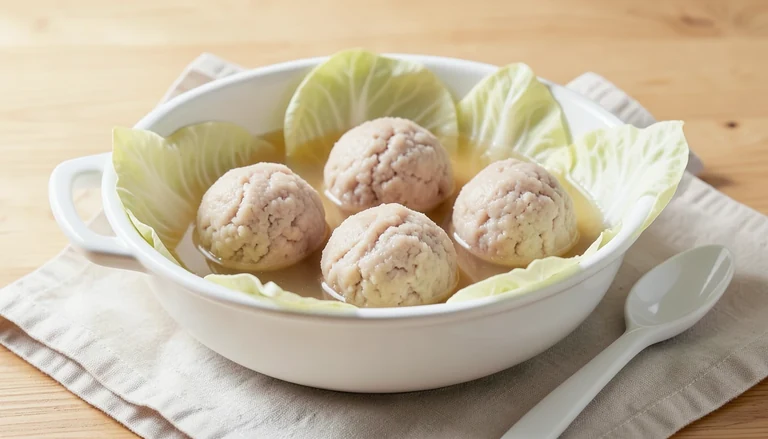
Lion’s head (狮子头) is a large pork meatball. The Yangzhou government portal describes a crab version, xie fen shi zi tou, made from streaky pork and crab meat, and says a chef created it when Emperor Yang of the Sui dynasty visited Yangzhou. (Yangzhou government portal — Lion’s head with crab (opens in a new tab), read ) Wikipedia’s Huaiyang table calls lion’s head braised pork meatballs in a brown sauce. (Wikipedia — Huaiyang cuisine (opens in a new tab), read ) Visit Beijing is more procedural: the meat is hand-chopped, the ball is typically about three times a regular meatball, it is pan-fried, then braised in a dark sauce of soy, vinegar, wine, sugar and cornstarch. (Visit Beijing — Jiangsu cuisine (opens in a new tab), read ) Three pages, one dish name, and not one pot. The lion’s head page sets the clear-broth branch next to the red-braised one.
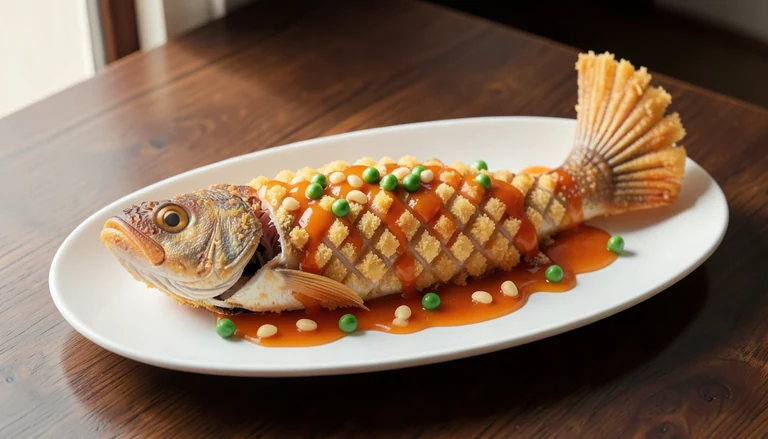
Squirrel fish (松鼠鳜鱼) is presented as a Suzhou dish on the Ministry of Culture and Tourism’s English page. A fish such as yellow croaker, carp or mandarin fish is deboned, shaped, scored with decorative cuts, deep-fried until set, and finished with a sweet-and-sour sauce. The name comes from a resemblance to a squirrel. Seasoning on that page centers on ketchup, white sugar and rice vinegar. (Ministry of Culture and Tourism — Suzhou squirrel fish (opens in a new tab), read ) The page also retells a legend in which the Qianlong emperor tasted the dish on a southern tour. The legend is not the method.
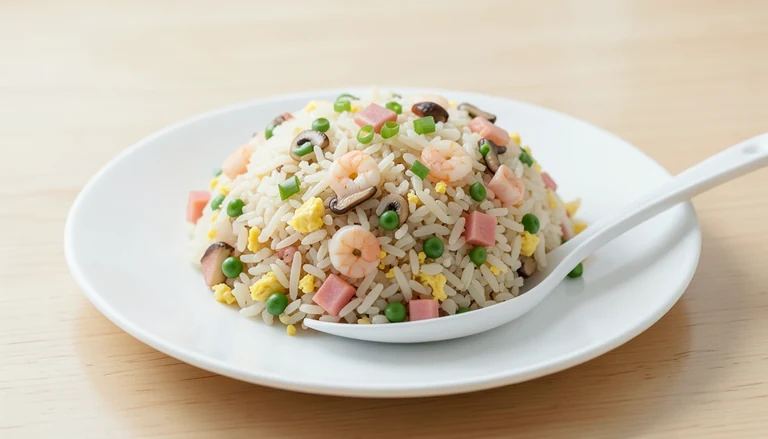
Yangzhou fried rice (扬州炒饭) is dated by the Yangzhou portal to the Sui dynasty, 581 to 618. The portal says versions differ, some with eggs, some with shrimp and eggs, some with ham and eggs, and that the cooking aims to keep the ingredients’ own taste. (Yangzhou government portal — Yangzhou fried rice (opens in a new tab), read ) Visit Beijing describes another plate under the same name: grains coated in salt and pepper, with diced cured sausage, shrimp and green beans, the rice left pearly white with colored specks. (Visit Beijing — Jiangsu cuisine (opens in a new tab), read ) The Woks of Life, a home-cooking site, says English menus spell the dish Young Chow, Yung Chow or Yeung Chow because early restaurant owners transliterated Yangzhou from their own dialect. A Qing-dynasty invention date on that page is offered as a guess, and it does not match the Sui dating on the Yangzhou portal. (The Woks of Life — Young Chow fried rice (opens in a new tab), read ) When a menu prints one of those English names, ask whether the rice holds egg, shrimp, ham or sausage. The spelling has not settled the wok.
Reading Jiangsu, Huaiyang, or Yang Chow
A line that says Jiangsu, Su or Huaiyang names a region, not a recipe. The useful question is which city style the kitchen cooks: Huai’an and Yangzhou, Nanjing’s river fish and duck, a sweeter Suzhou or Wuxi plate, or Nantong seafood. (Wikipedia — Jiangsu cuisine (opens in a new tab), read ) (Jiangsu government portal — Jiangsu cuisine (opens in a new tab), read ) Shanghai’s old place inside the province does not turn a benbang red braise into a Huaiyang dish. (Wikipedia — Jiangsu cuisine (opens in a new tab), read )
On a US menu the clearest Jiangsu words are often the fried-rice spellings, and sometimes the city names themselves. Wikipedia’s American Chinese cuisine article, in its Los Angeles section, includes Nanjing, Shanghai and Wuxi on a list of regional styles. (Wikipedia — American Chinese cuisine (opens in a new tab), read ) That is one article’s note about one metropolitan area. It is not evidence about a restaurant whose menu you have not read. The regional flavors guide puts Jiangsu in the familiar group of eight cuisines and then says the group is only a start. The three dish pages in the table are the plates this site has sourced for the province.
Signature dishes
| Dish | Characters and romanization | What it is | Heat |
|---|---|---|---|
| Lion’s head meatballs | 狮子头 · Shī zi tóu | Large pork meatballs. Accounts differ on crab, a brown sauce, and a hand-chopped braise. | Mild |
| Squirrel fish | 松鼠鳜鱼 · Sōng shǔ guì yú | A deboned, scored fish, deep-fried and finished with a sweet-and-sour sauce, named for its shape. | Mild |
| Yangzhou fried rice | 扬州炒饭 · Yáng zhōu chǎo fàn | Fried rice from Yangzhou. Egg, shrimp, ham and sausage mixes all travel under this name. | Mild |
| Wuxi-style soup dumplings | 无锡小笼包 · Wúxī xiǎolóngbāo | A Jiangnan xiaolongbao that Wikipedia calls sweeter than the Shanghai Nanxiang style. | Mild |
Keep reading
Questions people ask
What is Huaiyang cuisine?
Huaiyang cuisine is the cooking of the lower Huai and Yangtze, centered on Huai’an, Yangzhou and Zhenjiang. Wikipedia calls it one of the Four Great Traditions, with Cantonese, Shandong and Sichuan cooking, and also one style inside the larger Jiangsu cuisine. (Wikipedia — Huaiyang cuisine (opens in a new tab), read ) The Jiangsu government portal pairs it with separate Nanjing, Suzhou, Wuxi and Nantong styles, so the Huaiyang name does not cover every Jiangsu kitchen. (Jiangsu government portal — Jiangsu cuisine (opens in a new tab), read )
Is Jiangsu food spicy?
The Huaiyang article says the cooking leans slightly sweet and is almost never spicy, in contrast to Sichuan or Hunan food, and Visit Beijing says the dishes shy away from spice. (Wikipedia — Huaiyang cuisine (opens in a new tab), read ) (Visit Beijing — Jiangsu cuisine (opens in a new tab), read ) That is a tendency across those pages. It does not certify a particular plate. If heat matters, ask about chili rather than trusting the region name.
What is lion’s head?
Lion’s head (狮子头) is a large pork meatball associated with Huaiyang cooking. The Yangzhou portal describes streaky pork cooked with crab meat and attributes the dish to a chef serving Emperor Yang of the Sui dynasty in Yangzhou. (Yangzhou government portal — Lion’s head with crab (opens in a new tab), read ) Visit Beijing instead describes hand-chopped pork, a ball about three times a usual meatball, pan-fried and then braised with soy, vinegar, wine, sugar and cornstarch. (Visit Beijing — Jiangsu cuisine (opens in a new tab), read ) The two accounts are both on public pages, and they are not the same recipe.
Why do menus say Yang Chow fried rice?
The Woks of Life says Young Chow, Yung Chow and Yeung Chow are English spellings that early restaurant owners made by transliterating Yangzhou from their own dialect. (The Woks of Life — Young Chow fried rice (opens in a new tab), read ) The Yangzhou government portal dates 扬州炒饭 to the Sui dynasty and lists egg, shrimp-and-egg, and ham-and-egg versions. (Yangzhou government portal — Yangzhou fried rice (opens in a new tab), read ) Visit Beijing’s version uses salt, pepper, cured sausage, shrimp and green beans. (Visit Beijing — Jiangsu cuisine (opens in a new tab), read ) The English name tells you the city, not which mix is in the rice.
Is squirrel fish always mandarin fish?
The dish page on this site uses the characters 松鼠鳜鱼, which name mandarin fish. The Ministry of Culture and Tourism’s English page says squirrel fish can be made with yellow croaker, carp or mandarin fish, deboned, scored, deep-fried and sauced sweet and sour. (Ministry of Culture and Tourism — Suzhou squirrel fish (opens in a new tab), read ) Ask which fish the kitchen has. The squirrel shape is the scored, fried presentation, not a promise of one species.