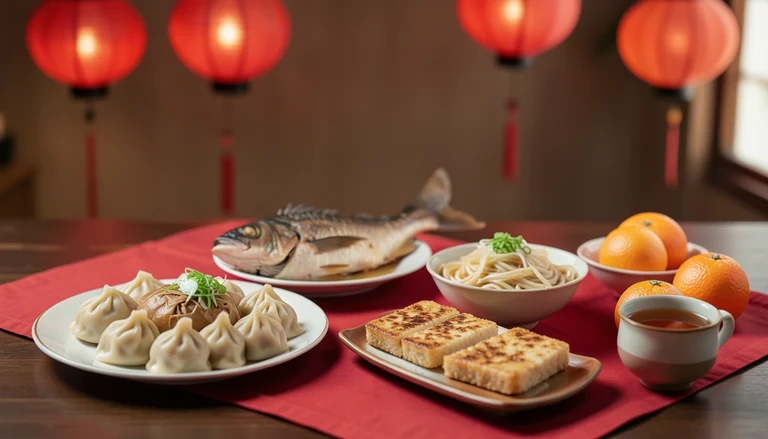
What the holiday is and when it falls in 2027
Lunar New Year 2027 begins on Saturday, February 6. This guide covers the foods sources link to the holiday, what they say each one symbolizes, where traditions differ by region, and what to ask when you order a holiday meal at a Chinese restaurant in the US. Symbolism is attributed to the source that reports it. We do not state any of it as fact.
Lunar New Year, also called Chinese New Year or Spring Festival, follows the traditional Chinese lunisolar calendar. Wikipedia says the new year starts on the new moon that falls between January 21 and February 20. That is why the Gregorian date changes every year.
In 2027 the date is Saturday, February 6. Wikipedia, China Highlights and the Farmers' Almanac all give that date. All three call it a Year of the Goat. China Highlights adds the element, Fire Goat. The Farmers' Almanac notes the animal is also called the Sheep or the Ram, so you will see all three names.
The Smithsonian National Museum of Asian Art describes the holiday as a celebration of spring's arrival and the start of a new year on the lunisolar calendar. It says the observance lasts fifteen days and ends with the Lantern Festival. China Highlights puts the 2027 Lantern Festival on February 20.
The Smithsonian also says the holiday is widely observed across East and Southeast Asia, and that some cultures use different zodiac animals. This guide covers Chinese dishes only.
Wikipedia's article on the reunion dinner says the family meal is held on New Year's Eve and is often considered the most important get-together meal of the year. In 2027 that evening is Friday, February 5.
Traditional foods and what sources say they symbolize
Many of the meanings below depend on wordplay in a particular language, such as Cantonese or Hokkien. Sources describe them as beliefs and customs. Families and regions differ, so treat this as a map of what is commonly reported, not a rulebook.
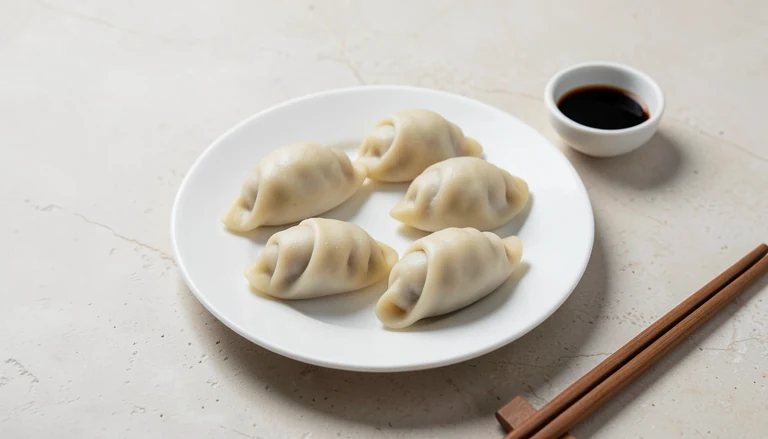
- Dumplings (jiaozi): Wikipedia says their resemblance to the gold and silver ingots (sycee) of Imperial China means they symbolize wealth, and that many families eat them at midnight on New Year's Eve. It adds that some cooks hide a clean coin in one.
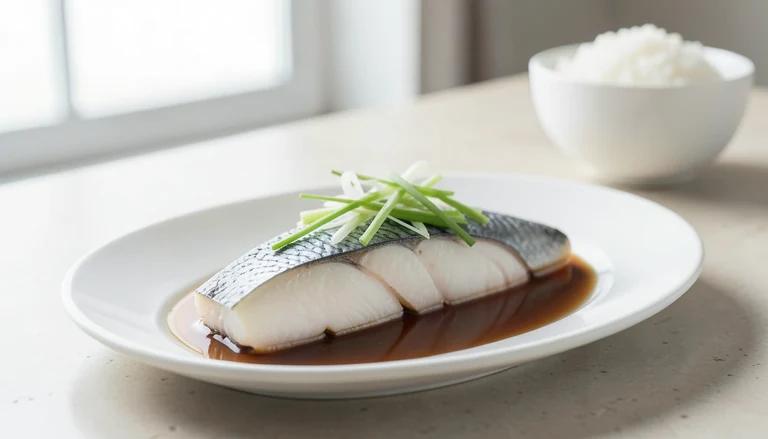
- Whole fish: The Smithsonian National Museum of Asian Art lists a whole fish as a dish representing abundance on the New Year's Eve table. Made With Lau explains that the Cantonese word for fish sounds like the word for surplus, and quotes the saying 年年有餘, which it relates to yearly abundance.
- Long noodles: Wikipedia says that at Lunar New Year the noodles for yi mein (longevity noodles) are not cut and each strand is eaten whole. China Highlights says the length stands for long life.
- Nian gao (sweet glutinous rice cake): Wikipedia says the name sounds like a phrase meaning a higher year, which it describes as a wish for a more prosperous year. China Highlights gives the same reading.
- Turnip cake (lo bak go): Wikipedia says Cantonese speakers hear the word for cake as a homophone of the word for high, and that in Taiwan the Hokkien word for radish is a near homophone of good fortune. Wikipedia lists turnip cake as a dim sum dish.
- Spring rolls: Wikipedia says they are usually eaten during the Spring Festival in mainland China, which gives them their name. China Highlights says fried spring rolls are thought to resemble gold bars and stand for wealth.
- Tangyuan (sweet glutinous rice balls): The Smithsonian says families eat them at the Lantern Festival that ends the holiday. Wikipedia says the name is a near homophone of the word for reunion. The Smithsonian Asian Pacific American Center quotes a Taiwanese American writer who says the round shapes stand for family togetherness.
How traditions differ by region, and where sources disagree
Wikipedia's articles on New Year's Eve and on Chinese New Year describe a north-south split. The north is associated with dumplings, and the south with nian gao. Wikipedia also says very few people in southern China serve dumplings on New Year's Eve. China Highlights agrees that dumplings are especially popular in the north.
Nian gao varies. Wikipedia lists a brown-sugar version in Guangdong that is pan-fried with egg, a taro version in Fujian, a white version in Shanghai that is commonly stir-fried, and sweetened northern versions that use ingredients such as jujubes and beans. Turnip cake also varies: Wikipedia calls the Cantonese dim sum version soft and often mixed with other ingredients, and the Taiwanese version firmer. Wikipedia lists dried shrimp, shiitake mushrooms and Chinese sausage as optional additions.
The sweet rice balls have two names. Wikipedia says tangyuan is the term in southern China, Taiwan and Southeast Asia and yuanxiao is the term in the north, and that many people treat them as the same thing.
China Highlights says spring rolls are popular in East China (it names Shanghai, Fujian and Guangzhou) and that lion's head meatballs are especially popular in Shanghai.
Fish customs: sources disagree on what happens after the fish is served. Wikipedia's reunion-dinner article says the fish is intentionally not finished and the rest is kept overnight. China Highlights says that north of the Yangtze River some fish is left uneaten, while in the south the head and tail are not eaten until New Year's Day. We report both and do not choose one.
Tangyuan timing also differs by source. The Smithsonian and Wikipedia tie them to the Lantern Festival on the fifteenth day. China Highlights says they are eaten throughout the Spring Festival in South China.
Customs that change how a dish is served
Made With Lau, a Cantonese family recipe site, says a complete fish on the table is considered perfect or consummate, and says the head and tail traditionally stay on the plate. The Marine Stewardship Council, citing its contributors, says the fish is served intact with head and fins attached, with the head pointed toward guests or senior family members.
For long noodles, Wikipedia says the strands are not cut. If you order them, expect them to arrive long, and eat them as served.
These are customs reported by the sources, not rules at every table. If a custom matters to your family, say so when you order.
How to order a holiday meal at a US Chinese restaurant
We did not find a fetched source that gives restaurant booking rules for the holiday, so this is general practical advice. Every restaurant differs. Ask the restaurant instead of assuming.
Contact the restaurant before the dates. New Year's Eve falls on Friday, February 5 and New Year's Day on Saturday, February 6. Ask whether it takes reservations for those dates, whether it offers a set menu or banquet for the holiday, and whether any dishes need advance notice.
For a whole fish, ask whether it is served whole with head and tail, what sizes are available, and how the price is calculated. Our steamed fish page covers the whole-fish-versus-fillet question.
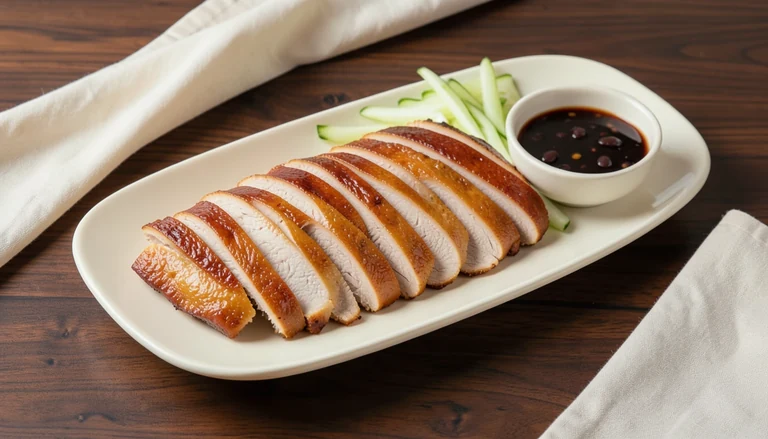
For roast duck, ask whether it must be ordered ahead and how many people one portion serves. Beijing tourism says the cook slices the duck at the table, but its page gives no booking guidance.
For a group, choose one anchor dish, then add contrast. Our shared-table guide explains the approach. Ask how large the portions are before you add a second round.
Tell the staff about allergies and dietary needs when you book, not at the table.
Dishes on this site that fit a holiday table
Jiaozi are the dish sources most clearly tie to New Year's Eve. Beijing tourism calls them a traditional dish eaten on Chinese New Year's Eve when families reunite, and Wikipedia ties them to the north. Ask the restaurant whether it serves them boiled, steamed or pan-fried.
Cantonese steamed fish is our closest match for the whole fish the Smithsonian and Made With Lau describe. A restaurant may serve a fillet instead.
Peking duck is here because the ordering questions matter. None of the sources above tie it to the holiday.
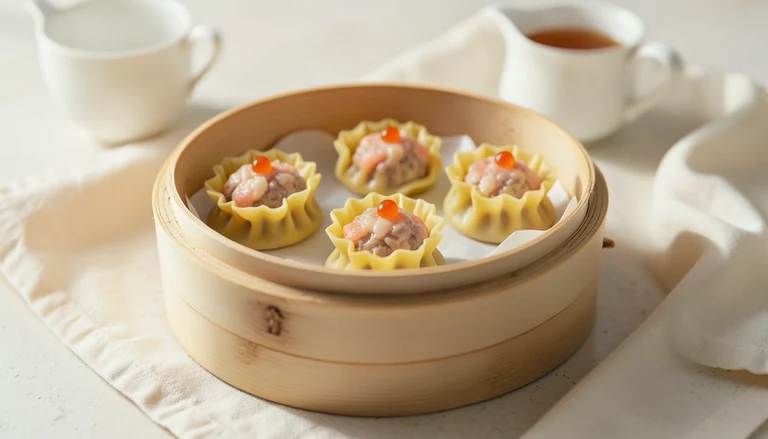
Siu mai and the dim sum glossary entries help if you want turnip cake, which Wikipedia lists as a dim sum dish. We do not have pages yet for nian gao, turnip cake, tangyuan or long noodles.
Questions people ask
When is Lunar New Year in 2027?
Saturday, February 6, 2027. Wikipedia, China Highlights and the Farmers' Almanac all give that date. It is a Year of the Goat. The Farmers' Almanac notes the animal is also called the Sheep or the Ram, and China Highlights calls it the Fire Goat.
How long does the holiday last?
The Smithsonian National Museum of Asian Art says the observance lasts fifteen days and ends with the Lantern Festival. China Highlights puts the 2027 Lantern Festival on February 20.
What foods do sources link to Lunar New Year?
Dumplings, whole fish, long noodles, nian gao, turnip cake, spring rolls and sweet rice balls (tangyuan) appear in the sources above. Each source attributes a different meaning to each food, often based on wordplay. See the symbolism section for who says what.
Does everyone eat the same dishes?
No. Wikipedia describes dumplings as a northern New Year's Eve dish and nian gao as a southern one, and says very few southern households serve dumplings that night. Sources also differ on fish customs and on when tangyuan are eaten.
What should I ask when ordering a whole fish?
Ask whether it is served whole with head and tail, what sizes are available, and how it is priced. Made With Lau says a complete fish is traditional for celebrations, with the head and tail left on the plate.
Menu words in this guide
Last reviewed
Sources & further reading
Background and preparation references. Our descriptions are editorial summaries, not restaurant reviews.
- Wikipedia — Chinese New Year (opens in a new tab) ↗
- China Highlights — Chinese New Year 2027 (opens in a new tab) ↗
- Farmers' Almanac — When is Lunar New Year 2027 (opens in a new tab) ↗
- Smithsonian National Museum of Asian Art — Lunar New Year celebration (opens in a new tab) ↗
- Smithsonian Asian Pacific American Center — Lunar New Year foods (opens in a new tab) ↗
- Wikipedia — Chinese New Year's Eve (opens in a new tab) ↗
- Wikipedia — Reunion dinner (opens in a new tab) ↗
- Wikipedia — Jiaozi (opens in a new tab) ↗
- Wikipedia — Nian gao (opens in a new tab) ↗
- Wikipedia — Turnip cake (opens in a new tab) ↗
- Wikipedia — Yi mein (longevity noodles) (opens in a new tab) ↗
- Wikipedia — Tangyuan (opens in a new tab) ↗
- Wikipedia — Lantern Festival (opens in a new tab) ↗
- Wikipedia — Spring roll (opens in a new tab) ↗
- China Highlights — Chinese New Year food (opens in a new tab) ↗
- Made With Lau — Steamed fish (opens in a new tab) ↗
- Marine Stewardship Council — Festive seafood dishes for the Chinese Lunar New Year (opens in a new tab) ↗
- Beijing tourism — Chinese dumplings (opens in a new tab) ↗
- Beijing tourism — Beijing roast duck (opens in a new tab) ↗