The wrapper is the useful first distinction
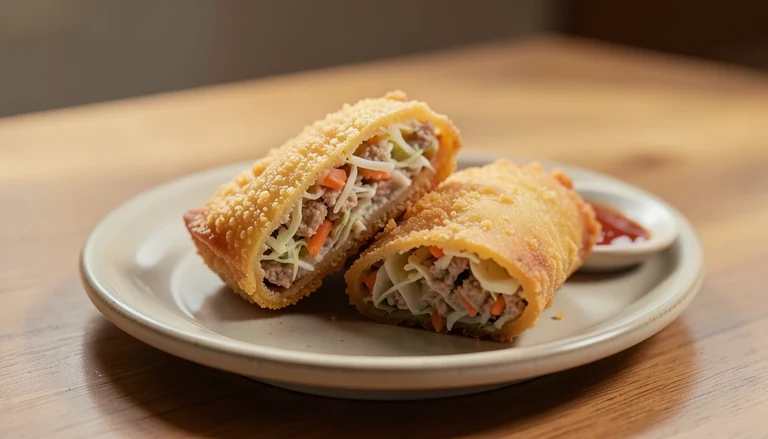
On a Chinese-American menu, an egg roll often means a fried roll with a substantial, blistered wheat wrapper. A Chinese spring roll usually points to a thinner wrapper that fries into a more delicate shell. Both can contain vegetables, meat or seafood. Choose by the wrapper and filling you want, then check how this restaurant uses the names.
These are useful tendencies, not two compulsory recipes. Made With Lau calls its recipe Egg Rolls while explaining that the thin-skinned Cantonese preparation is more precisely a spring roll. The title on a menu can therefore differ from the texture you expect. A short question about the shell resolves more than debating the label.
| Example | Wrapper and cooking | Filling in the cited recipe | What to ask |
|---|---|---|---|
| Chinese-American egg roll — The Woks of Life | Thicker wheat wrapper; fried, with a bubbled exterior | Cabbage, roast pork and optional shrimp | Is this the thick, blistered kind? |
| Cantonese-style roll — Made With Lau | Thin wheat shell; deep-fried | Vegetables, mushrooms and vermicelli | Is the wrapper thin and crisp? |
| Shanghai-style spring roll — The Woks of Life | Spring-roll wrapper; fried | Napa cabbage, pork and shiitake | Does the filling contain pork? |
| Fresh Vietnamese summer roll — wrapper glossary example | Softened rice paper; assembled with fresh or cooked filling | Filling varies; ask what is inside | Is this served fresh rather than fried? |
What the shell changes on the plate
The Woks of Life's wrapper guide contrasts the thick, bubbled shell of an egg roll with Chinese spring-roll wrappers. That gives you a useful texture choice: a more substantial bite of wrapper or a thinner crisp shell around the filling. Size alone cannot make the distinction, because kitchens can roll either style larger or smaller.
If you are sharing, ask whether an order contains one large roll or several smaller pieces. Two menu items with the same price can play different roles in a meal. A single substantial egg roll may suit one person's starter; a plate of smaller spring rolls may be easier to divide alongside dim sum.
Look at the description before the photograph. A smooth shell is a clue about texture, but it does not identify the filling, the fat used or the wrapper ingredients. When the menu shows only a generic picture, ask staff for those details rather than treating the photograph as the recipe.
The filling does not divide the two categories
Vegetables are not exclusive to spring rolls, and pork is not exclusive to egg rolls. The recipe examples above demonstrate the overlap. To choose between two orders, compare the actual filling: cabbage-led, mushroom-led, pork-and-vegetable, or seafood. A familiar name may hide a combination rather than a single main ingredient.
Made With Lau's thin Cantonese rolls use a vegetable filling and a specifically vegetarian oyster-style sauce. Its instructions also allow regular oyster sauce instead. Even in that one preparation, a small sauce substitution changes the dietary answer without changing the visible vegetables or the English title.
If you want a vegetable roll, ask whether that means vegetables only, then ask about its seasoning. If you want pork or shrimp, confirm whether it is the main filling or one component of a larger vegetable mix. This is more useful than expecting an egg roll to be meatier simply because its wrapper is thicker.
Egg roll is not an ingredient declaration
The Woks of Life explicitly notes that egg may or may not be in an egg-roll wrapper. Made With Lau recommends a mainly wheat-flour-and-water shell without egg for its particular thin, crisp preparation. Together, these examples explain why the English word egg cannot settle the ingredient question.
Ask about the wrapper separately from the filling and the seal. A kitchen may buy ready-made shells while making the filling itself. If staff do not know what is in the wrapper, they may need to check the packaging. Asking only whether the filling contains egg leaves that separate component unanswered.
The same care applies to the word spring. It describes a food name, not a promise that the roll contains only vegetables. Neither fried-roll name establishes whether the complete dish meets your dietary requirements. Describe what you avoid and include the dipping sauce in the conversation.
Chinese and regional names help explain the overlap
Made With Lau gives the Cantonese name 春捲, meaning spring rolls, for the thin fried rolls in its Egg Rolls recipe. The Woks of Life separately publishes a Shanghai-style preparation. These are examples of Chinese spring rolls with different fillings, rather than evidence that every restaurant divides rolls the same way.
An English menu may group them under appetizers, dim sum or takeout combinations. That placement helps you understand the service, but it does not settle the wrapper. A Cantonese restaurant's egg roll can be the thin version you were calling a spring roll; a takeout restaurant may offer both names as two separate items.
You do not need to correct the menu to order well. Ask which version the kitchen makes and use a physical description: thin and smooth, or thick and blistered. If both appear, ask what changes besides the name. You may discover a difference in filling, portion or cooking that matters more to your choice.
Fresh Vietnamese rolls are a separate naming question
Some English menus use spring roll for a fresh Vietnamese rice-paper roll, also called a summer roll. The Woks of Life's wrapper guide distinguishes that softened rice paper from Chinese fried-roll wrappers. If you expected a hot, crisp appetizer, check the cooking description before ordering.
Rice paper can also be used for fried Vietnamese rolls, so the material alone does not settle whether the dish is fresh or fried. Ask both questions: what wraps it, and how is it served? This brief distinction resolves the common naming mix-up without making Chinese and Vietnamese preparations interchangeable.
At a Chinese restaurant, do not automatically expect a rice-paper wrapper because the menu says spring roll. At a menu spanning several cuisines, do not automatically expect the Chinese fried version either. The useful answer is the actual preparation on that menu.
Order the roll that adds something to your meal
For a meal already built around fried chicken or another crisp dish, a roll is an optional extra rather than a necessary starter. If you want one, choose a different filling so you are adding a new flavor. If the rest of the meal is soup and steamed dishes, a fried roll gives you a clearer texture contrast.
An editorial dim sum starting point is one steamed dumpling, one thin fried roll and a noodle or rice dish, adjusted after checking the portions. This is a suggested combination, not a traditional requirement or a tested serving count. Choose the roll because someone wants it, not because it completes a checklist.
Ask what dip accompanies the rolls and whether it can come separately. That lets you taste the shell and filling before adding sweetness, tang or chili. It also avoids making a decision about the roll based only on a sauce you may not want.
Use three questions at the counter
Try: 'Is your egg roll the thick, blistered kind or a thin spring roll? What is in the filling and wrapper? Is it fried, and what sauce comes with it?' If both names are listed, add: 'What is different between these two orders?'
For delivery, check the piece count and choose the shell you enjoy even when it has spent time in a container. This guide does not claim a tested delivery winner. If crispness is the reason you are ordering, ask how the restaurant packages the rolls and whether the sauce comes separately.
Questions people ask
What is the main difference between egg rolls and spring rolls?
For the Chinese and Chinese-American fried versions compared here, the wrapper is the useful starting point: an egg roll often has a thicker, blistered shell, while a Chinese spring roll has a thinner crisp shell. Restaurants may use the English names differently, so check their version.
Do egg rolls always contain egg?
No. The Woks of Life notes that egg may or may not be in the wrapper. Ask about the wrapper, filling and seal separately when egg matters to your order.
Are spring rolls vegetarian?
The name does not establish that. The cited Shanghai-style rolls contain pork; Made With Lau's vegetable version uses a vegetarian oyster-style sauce but also discusses regular oyster sauce. Ask about the whole preparation.
Are spring rolls fried or fresh?
Chinese spring rolls in this comparison are fried. English menus may also call fresh Vietnamese rice-paper rolls spring rolls or summer rolls. Ask about both the wrapper and the cooking method.
Menu words in this guide
Last reviewed
Sources & further reading
Background and preparation references. Our descriptions are editorial summaries, not restaurant reviews.