Choose a braise or noodle dish before adding buns
For a first Shanghainese order beyond soup dumplings, consider red-braised pork with rice, or scallion-oil noodles with a contrasting small dish. Add shengjian only if you want to compare a crisp-bottomed bun with the steamed dumplings you already know. The useful choice is between a shared braise, a dressed noodle bowl and a bun-focused meal, rather than a list of Shanghai's most famous foods.
A small editorial order for two is red-braised pork, one cold starter, greens and rice, after the server confirms the sizes. A noodle-shop order may instead be one noodle bowl per diner and a shared bun portion. These formats should not be combined automatically: a full braise, noodles, rice and two kinds of buns can repeat the meal's richest or starchiest elements.
Use this guide to ask about preparations. The city sources provide local examples and attribution; they do not establish what a restaurant elsewhere serves, what tastes best, or what portion your group needs.
Keep Shanghai's local cooking distinct from its neighbors
Benbang cai (本帮菜) means Shanghai's local cooking. The Shanghai government's Huangpu restaurant guide explicitly identifies Lan Xin with benbang cooking and describes its sweet-sauced braised pork. The same guide labels Yangzhou Hotel's cooking as Huaiyang, a subgroup of Jiangsu cuisine. A restaurant being in Shanghai does not make every dish on its menu uniquely Shanghainese.
Look for the kitchen's own description of its tradition. Shanghai-style menus can share preparations with neighboring Jiangsu and Zhejiang traditions, or list dishes from other regions. Treat those connections as questions for the server, not reasons to relabel an entire menu. Ask: 'Which of these are your Shanghai local specialties, and which follow another regional style?'
That distinction changes an order. If your aim is specifically to understand benbang cooking, choose a locally attributed preparation as the anchor. If your aim is simply a good meal at that restaurant, the wider menu may be useful. This article uses Shanghai examples without presenting the neighboring traditions as interchangeable.
Red-braised pork gives rice a reason to be there
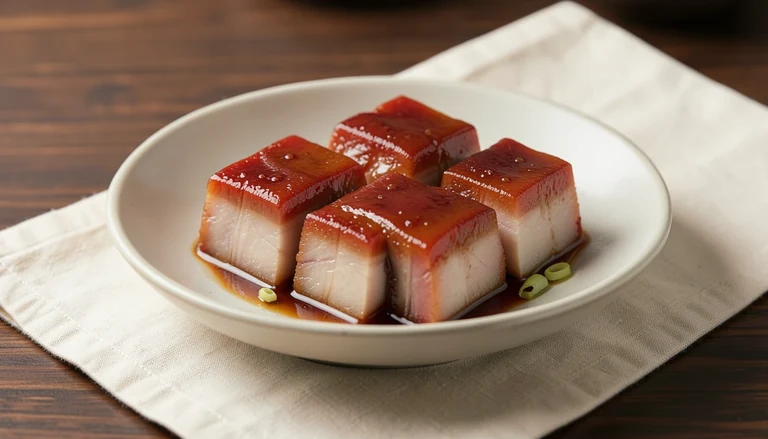
Hong shao rou (红烧肉), red-braised pork, is a useful shared-dish starting point. The Shanghai government's Lan Xin example describes pork in a sweet sauce; its Huangpu account also names braised pork at Mao Long. Those are specific Shanghai restaurant traditions, not proof that all red-braised pork is Shanghainese or equally sweet.
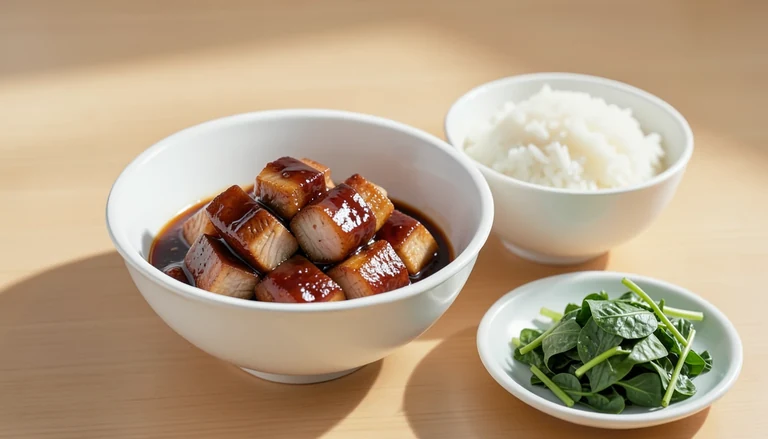
Ask how this kitchen prepares the pork: which cut, how sweet the sauce is, and what size the plate comes in. Choose it because the group wants a rich braise, then consider greens or another dish with a different texture. Rice can serve the sauce without introducing another substantial preparation.
If the menu offers Dongpo pork, lion's-head meatballs or a different braise, ask about that dish's regional attribution and format instead of reading every brown sauce as the same dish. For a small first order, one rich shared preparation is enough to explore; save a second braise for a deliberate comparison.
Shengjian changes the bun's texture, and sometimes its filling
Shengjian (生煎), often called pan-fried pork buns or shengjian mantou, offers a crisp base and a dough wrapper. Shanghai's 2026 local-flavors account distinguishes soup-filled hunshui buns with added aspic from qingshui buns without added aspic, which rely on the meat's juices. It identifies Da Hu Chun with the more bread-like qingshui style. Ask about the bun's actual style rather than assuming all shengjian release abundant soup.
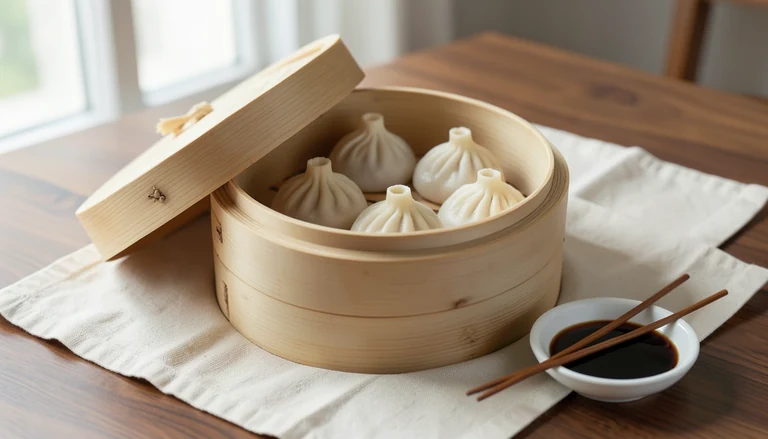
Decide whether buns are the meal's anchor or an addition. If you already have xiaolongbao, shengjian makes sense when contrasting wrappers and cooking methods is the point. Otherwise, choose one bun style and use the remaining order to explore noodles, a vegetable or a cold plate.
Confirm the piece count on the restaurant's own menu, and use a spoon while letting a hot bun cool. A crust does not tell you how much hot liquid is inside. Avoid planning a group portion from the name alone.
Scallion-oil noodles are dressed noodles, not noodle soup
Cong you ban mian (葱油拌面) means a tossed noodle preparation organized around scallion oil. Shanghai's local-flavors account describes noodles with scallion oil and soy sauce, and names several restaurant versions with dried shrimp. A brief English label may leave that ingredient unstated. Ask whether the bowl contains shrimp, other toppings or a separate accompanying soup.
Choose this direction when you want the noodles and their dressing to occupy the meal's center. Mix from the bottom so the dressing coats the strands. If the group also wants braised pork, check whether the menu offers a small noodle portion or a combined preparation before ordering a full plate of each.
A dressed bowl and a noodle soup can look equally simple on a menu but produce different lunches. Use the word 'tossed' or 'mixed' when confirming the format. Then ask about toppings and stock separately when you have an ingredient requirement.
Use a small dish to explore a different texture
Read the cold-dish section before filling the order with more buns. Ask which starter the kitchen considers a Shanghai specialty, whether it is served cold or warm, and how it is dressed. A small plate can be a useful way to explore another preparation without committing to a second main.
Kaofu (烤麸), spongy wheat gluten, is one ingredient to recognize. Judy's Shanghai braised-kaofu recipe at The Woks of Life combines it with mushrooms, wood ear, lily flowers and peanuts in a soy-seasoned braise, served warm or cold. It is a specifically Shanghainese cold-starter example. Shanghai's municipal account also names kaofu at Longhua Vegetarian Restaurant, while another kitchen's sauce still needs confirmation.
If the menu lists a braised kaofu starter, ask what accompanies the gluten and whether the sauce or stock contains meat. If you prefer a vegetable starter, ask about the complete dressing. The goal is a dish people want, with a different texture or seasoning from the braise—not a decorative extra.
Turn the menu into one meal, with the attribution intact
This editorial proposal assumes two people, shared dinner plates, and a kitchen that offers the listed dishes. Choose a modest red-braised-pork plate, one available cold starter, greens and rice. Ask the server whether the pork portion is suitable and which starter gives a meaningful contrast. This is a suggested structure, not a measured portion or a restaurant-specific recommendation.
For a bun-and-noodle meal instead, choose scallion-oil noodles and shengjian, check the sizes, then decide whether a small vegetable or cold plate would improve the order. You can keep xiaolongbao for another meal rather than make every introduction revolve around the same dumpling.
| Menu choice | Role in the order | Attribution and question |
|---|---|---|
| Hong shao rou / 红烧肉 | Shared braise with rice | Shanghai government documents local restaurant versions; ask about sweetness and size |
| Shengjian / 生煎 | Bun anchor or texture comparison | Shanghai source distinguishes styles; ask about broth and piece count |
| Cong you ban mian / 葱油拌面 | Dressed noodle bowl | Shanghai local-flavors example; ask about dried shrimp and toppings |
| Hong shao kaofu / 红烧烤麸 | Braised wheat-gluten starter; warm or cold service | Judy's Shanghai recipe uses mushrooms and peanuts; confirm this kitchen's sauce |
| Huaiyang-labelled dish | A separate regional exploration | Jiangsu tradition; do not relabel it solely because it appears in Shanghai |
Ask the kitchen to make the final distinction
A useful final question is: 'We want one Shanghai local dish and a contrast; which of these preparations would you choose for that?' Tell the server whether you prefer a shared rice dinner or individual noodle bowls. That is more actionable than asking for 'authentic food' with no other preference.
Remember which sauce, bun style and noodle format you ordered. Those details help on another menu, while the regional attribution keeps you from assuming every dish encountered in Shanghai belongs to one undifferentiated cuisine.
Questions people ask
What should I order at a Shanghainese restaurant besides soup dumplings?
Consider red-braised pork with rice and a contrasting small dish, or scallion-oil noodles with a checked bun portion. Ask which preparations the kitchen identifies as Shanghai local specialties.
Are shengjian the same as soup dumplings?
They offer a pan-fried base and a different wrapper. Shanghai's local-flavors account distinguishes shengjian with added aspic from a more bread-like style without it, so ask how much broth this version contains.
Are scallion-oil noodles vegetarian?
Do not assume so. Shanghai's official account names versions containing dried shrimp. Ask about toppings, sauce ingredients and any accompanying broth at the restaurant you are ordering from.
Is every dish in a Shanghai restaurant Shanghainese?
No. Shanghai sources distinguish benbang local cooking from neighboring traditions such as Jiangsu's Huaiyang cuisine. Ask the kitchen about a dish's attribution rather than assigning a region from the restaurant's location.
Last reviewed
Sources & further reading
Background and preparation references. Our descriptions are editorial summaries, not restaurant reviews.
- Shanghai municipal government — Huangpu restaurant traditions (opens in a new tab) ↗
- Shanghai municipal government — Pan-fried pork buns and their styles (opens in a new tab) ↗
- Shanghai municipal government — Scallion-oil noodles (opens in a new tab) ↗
- Shanghai municipal government — Longhua Temple vegetarian cuisine (opens in a new tab) ↗
- The Woks of Life — Shanghai braised wheat gluten, hong shao kaofu (opens in a new tab) ↗