
Choose bread, cold noodles or a hot bowl first
At a Xi'an-style restaurant, start with roujiamo if you want meat in flatbread, liangpi if you want a cool dressed noodle plate, or hot noodles if a chewy wheat ribbon or broth bowl is the main attraction. Biang biang is one useful noodle choice, not the entire menu. Choose the format before choosing a protein or chili level.
A first editorial order could be a roujiamo and a small liangpi portion, if the restaurant offers suitable sizes. The bread and cool dressing make a useful comparison. For a noodle-focused lunch, choose one hot bowl instead and add a small vegetable plate only if you want it after checking the portion. These are suggested structures, not claims that every order serves a fixed number of diners.
Xi'an is in Shaanxi, spelled with two a's in English to distinguish it from Shanxi. The guide's scope is named Xi'an and Shaanxi preparations as they appear in authored recipes and an operator menu. It is not a ranking of restaurants, a city-wide food inventory or an imitation of one chain's menu.
Treat the operator's version as one version
Xi'an Famous Foods explicitly describes its menu as the family's versions of Xi'an classics. Its current list includes cold and stir-fried liangpi, stewed-pork and cumin-lamb burgers, and hand-ripped noodles with several sauces, both with and without soup. Those labels show one operator's range; they do not define every restaurant in Xi'an.
The non-brand sources matter here. Wei Guo's Red House Spice documents a roujiamo preparation and a Xi'an biang-biang recipe connected to her mother's hometown. The Woks of Life's original liangpi recipe identifies the dish with Shaanxi and explains its noodles and dressing. We use their actual preparations, while asking your restaurant which local or family approach it follows.
If a menu says only 'Xi'an noodles,' ask for the preparation rather than assuming a branded item number applies. 'Are these hot oil-splashed noodles, a meat-sauce bowl or noodles in soup?' is a useful question whether or not you have eaten at that US chain.
Roujiamo: confirm the bread and the meat
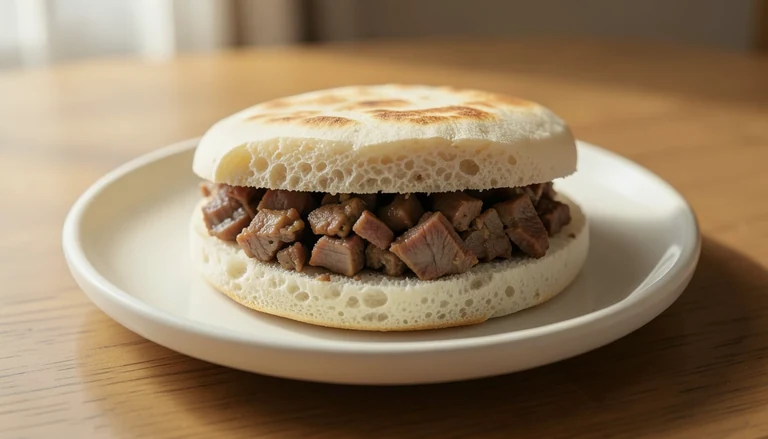
Roujiamo (肉夹馍) is meat held in flatbread, sometimes translated as a Chinese burger. Red House Spice's version uses spiced braised pork belly, chopped with coriander and chili, in a wheat flatbread called baijimo. The creator notes beef and lamb alternatives. It is a filled-bread preparation, not a steamed bun or a promise of one meat everywhere.
Ask what this kitchen puts inside the bread, whether it is braised or stir-fried, and whether chili is part of the filling or can be adjusted. A cumin-lamb filling and braised pork give you different seasoning choices. The English word 'burger' explains the format loosely; the restaurant's description should settle the filling.
Check whether one piece is intended as a snack or a substantial lunch item before combining it with noodles. If the bread is what interests you, a smaller noodle or vegetable dish can leave room to notice its texture. If a large noodle bowl is your priority, the extra flatbread may be something to save for another meal.
Liangpi: cold refers to temperature, not chili level
Liangpi (凉皮), often translated as cold-skin noodles, offers a different texture from a hot pulled-noodle bowl. The Woks of Life describes broad sheets usually made from wheat, while noting rice-flour versions, and serves its recipe with cucumber, bean sprouts and spongy wheat gluten. Its dressing includes chili oil, vinegar and other seasonings. 'Cold' does not mean unseasoned or non-spicy.
Ask whether your restaurant's liangpi is served cold, what the sheets are made from, and which dressing it uses. Xi'an Famous Foods also lists a stir-fried version, so even the temperature deserves confirmation when the English menu is brief. Wheat gluten or another topping can change the texture and ingredients independently of the noodles.
Choose a cold plate when a dressed sheet noodle is what you want to explore. Mix the sauce before judging the whole plate, and ask about adjustable chili before ordering. Rice-flour sheets alone do not establish the complete dish's ingredients or whether its sauce meets a dietary requirement.
Hot noodles: wide ribbons do not decide the sauce
Red House Spice's Xi'an biang-biang preparation uses broad hand-pulled wheat noodles dressed by pouring hot oil over chili, garlic, scallions and Sichuan pepper, then adding soy sauce and vinegar. It is an authored oil-splashed example. Another menu may pair wide noodles with meat, a different sauce or soup, so 'wide' and 'hand-pulled' do not complete the choice.
Use three separate questions: 'Which noodle width is this? What dresses or tops it? Is it served with soup?' Xi'an Famous Foods' hand-ripped-noodle list demonstrates the format difference by offering several toppings in soup and non-soup versions. A protein you recognize tells you less about the meal than knowing the noodles' texture and the bowl's serving style.
If you already know biang-biang noodles, use this visit to change one feature: compare a cool liangpi plate, a meat-filled bread or another noodle format the kitchen identifies as a specialty. You do not need a second biang-biang order simply because the restaurant is described as Xi'an-style.
Separate heat, acidity and numbing seasoning
Tell the server which sensation you want to change. A cold noodle dressing can carry chili; an oil-splashed hot bowl can contain both chili and Sichuan pepper; a braised-meat filling may bring a different set of spices. Ask what is mixed in ahead and what can genuinely be adjusted at ordering time.
For example: 'I want the vinegar and garlic flavor, with less chili if your dressing allows it.' Or: 'I like chili, but how much numbing pepper is in this bowl?' Those questions describe your preference more clearly than asking for a generic mild order.
Do not assume a meat name determines dietary status. Discuss the actual ingredients, stock and preparation with the kitchen when they matter. A city's diverse food traditions cannot be reduced to one protein, one chili level or one label on a foreign-language menu.
| Choice | Format and temperature | Heat and sauce question |
|---|---|---|
| Roujiamo / 肉夹馍 | Meat-filled flatbread; serving temperature depends on the kitchen | Braised pork or another filling; is chili mixed in? |
| Cold liangpi / 凉皮 | Cool dressed sheets; wheat and rice versions exist | Which vinegar, chili and toppings are in the dressing? |
| Stir-fried liangpi | Hot preparation listed by Xi'an Famous Foods | What changes besides the temperature in this version? |
| Oil-splashed biang-biang | Hot broad wheat ribbons; Red House Spice's example | Chili, Sichuan pepper, garlic and vinegar balance? |
| Hand-ripped noodles in soup | A broth format on the operator's menu | Which broth and topping, and is chili adjustable? |
| Chang'An Spicy Tofu Custard / 长安豆花 | A tofu-custard item on Xi'an Famous Foods' menu; confirm temperature and portion | Spoonable texture, dressing, chili and numbing pepper; what can be adjusted? |
Build a small order around one contrast
Our editorial bread-and-noodle proposal assumes one diner or two people sharing a light comparison, with suitable small portions: one roujiamo and a cold liangpi dish. Ask about the sizes first; a full noodle main plus several filled breads can exceed what you intended. Choose the filling and dressing separately so the pair actually shows two preparations.
For a hot-noodle proposal, order one bowl in the sauce or broth style you want. Then ask which small vegetable dish or other available specialty would add a different texture. If staff suggest another substantial wheat dish, decide whether the comparison is the purpose of the meal or whether you would rather save it for next time.
For a choice beyond bread and noodles, Xi'an Famous Foods also lists Chang'An Spicy Tofu Custard (长安豆花). Ask whether its custard is served warm or cool, whether the texture is spoonable, and whether the portion is a small dish or a main. Then confirm the dressing's chili and numbing-pepper intensity and what can be adjusted. This is one operator's named offering, not a standard recipe assigned to every Xi'an restaurant.
For a shared dinner, explain how many people are eating and ask which dishes beyond the noodle list the kitchen makes. Let the operator's full menu expand the order. This guide's short selection is an entry point, not evidence that Xi'an food consists only of bread and noodles.
Remember the format alongside the place name
Keep a short note such as 'cold wheat liangpi with vinegar and chili' or 'braised-pork roujiamo.' That preserves a useful preparation while allowing the next kitchen to have its own version. A broad place name is a starting point; it should not erase the actual dish you chose.
At the next menu, ask which preparations come from the kitchen's Xi'an or wider Shaanxi tradition. You can explore beyond biang-biang noodles without pretending one operator, recipe or meal represents the whole city.
Questions people ask
What can I order at a Xi'an restaurant besides biang-biang noodles?
Look for roujiamo, cold liangpi and other noodle formats the kitchen offers. Choose bread, a cool dressed plate or a hot bowl first, then confirm filling, dressing and portions.
Does cold-skin noodle mean rice noodle?
No. The Woks of Life's Shaanxi liangpi account describes wheat-based sheets and notes rice-flour versions. Ask what the restaurant uses and whether wheat gluten or other ingredients are added.
Is liangpi non-spicy because it is cold?
Cold describes the serving temperature. The cited liangpi recipe uses a chili-oil dressing. Ask about the kitchen's seasoning and what can be changed before ordering.
Does Xi'an Famous Foods represent every Xi'an restaurant?
The operator describes its dishes as family versions of Xi'an classics. Its menu is a useful attributed example, alongside the non-brand recipes cited here; it is not a universal city menu.
Last reviewed
Sources & further reading
Background and preparation references. Our descriptions are editorial summaries, not restaurant reviews.